Main Line Cleanout or Simple Snake Service? How to Tell Which One You Actually Need
If drains are backing up in your Phoenix home right now, the first thing you probably want to know is whether this is a small problem or a big one. Here is the most reliable way to tell: check how many fixtures are affected.
When only one drain is slow or stopped — your kitchen sink, a single shower, one bathroom sink — the clog is almost always in the branch line that serves that fixture. A standard drain snake can usually clear it. When multiple fixtures are backing up at the same time, or using one fixture causes water to appear somewhere else in the house, the problem is likely deeper in your main sewer line, and clearing it requires access through a cleanout or similar entry point with heavier equipment.
That single question — one fixture or many? — will point you in the right direction before you ever pick up the phone. The rest of this guide explains why that question works, what each service actually involves, and how to know what to ask for when you call a plumber.
Why the Number of Affected Fixtures Matters So Much
Your home’s plumbing works like a tree. Every sink, toilet, shower, and tub has its own dedicated branch drain that handles waste from that fixture alone. All of those individual branch lines eventually merge into a single shared trunk — the main sewer line — which moves everything out to the municipal sewer or your septic system.
When a branch line gets clogged, only the fixture tied to that branch is affected. Every other drain in the house continues to work normally. When the main sewer line gets blocked, water from every fixture in the house has nowhere to go. It backs up through whichever opening offers the least resistance, which is usually the lowest drain in the home — often a floor drain, a ground-floor bathtub, or a basement shower.
This is why the “how many fixtures?” question works so well. It tells you where in the system the blockage sits, and that determines which service is appropriate.
What a Simple Snake Service Actually Does
How a drain snake works
A drain snake — also called a drain auger — is a flexible cable that a plumber feeds into the drain opening. As it moves through the pipe, it either breaks apart the clog or hooks onto it so it can be pulled out. Handheld snakes that homeowners can buy at hardware stores typically reach 15 to 25 feet, which covers most branch lines. A professional-grade motorized snake has a longer reach, more power, and different cutting heads designed for tougher blockages.
What kinds of clogs a snake handles well
- Hair buildup in a bathroom sink or shower drain
- Soap scum and residue narrowing a branch line
- Food particles or grease partially blocking a kitchen drain
- Small objects accidentally dropped into a drain
- Buildup near the P-trap or within the first several feet of a branch line
When a snake is not enough
A standard snake clears a path through the blockage, but it does not always remove the cause. If grease has coated the inside of the pipe over months or years, snaking may punch a temporary hole through the buildup without removing it. The drain works again for a while, then slows down again as the coating narrows the line. If you have had the same drain snaked more than once in a short period, that recurring pattern may indicate a deeper issue a technician can evaluate with a camera inspection.
What a Main Line Cleanout Service Actually Involves
First: a cleanout is an access point, not a service
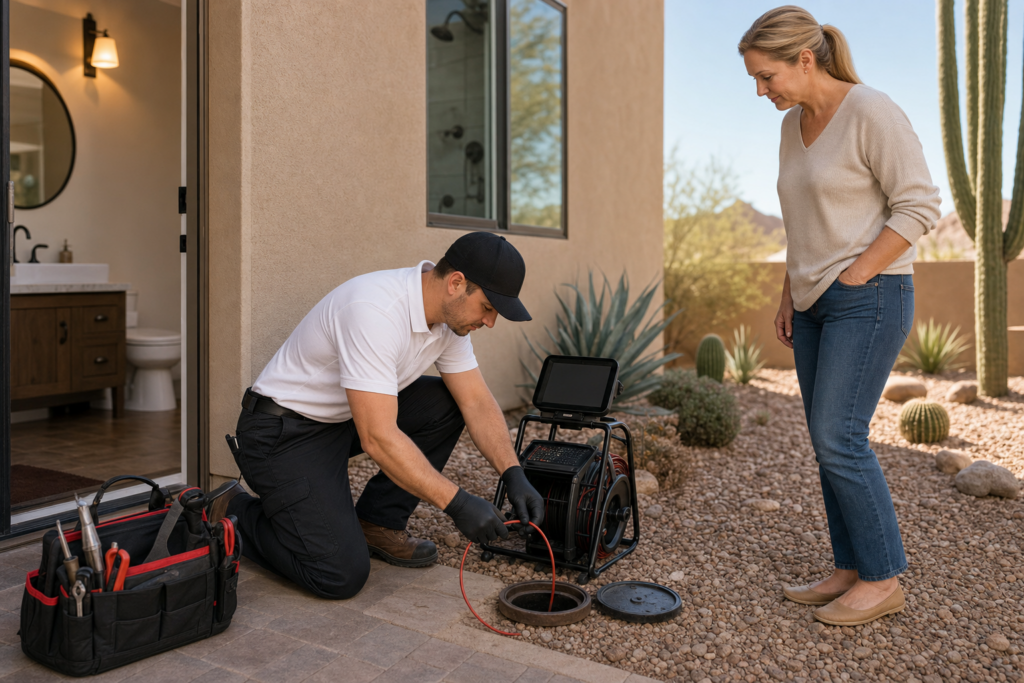
This is one of the most common sources of confusion. A sewer cleanout is a capped pipe — usually white PVC or sometimes cast iron — that sticks up from the ground near your home’s foundation or sits at the base of an exterior wall. It provides direct access to your main sewer line without having to go through a fixture or remove a toilet.
When plumbers refer to a “main line cleanout,” what they mean is clearing your main sewer line by accessing it through the cleanout. The cleanout is the door. The actual service may involve a heavy-duty power auger, hydro jetting, or a camera inspection — depending on what the plumber finds once they are in the line.
What the plumber does when they access the main line
After removing the cleanout cap, the plumber can feed a commercial-grade cable or hydro jet nozzle directly into the main sewer line. This equipment is significantly more powerful than what is used for a branch drain snake. Commercial augers can reach well beyond 100 feet and are designed to cut through tree roots, heavy grease buildup, and compacted debris.
In many cases, the plumber will also run a sewer camera through the line after clearing it. The camera helps identify the cause of the blockage — roots, a bellied section of pipe, a crack, heavy scale — so the plumber can tell you whether the problem is likely to come back and what your options are.
What if your home does not have an accessible cleanout?
Not every home has one, and in some older Phoenix neighborhoods, the cleanout may be buried under landscaping, a patio, or soil that has accumulated over the years. If your home does not have a visible cleanout, a licensed plumber can still access the main sewer line through other entry points — most commonly by pulling a toilet to feed equipment through the floor flange, which connects directly to the main line.
If your cleanout is buried, a plumber can often locate it using a pipe locator or camera. In some situations, installing a new accessible cleanout is worth considering, especially if your home has had recurring main line issues. A technician can evaluate whether that makes sense for your property.
Symptoms That Point to a Main Line Problem
The following symptoms suggest the blockage is in your main sewer line rather than in a single branch drain. The more of these you notice at the same time, the more likely a main line issue is involved.
Cross-fixture backup
This is the single clearest indicator of a main line clog. You flush the toilet and notice water rising in the bathtub. You run the washing machine and water appears around a floor drain. You use the kitchen sink and hear gurgling from a bathroom drain down the hall. These cross-fixture reactions happen because the shared main line is blocked and water is finding the nearest available exit.
Multiple drains slow or backed up at the same time
If your kitchen sink, a bathroom sink, and a shower are all draining slowly — especially if they are in different parts of the house — the common factor is the main sewer line they all connect to.
Water backing up from the lowest drains first
Gravity sends water to the lowest available point. When the main line is blocked, the lowest drains in your home — a ground-floor bathtub, a floor drain in the laundry room, a ground-level shower — are the first to show signs. If those fixtures are backing up while upper-floor drains still work, the blockage is likely at or near the main line level.
Gurgling sounds from multiple fixtures
A gurgling drain usually means air is being pushed or pulled through standing water in a trap. When you hear gurgling from several drains around the house — not just the one you are using — the air pressure disruption is happening deeper in the system.
Sewage odor from drains or near the cleanout
A persistent sewage smell from a floor drain, from outside near the cleanout, or from multiple fixtures may indicate a blockage is causing waste to sit in the line instead of flowing out to the sewer. This is different from the occasional smell that comes from a rarely used drain where the water in the P-trap has evaporated.
Symptoms That Point to a Branch Drain Clog
These symptoms typically indicate a localized clog in the branch line that serves one fixture or one area of the home.
Only one fixture is slow or backed up
If your kitchen sink is draining slowly but every other fixture in the house works fine, the clog is almost certainly in the branch line between that sink and the point where it meets a larger pipe. A standard drain snake is usually the right first step.
Localized gurgling
If you hear gurgling only from the drain you are using — or from one nearby fixture — the air displacement is happening close to the blockage, not deep in the system.
Gradual slowdown at one fixture
Branch line clogs often build up gradually. The sink drains a little slower each week. The shower takes longer and longer to clear. This pattern usually points to accumulation in the branch line — hair, soap residue, grease, or mineral buildup — rather than a sudden main line failure.
A Side-by-Side Comparison
| Simple Snake Service | Main Line Cleanout Service | |
|---|---|---|
| Fixtures affected | One fixture or one area | Multiple fixtures or cross-fixture backup |
| Where the clog is | Branch drain near the fixture | Main sewer line shared by the whole house |
| Common causes | Hair, soap scum, food, grease near the drain | Tree roots, grease buildup, flushed wipes, pipe damage, mineral scale |
| Equipment used | Handheld or light motorized drain snake | Commercial power auger, hydro jet, sewer camera |
| Access point | Through the fixture drain opening | Through the sewer cleanout, a pulled toilet, or another main line access point |
| What you notice | One slow or stopped drain | Water appearing where it should not, multiple slow drains, sewage odor |
What Causes Main Line Clogs in Phoenix Homes
Phoenix has plumbing conditions that differ from other parts of the country, and some of them make main line problems more common in certain neighborhoods.
Tree roots
Many older Phoenix neighborhoods have mature landscaping — citrus trees, ficus, palm trees, and other species with aggressive root systems. Roots seek moisture, and even a small crack or joint gap in a sewer line can attract root growth. Over time, roots can enter the pipe, catch debris, and create a serious blockage. This is especially common in homes built before the 1990s that still have original clay or Orangeburg pipe.
Older pipe materials
Homes built in the 1950s through the 1980s across many Phoenix neighborhoods may still have clay, cast iron, or in some cases Orangeburg (a tar-paper material) sewer lines. These materials degrade over decades. Clay pipes crack at joints. Cast iron corrodes and scales internally. These conditions narrow the pipe’s interior and make blockages more likely.
Hard water mineral buildup
Phoenix has notably hard water. Over years, mineral deposits can accumulate inside drain and sewer lines, gradually reducing flow capacity. This does not usually cause a sudden blockage on its own, but it can worsen an existing problem or make a line more vulnerable to catching debris.
Flushed items that do not break down
Flushable wipes, hygiene products, paper towels, and other items that do not dissolve the way toilet paper does are a leading cause of main line blockages. This is not unique to Phoenix, but it combines with the factors above to create problems faster in older homes.
What to Do Right Now If You Suspect a Main Line Problem
- Stop running water. Every gallon you send down a drain with a blocked main line can back up into your home. Turn off the washing machine, dishwasher, and avoid flushing toilets until a plumber can evaluate the situation.
- Check for a visible cleanout. Look along your home’s exterior foundation walls or in the yard near the house. A sewer cleanout is usually a white PVC pipe with a threaded or square-nut cap, typically 3 to 4 inches in diameter. Knowing where it is can save time when the plumber arrives.
- Note what you observed. Which fixtures are affected? When did it start? Did it happen suddenly or build up over time? Is water coming up from a floor drain or bathtub? These details help the plumber understand the situation before they start working.
What to Expect When a Plumber Arrives
Knowing what a service call looks like can make the whole process less stressful, especially if you have had a frustrating experience with a plumber in the past.
Diagnosis comes first
A good plumber does not start clearing a line without understanding the situation. Expect them to ask what symptoms you have noticed, check the affected fixtures, and look at your cleanout. In many cases, especially when a main line issue is suspected, a camera inspection is the best way to see what is actually happening inside the pipe before recommending a service.
The plumber explains what they find
You should receive a clear explanation of what the problem appears to be, what they recommend, and why. If a plumber cannot explain the issue in plain language or jumps straight to the most expensive option without showing you evidence, that is worth questioning.
Snaking, hydro jetting, or something else
For branch drain clogs, a standard or motorized snake is usually the first tool. For main line blockages, the plumber may use a commercial auger to break through the clog, or hydro jetting — which uses high-pressure water to scour the inside of the pipe — when the buildup is heavy or widespread. The right approach depends on what the inspection reveals, not on a one-size-fits-all recommendation.
What happens if snaking does not resolve the problem
Sometimes a plumber snakes a line, restores flow temporarily, and then the camera reveals a deeper issue — a cracked pipe, a bellied section where the pipe has sagged and collects waste, or root intrusion that will return without further action. If this happens, the plumber should explain what the camera shows, what your repair options are, and what happens if you do nothing. You should never feel pressured into an immediate decision on a large repair without a clear explanation and time to consider your options.
How Fast Layne Plumbing Handles This Kind of Call
At Fast Layne Plumbing, we approach every drain and sewer call with the same priority: find the real problem, explain it clearly, and give you honest options.
We are a family-owned plumbing company serving Phoenix, AZ. When you call us about a slow drain or a backup, here is what you can expect:
- We answer the phone and work to schedule service as quickly as possible.
- Our technician arrives, listens to what you have noticed, and inspects the situation before recommending anything.
- If a camera inspection is needed to understand the condition of the line, we will explain why and show you what we find.
- We explain the diagnosis in plain English — no jargon, no pressure, no vague recommendations without evidence to back them up.
- Pricing is upfront. You know the cost before we start the work.
- We do not upsell services you do not need. If a simple snake clears the problem and the line looks healthy on camera, that is what we will tell you.
- We clean up after ourselves and treat your home with respect.
If you are unsure whether your problem is a quick fix or something bigger, that uncertainty is completely normal. A licensed technician can evaluate the situation and help you understand what you are dealing with — without committing you to anything.
Frequently Asked Questions
How do I know if I have a main sewer line clog?
The most reliable indicator is multiple fixtures backing up or draining slowly at the same time, especially when using one fixture causes water to appear at another. Sewage odor from multiple drains and water backing up from the lowest fixtures in the house are also strong signals. A licensed plumber can confirm with a camera inspection.
What does a sewer cleanout look like?
A sewer cleanout is typically a white PVC pipe, 3 to 4 inches in diameter, with a threaded or square-nut cap on top. It usually sits near your home’s foundation along an exterior wall or in the yard close to the house. In older homes, it may be cast iron. In some cases, the cleanout is buried under soil, mulch, or landscaping and may need to be located by a plumber.
What if my home does not have a sewer cleanout?
A plumber can still access the main sewer line through other entry points. The most common alternative is removing a toilet and feeding equipment through the floor flange, which connects directly to the main line. If your home has had recurring sewer issues and lacks a cleanout, installing one may be worth discussing with your plumber.
Can I snake my own main sewer line?
A handheld drain snake from a hardware store is designed for branch drain clogs near a fixture. Clearing a main sewer line requires commercial-grade equipment with significantly more power and reach. Attempting to clear a main line with consumer equipment can be ineffective and may risk damaging the pipe. Main line work is best handled by a licensed plumber with the right tools and a camera to verify the results.
What is the difference between snaking and hydro jetting?
Snaking uses a flexible cable to break through or pull out a clog. It is effective for most branch line blockages and many main line clogs. Hydro jetting uses high-pressure water to scour the full interior of the pipe, removing grease, scale, mineral buildup, and root fragments more thoroughly. Hydro jetting is typically used when snaking alone has not resolved the problem or when the line has heavy buildup that a cable cannot fully remove. A plumber can recommend the right approach based on what a camera inspection reveals.
How often should a main sewer line be cleaned?
There is no universal schedule. Some homes with older pipes, mature trees nearby, or a history of backups may benefit from preventive cleaning every year or two. Other homes may go many years without an issue. If you have had a main line backup, your plumber can give you a recommendation based on the condition of your specific line.
The Bottom Line
Most drain problems come down to one question: is this affecting one fixture, or is it affecting multiple areas of the house? A single slow drain usually means a branch line clog that a standard snake can handle. Multiple fixtures backing up, cross-fixture water movement, or sewage odor from several drains usually means the main sewer line needs attention.
If you are not sure — or if you have had a drain snaked before and the problem keeps coming back — a licensed plumber with a camera can show you exactly what is happening inside the pipe and help you make an informed decision about what to do next.
Call Fast Layne Plumbing at 480.485.4659 to schedule service or talk with a local Phoenix plumber about what you are experiencing. We will help you understand the problem, explain your options clearly, and handle the work with the respect your home deserves.