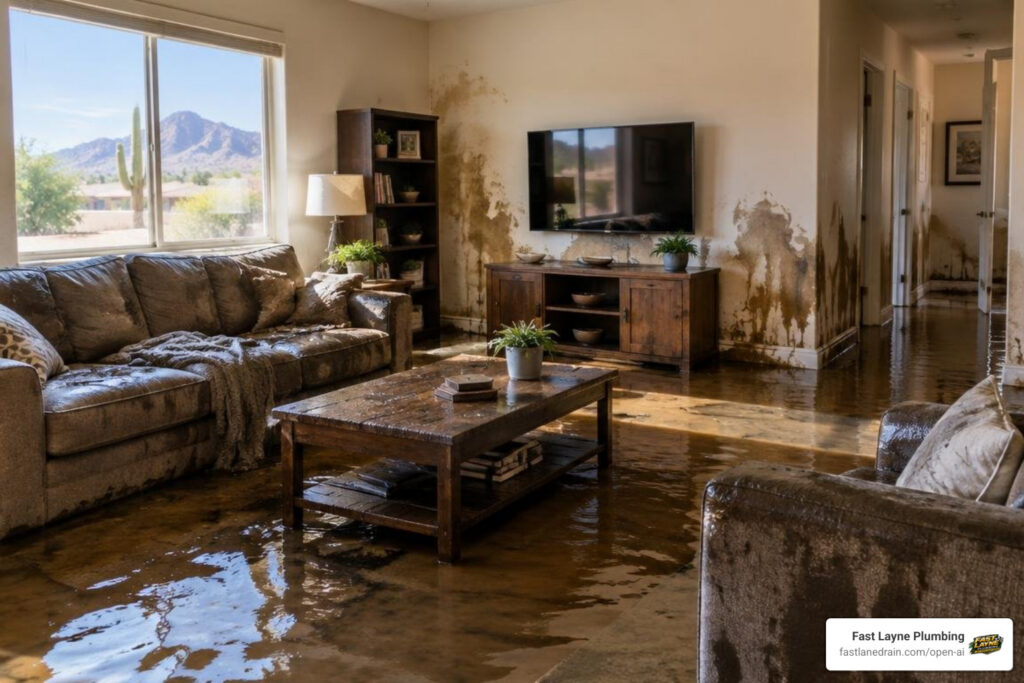
Phoenix Burst Pipe Repair and What Every Homeowner Must Know
Phoenix Burst Pipe Repair: What to Do First
For phoenix burst pipe repair, first shut off your main water valve. Stay out of standing water near outlets or electrical equipment. If it is safe, open a faucet to relieve pressure, take photos of the damage, and call a plumber. Do not wait for the desert heat to dry things out. Water trapped in walls and floors can still cause serious damage.
I’m David Layne, owner of Fast Layne Plumbing, with over 10 years of experience serving Phoenix-area homes and businesses. My team provides 24/7 emergency response, clear diagnostics, and line replacement for people who need phoenix burst pipe repair.
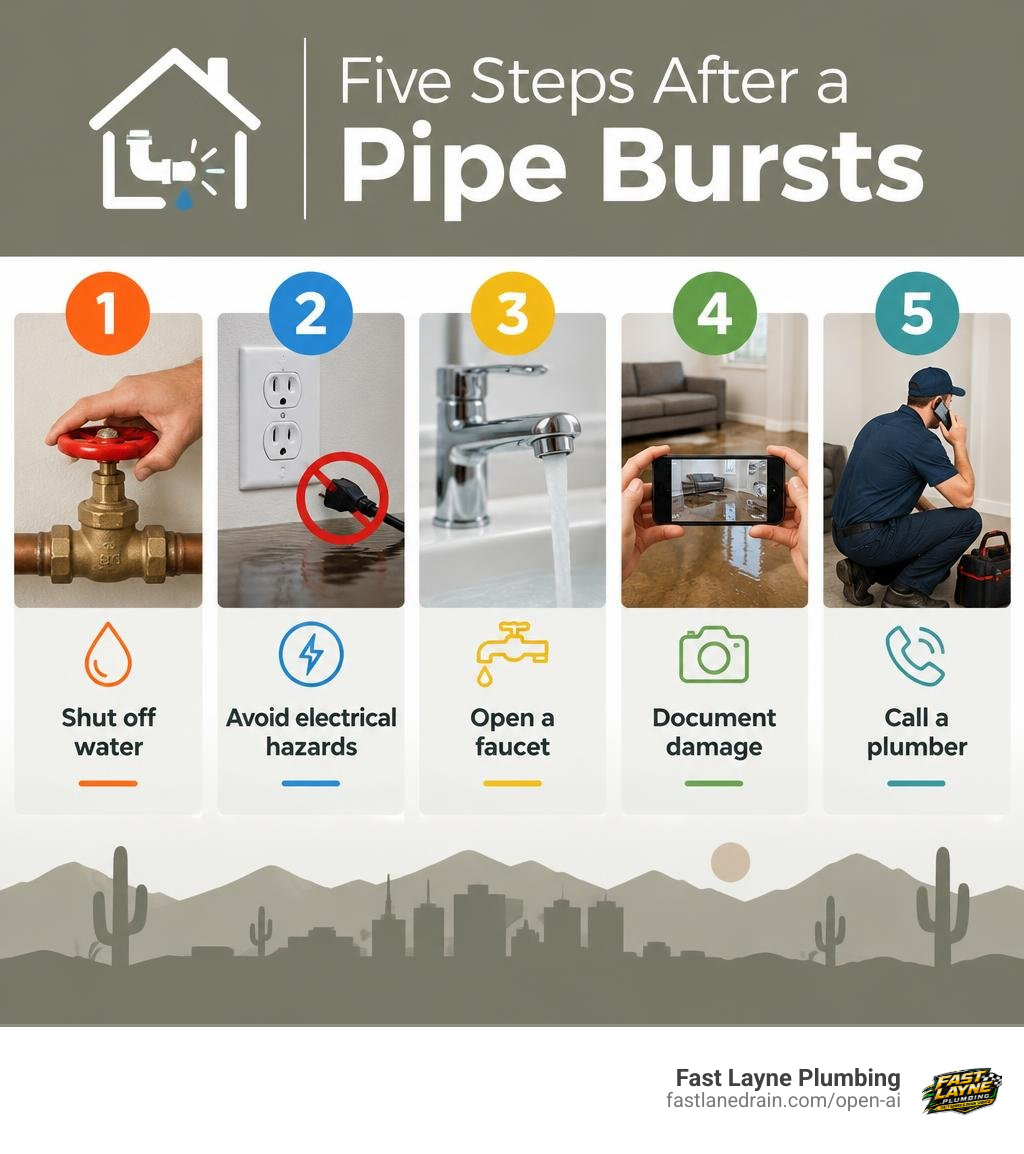
Emergency Steps for Phoenix Burst Pipe Repair
When gallons of water pour into your hallway, panic is a completely normal reaction. However, acting fast can save you thousands of dollars in structural framing, drywall, and flooring replacements. Here in the Valley, municipal water lines often push water at high velocity, meaning an uncontrolled break can flood a room in mere minutes.
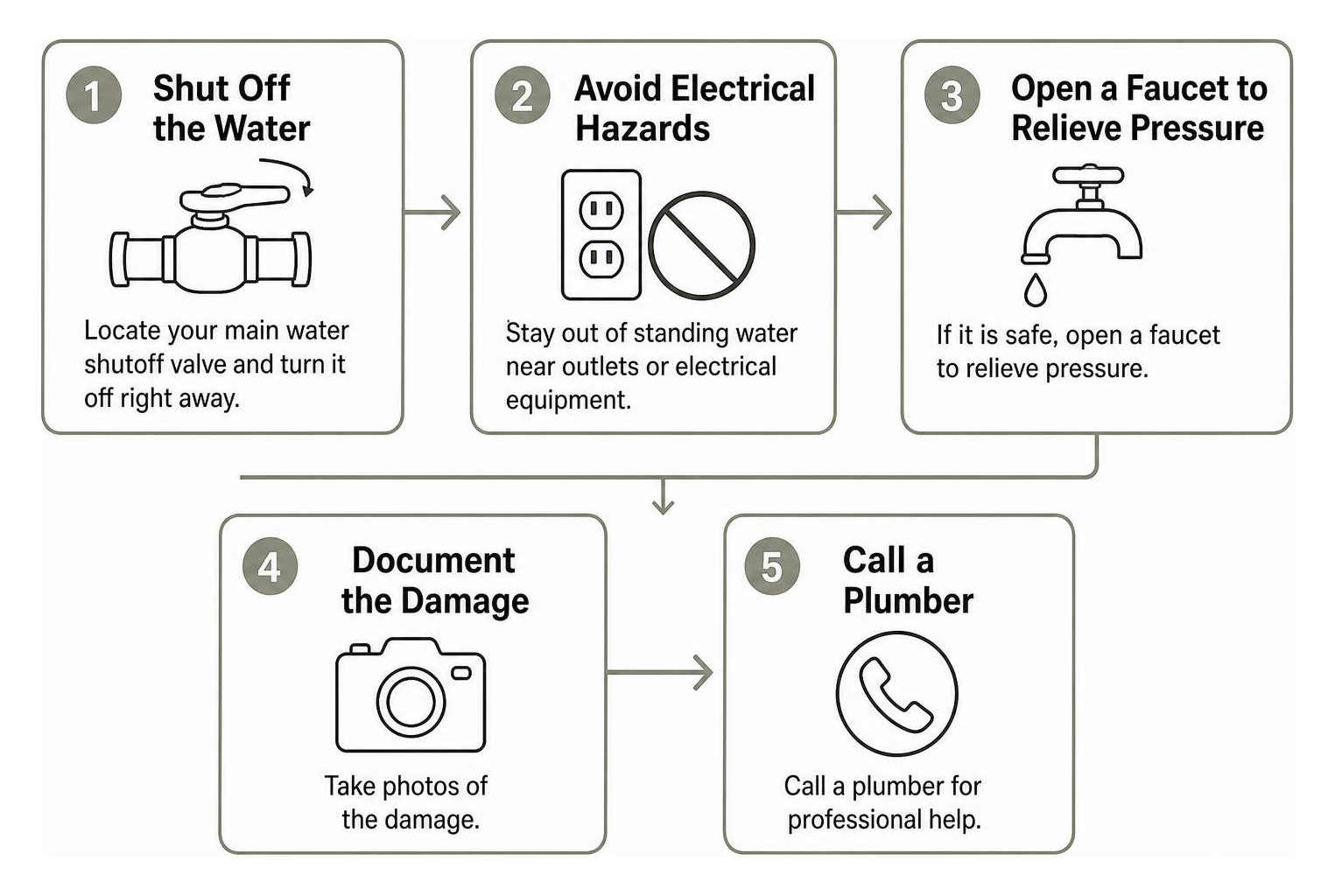
Shutting Off Water and Securing Your Property
Your primary priority is to cut off the water supply immediately.
- Locate Your Main Water Shutoff Valve: In most Phoenix properties, the main shutoff valve sits outside near your hose bib, along an exterior wall, or inside your garage. Newer homes typically feature a quarter-turn ball valve (turn the lever perpendicular to the pipe). Older homes often have brass gate valves with round wheel handles (turn clockwise until fully closed).
- Address Electrical Breaker Hazards: If standing water reaches electrical outlets, power strips, or major appliances, do not walk through it. Head directly to your main electrical panel and switch off the circuit breakers for the flooded areas before stepping into the water.
- Relieve Internal Water Pressure: Once the main valve is shut, walk outside and open the lowest exterior hose bib, then open an indoor cold-water faucet. This drains the residual water remaining in your plumbing lines away from the break point rather than letting it spill into your living room.
- Prevent Ceiling Collapses: If you notice a water bulge swelling in your drywall ceiling, place a bucket beneath it and carefully puncture the center with a screwdriver or broom handle. Releasing that trapped water in a controlled stream prevents the entire drywall panel from tearing free and crashing down.
- Call for City Cutoff if Necessary: If your private shutoff valve is frozen, stripped, or broken, call an emergency plumber immediately. You can also contact the Phoenix Water Services Department for an emergency municipal meter shutoff at your curb if the leak originates upstream of your home’s main valve.
Documenting Water Damage for Insurance Claims
Before you start tearing out wet carpets or mopping up puddles, pull out your smartphone and thoroughly document everything. Clear visual evidence makes the insurance claims process significantly smoother.
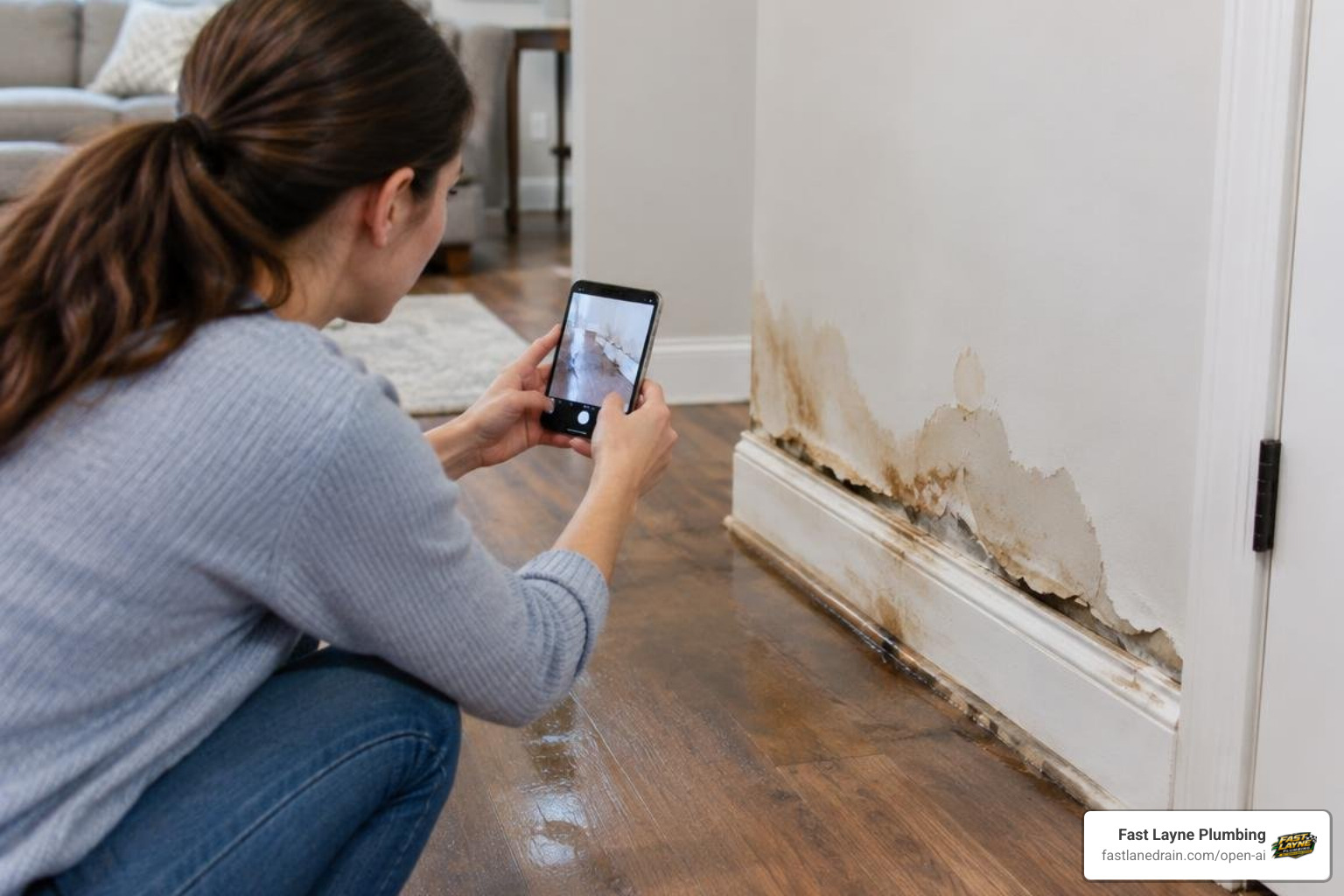
- Capture Wide and Close-Up Photos: Take wide shots showing the full scope of flooding across every affected room, paired with close-up shots of baseboards, furniture, cabinetry, and damaged personal items.
- Record Video Walkthroughs: Record a continuous video with sound explaining what happened, pointing out standing water, sagging drywall, and saturated flooring.
- Catalog Damaged Possessions: Create an itemized inventory list detailing ruined items, including brand names, model numbers, estimated age, and replacement values.
- Save Every Receipt: Keep copies of all invoices from emergency plumbing repairs, water mitigation services, equipment rentals, and temporary living arrangements. Arizona insurers require clear proof of out-of-pocket expenses incurred while mitigating further damage.
Key Causes of Burst Pipes in the Phoenix Metro Area
Many people assume burst pipes only happen in freezing northern climates. In reality, our desert environment creates unique stresses that lead to catastrophic failures. According to the American Society of Civil Engineers (ASCE) Infrastructure Report Card, Arizona faces an $8.6 billion shortfall in drinking water infrastructure funding over the next two decades. On top of that, the City of Phoenix experiences an average of 250 municipal water main breaks annually, with roughly 70% occurring in aging systems installed before 1990—many constructed with deteriorating cast iron or asbestos cement.
While winter freezes do happen—the Arizona Department of Environmental Quality notes a 30% increase in burst pipe incidents during colder winter snaps when temperatures dip below freezing—our primary culprits throughout the year stem from chemical, thermal, and geological factors. For winter precautions, reviewing the city’s guide on Preventing Damage to Household Plumbing from Freezing Temperatures is always smart practice.
Arizona Hard Water and Mineral Corrosion
Phoenix tap water is notoriously hard, carrying heavy concentrations of dissolved calcium and magnesium minerals. Over years of steady use, these minerals form scale along the interior walls of your pipes.
As scale builds up, it restricts internal water flow and creates friction. Minerals react chemically with metal piping—particularly copper and older galvanized steel—leading to galvanic corrosion and pitting. Over time, microscopic pits turn into pinhole leaks hidden inside walls or under concrete slabs. When water pressure spikes, these structurally compromised pipe walls burst wide open.
Extreme Desert Heat and Soil Shifting
The Valley’s intense climate works against your plumbing system in two specific ways:
- Attic Heat and Thermal Expansion: During Phoenix summers, unconditioned attic spaces regularly exceed 140°F. Uninsulated copper or plastic lines routed through attics absorb this punishing heat. The water inside expands, increasing pressure against pipe joints and pressure relief valves.
- Expansive Clay Soil and Monsoon Shifts: Much of the Valley rests on expansive clay soil. During dry spells, this soil shrinks and cracks. When heavy summer monsoon rains hit, the clay absorbs moisture and expands dramatically. This cyclic ground movement places immense bending stress on underground water lines, cracking aged pipes and breaking slab-embedded plumbing.

Solutions: Repairing vs. Replacing Damaged Lines
When we arrive at a home facing a ruptured line, our first step is pinpointing the exact failure point using non-invasive acoustic leak detection and thermal imaging. Once we locate the rupture, we determine whether a targeted spot repair or a more extensive line replacement makes the most sense for your home and budget.
| Consideration | Spot Pipe Repair | Whole-Home Repiping |
|---|---|---|
| Best Used For | Isolated physical breaks, accidental nail punctures, or localized joint failures. | Widespread corrosion, multiple pinhole leaks, aged galvanized steel, or pre-1990 polybutylene lines. |
| Cost Range | Lower upfront cost ($250 to $800+ depending on access). | Higher initial investment ($4,000 to $12,000+ depending on home size). |
| Installation Time | 1 to 4 hours. | 2 to 5 days. |
| Durability | Fixes the immediate leak but does not protect aging sections elsewhere. | Delivers a brand-new plumbing system backed by modern manufacturer warranties. |
| Code Compliance | Adheres to local City of Phoenix plumbing codes for localized repairs. | Upgrades entire system to meet modern Arizona Registrar of Contractors (ROC) standards. |
Spot Phoenix Burst Pipe Repair vs. Repiping
A spot repair involves cutting out the ruptured section of pipe and sweating in a new copper slip coupling or transitioning to flexible PEX tubing with approved fittings. Spot repairs are fast, cost-effective, and ideal when the surrounding pipe walls remain thick and healthy.
However, if your plumbing is original copper experiencing widespread pitting or older cast-iron drain lines corroding from within, patching one leak often shifts hydraulic pressure to the next weakest point. In these scenarios, repiping with durable, scale-resistant PEX-a piping offers long-term peace of mind and prevents repetitive water damage emergencies.
Preventing Future Pipe Bursts and Leaks
You do not have to wait for an emergency to protect your home. A few proactive plumbing upgrades can keep your lines running safely:
- Install a Pressure Reducing Valve (PRV): City water mains often deliver water at 80 to 100+ PSI to ensure adequate pressure across vast desert grids. Residential fixtures and pipes operate best between 50 and 70 PSI. A calibrated PRV protects your indoor lines from municipal pressure spikes.
- Insulate Exposed and Attic Piping: Wrap all hot and cold lines running through your attic or exterior walls with closed-cell foam insulation to shield them from extreme desert temperature swings.
- Add a Water Softening System: Removing calcium and magnesium before water enters your plumbing prevents scale buildup and stops galvanic corrosion in its tracks.
- Install Smart Leak Detectors: Automatic shutoff systems monitor real-time water flow. If a pipe ruptures while you are at work or on vacation, the sensor detects the abnormal flow and cuts the water off automatically.
Financial and Professional Considerations
A plumbing emergency brings immediate financial questions. Knowing what to expect regarding repair bills, water mitigation, and insurance coverage helps you navigate the recovery process with confidence.
Typical Phoenix Burst Pipe Repair Costs and Insurance Claims
The total cost of dealing with a burst pipe falls into two distinct categories: plumbing repairs and structural water mitigation.
- Plumbing Repairs: Emergency diagnostic fees, after-hours dispatch, and pipe repairs typically range from $250 to $1,500 depending on whether the pipe sits exposed in an open garage or buried beneath a concrete slab foundation.
- Restoration and Mitigation: Water extraction, structural drying, drywall removal, and mold treatment often range between $2,000 and $10,000+.
The Insurance Information Institute notes that water damage and freezing account for roughly 20% of all homeowners insurance claims nationwide, with an average claim severity hovering around $11,000.
In Arizona, standard homeowners insurance policies generally cover “sudden and accidental” water damage caused by a burst pipe, including structural drying and repairs to damaged drywall, flooring, and cabinetry. However, policies rarely cover the direct cost of fixing the plumbing pipe itself if the failure resulted from long-term wear, gradual corrosion, or poor maintenance. Always check your specific policy deductible and limits when filing a claim.
Selecting a Licensed Arizona Plumber
When water is actively damaging your home, choosing the right professional matters. Never hire an unlicensed handyman for major water line repairs.
- Verify ROC Licensing: Ensure your plumbing contractor holds an active license in good standing with the Arizona Registrar of Contractors (ROC). Licensed contractors carry required liability insurance and surety bonds.
- Look for 24/7 Availability: Plumbing emergencies do not wait for business hours. Work with a team that provides round-the-clock emergency response.
- Demand Upfront Flat-Rate Pricing: A trustworthy plumbing company diagnoses the issue and provides a clear, flat-rate quote before turning a wrench, so you never encounter surprise hourly fees.
- Ask About Workmanship Warranties: Reputable plumbers stand behind their work with clear guarantees on both parts and labor.
Frequently Asked Questions About Burst Pipes in Phoenix
How quickly does mold develop after a pipe bursts in Phoenix?
Mold spores can begin germinating within 24 to 48 hours of water exposure. While our outdoor desert air is dry, water trapped behind baseboards, beneath carpet pads, or inside insulated drywall creates an enclosed, humid microclimate. When combined with warm indoor temperatures, this trapped moisture creates an ideal breeding ground for microbial growth. Professional water extraction and high-capacity dehumidifiers are critical to drying the structure completely before mold can take hold.
Who is responsible for repairing a burst pipe near the street?
Responsibility is divided cleanly at your water meter box:
- The City of Phoenix owns and maintains the municipal water main, the service line running to the meter, and the water meter itself.
- The Homeowner owns and is financially responsible for the entire private water service line running from the meter outlet to the home, including all interior plumbing, pressure regulators, and outdoor irrigation lines.
If a leak occurs between the street and your meter, notify the city. If it occurs between the meter and your home, you need a private plumbing contractor.
What water pressure is safe for Phoenix residential plumbing?
Safe residential water pressure ranges between 40 and 80 PSI, with 50 to 65 PSI considered the optimal sweet spot. Municipal delivery lines in certain parts of Phoenix frequently exceed 85 to 100 PSI to maintain distribution across the Valley. Consistently high pressure stresses your pipe joints, causes noisy water hammer, and dramatically increases the likelihood of a sudden burst. You can test your home’s pressure using an inexpensive gauge attached to an outdoor hose bib.
Conclusion
A burst pipe is one of the most stressful emergencies a homeowner can experience, but quick action makes all the difference. Shutting off your main water valve, cutting power to affected rooms, and contacting a licensed local professional can turn a potential disaster into a manageable repair.
When you need fast, dependable service, our team at Fast Layne Plumbing is ready to help. We provide 24/7 emergency response across the Phoenix metropolitan area, complete with upfront flat-rate pricing, advanced diagnostics, and a 100% satisfaction guarantee. Contact us today for reliable emergency burst pipe repair and plumbing solutions to protect your home and restore your peace of mind.