How Much Does It Cost to Clear a Root-Infested Sewer Line in Phoenix?
For most Phoenix homeowners, clearing tree roots from a sewer line typically costs somewhere between a few hundred dollars for a straightforward mechanical clearing and several hundred more when hydro jetting or camera inspection is part of the job. Where your situation falls in that range depends on how far the roots have spread, what method the plumber uses, and what condition your pipe is in once the line is cleared.
That is a wide range, and it is wide for a reason. A root problem that just started behaving differently last week is a different job than one that has been building for years inside an older clay pipe. This article is designed to help you understand what drives those costs in Phoenix specifically, what each service method actually does, and what to ask before you agree to any quote.
If you want to talk through your situation with a local plumber who will give you a straight answer, call Fast Layne Plumbing at 480.485.4659.
Why Cost Ranges for Root Clearing Vary So Much
There is no single price for clearing roots from a sewer line because no two root problems are the same. The cost depends on several things that a plumber can only evaluate once they look at your specific line. Here are the factors that matter most in Phoenix:
- How severe the root intrusion is. A few small roots that have grown through a joint in the pipe are a different scope of work than a dense root mass that has filled a 10-foot section of the line.
- Which clearing method is needed. Mechanical snaking is the most common starting point and generally costs less. Hydro jetting uses high-pressure water to clear more stubborn buildup and costs more. Some jobs need both.
- Whether a camera inspection is included. A sewer camera inspection lets the plumber see what is actually happening inside the pipe. This is often a separate line item, and it is one of the most valuable parts of the service because it shows whether the pipe itself is damaged.
- The condition and material of your pipe. Older clay and cast-iron pipes, which are common in many established Phoenix neighborhoods, are more vulnerable to root intrusion than PVC. If the pipe has cracks, separations, or significant deterioration, the clearing itself may be straightforward, but the plumber may recommend additional repair work.
- Access and depth. Most residential sewer lines in Phoenix are relatively shallow compared to other parts of the country, but access points, cleanout locations, and line routing still affect the job.
The honest reality is that a plumber cannot give you an accurate price without understanding your specific situation. A company that quotes a hard number before looking at the line may not be giving you the full picture.
The Three Main Methods and What Each One Involves
Mechanical Snaking
Mechanical snaking, sometimes called cabling or augering, is the most common first step for clearing roots. A motorized drain snake feeds a flexible cable with a cutting head into the sewer line. The cutting head breaks through the root mass and restores flow.
Snaking works well when the root intrusion is moderate and the pipe itself is still in reasonable shape. It is generally the least expensive clearing method. However, snaking cuts through the roots without removing all of the debris from the pipe walls, which means roots can regrow over time, especially if the pipe has cracks or open joints where roots entered in the first place.
Hydro Jetting
Hydro jetting uses a specialized nozzle that sends high-pressure water through the sewer line. It clears roots, grease, scale, and buildup more thoroughly than snaking because it scours the inside of the pipe rather than just cutting a path through the blockage.
Hydro jetting typically costs more than snaking, but it leaves the pipe in better condition and may extend the time before roots become a problem again. It is not always the right choice. If the pipe is already fragile or heavily deteriorated, the pressure from hydro jetting could cause additional damage. A good plumber will evaluate the pipe condition, often with a camera inspection, before recommending hydro jetting.
Camera Inspection
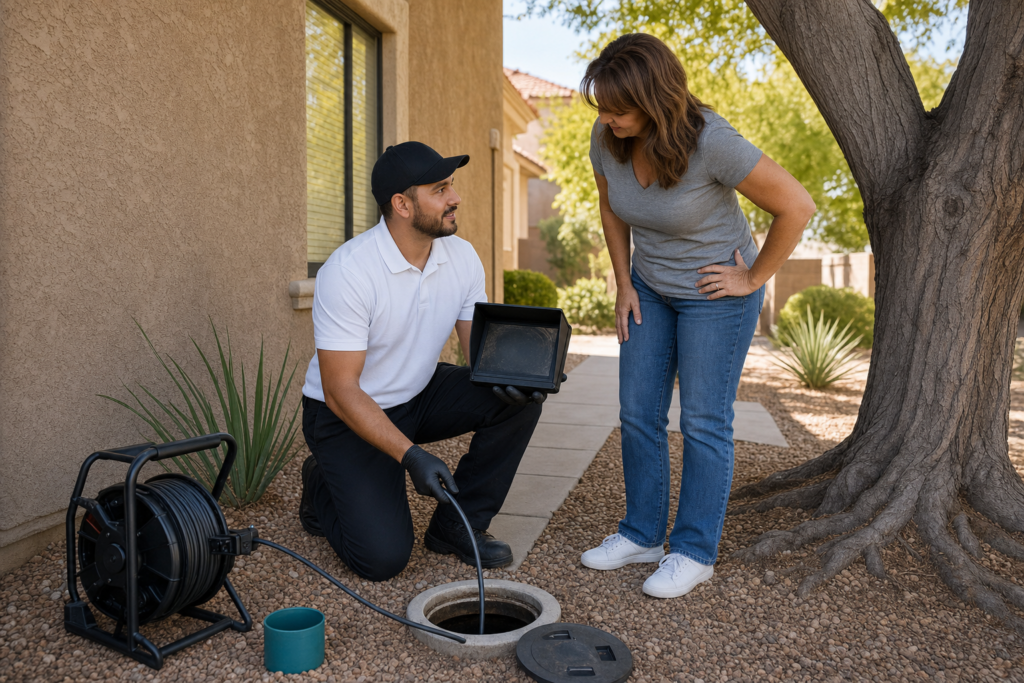
A sewer camera inspection involves sending a small waterproof camera through the line to see the inside of the pipe in real time. This is not a clearing method. It is a diagnostic tool, and it is one of the most important parts of dealing with root intrusion.
A camera inspection can reveal where and how roots are entering the pipe, whether the pipe has cracks, separations, or bellying, and whether the pipe material and overall condition support a long-term clearing strategy or whether repair is worth discussing. Many plumbers offer camera inspection as a standalone service or as an add-on to a clearing job. It is often listed as a separate cost.
At Fast Layne Plumbing, we use camera inspection to help homeowners understand exactly what is happening in their sewer line. We believe you deserve to see what we see, and we explain what the inspection shows in plain English so you can make an informed decision about what to do next.
How to Tell Whether Your Situation Is Closer to the Low End or the High End
Instead of just giving you a range and leaving you to guess, here is a practical way to think about where your job might fall.
Your job may be on the lower end of the cost range if:
- This is the first time you have had a root-related backup or slow drain.
- Your home has PVC sewer pipe, which is less likely to have the kinds of cracks and joint separations that invite heavy root growth.
- The blockage is accessible through a cleanout near the house.
- Mechanical snaking is enough to restore flow.
- The plumber does not find significant pipe damage during the clearing.
Your job may be on the higher end if:
- You have had root problems before, especially if they keep coming back in the same area.
- Your home has older clay or cast-iron sewer pipe, which is more common in Phoenix neighborhoods built in the 1950s through the 1980s.
- The root intrusion is extensive and affects a long section of the line.
- Hydro jetting is needed to clear the line properly.
- A camera inspection is added to evaluate the pipe condition.
- The inspection reveals pipe damage that may require follow-up repair.
This is not a formula. It is a way to start thinking about your situation before you call. A licensed plumber can evaluate your line and give you a clear picture of what the job actually involves.
Phoenix-Specific Factors That Can Affect Your Cost
Root intrusion in Phoenix has some local characteristics that generic plumbing content usually skips over. Understanding these can help you have a better conversation with your plumber.
Older pipe materials in established neighborhoods. Many homes in Phoenix built before the 1980s have clay or cast-iron sewer lines. These materials are more susceptible to root intrusion because they develop cracks and joint separations over time. If your home is in an older, established neighborhood, there is a higher chance that your sewer pipe is one of these materials.
Mature trees near sewer lines. Phoenix has plenty of mature landscaping, including trees with aggressive root systems that seek out moisture. If you have large trees near the path of your sewer line, the roots have likely been growing toward that pipe for years. The longer roots have been inside the line, the more involved the clearing may be.
Caliche soil. Caliche is a dense, calcium-rich soil layer common across the Phoenix Valley. It matters for root clearing because if the clearing reveals pipe damage severe enough to require excavation and repair, digging through caliche adds labor, time, and cost. Caliche does not usually affect the clearing itself, but it is worth understanding in case the job scope expands beyond clearing.
Shallow sewer lines. Residential sewer lines in Phoenix tend to be shallower than in colder climates. This can make access easier in some situations, but it also means tree roots do not have to travel far to reach the pipe.
When Clearing Is Not Enough
Clearing a root-infested sewer line restores flow. It does not repair the pipe. When a pipe has cracks, separated joints, or sections where root growth has compromised the structure, those roots will return. The real question is how soon that happens.
This is why camera inspection matters. What the camera shows after clearing determines whether the pipe can be maintained with periodic clearing or whether a more permanent solution is worth considering.
Pipe Relining
Pipe relining, sometimes called cured-in-place pipe lining or CIPP, is a repair method where a flexible liner coated in resin is inserted into the existing pipe and cured in place. It creates a new, smooth pipe inside the old one, sealing cracks and joints where roots were entering.
Relining is a middle-ground option between periodic clearing and full replacement. It typically costs more than clearing but significantly less than excavating and replacing the entire line. It is not appropriate for every situation. If the pipe has collapsed, is severely misaligned, or has large sections missing, relining may not be possible.
Sewer Line Replacement
Full sewer line replacement is the most involved and most expensive option. It is recommended when the pipe is beyond repair — collapsed sections, extensive deterioration, or damage that cannot be addressed with relining.
In some cases, trenchless sewer replacement methods such as pipe bursting can reduce the disruption and excavation compared to traditional open-trench replacement. The right approach depends on the pipe condition, location, depth, and what the camera inspection reveals.
At Fast Layne Plumbing, we do not recommend repair or replacement unless the inspection shows that clearing alone will not hold up. We explain what we find, show you the camera footage when possible, and walk you through the options so you can make a decision that makes sense for your home and your budget.
What to Ask Before You Accept a Quote
If you are getting quotes for root clearing in Phoenix, here are questions worth asking. They will help you understand what you are paying for and whether the plumber is being straightforward with you.
- Does the quote include a camera inspection? Some quotes cover only the clearing. A camera inspection may be listed separately. Knowing this upfront helps you compare quotes accurately and understand whether you will actually see the condition of your pipe.
- What method will be used to clear the line? Ask whether the plumber plans to use mechanical snaking, hydro jetting, or both. Understanding the method helps you understand the cost.
- What happens if the clearing reveals pipe damage? A good plumber will explain in advance how they handle situations where the scope changes. Ask whether they will stop and discuss options with you before proceeding with any additional work.
- Is the price upfront, or could it change during the job? Upfront pricing means you know what the clearing will cost before the work begins. If the quote is an estimate that could increase, ask what would cause the price to go up.
- Will the plumber explain what they find in the line? You should not have to guess what is happening with your own sewer pipe. Ask whether the plumber will walk you through the findings and help you understand your options.
These are not confrontational questions. A trustworthy plumber will welcome them because they show you are taking your home seriously.
How Fast Layne Plumbing Handles Root-Infested Sewer Lines
Fast Layne Plumbing is a family-owned plumbing company serving Phoenix, AZ. When you call us about a root problem, here is what you can expect:
- We answer the phone and schedule your service promptly.
- We show up when we say we will.
- We evaluate your sewer line and explain what we find in plain English — no jargon, no pressure.
- We provide upfront pricing before we start any work.
- We use professional equipment including motorized drain snakes, hydro jetting, and sewer cameras to diagnose and clear the problem properly.
- We do not upsell services you do not need. If clearing is enough, we say so. If the camera shows something that needs attention, we explain why and give you clear options.
- We treat your home with respect and clean up after our work.
We know that many homeowners calling about sewer problems have already dealt with a plumber who did not show up, a quote that felt too high, or a diagnosis they were not sure they could trust. We built Fast Layne Plumbing to be the kind of company we would want to call if it were our own home.
Call Fast Layne Plumbing at 480.485.4659 to schedule service or talk through your situation with a local Phoenix plumber.
Frequently Asked Questions
How do roots get into a sewer line?
Tree roots naturally grow toward sources of moisture. Sewer pipes carry water continuously, and if a pipe has cracks, loose joints, or deterioration, roots can enter through those openings. From there, roots keep expanding and can gradually narrow or fully obstruct the line. Clay and cast-iron pipes tend to be more vulnerable than modern PVC because they are more prone to developing the kinds of gaps and fractures that roots exploit.
Will clearing roots fix the problem permanently?
Clearing restores flow, but it does not repair the pipe. If the pipe has openings where roots entered, they can grow back over time. How quickly depends on the pipe condition, the type of trees nearby, and how extensive the intrusion was. A camera inspection after clearing can help determine whether the pipe needs repair to prevent recurrence or whether periodic clearing is a reasonable maintenance strategy.
What is the difference between snaking and hydro jetting for roots?
Mechanical snaking uses a rotating cable with a cutting head to break through the root mass and restore flow. Hydro jetting directs high-pressure water through the pipe, flushing out roots, mineral scale, and accumulated debris from the pipe walls more completely than snaking alone. Hydro jetting generally provides a more thorough result, but it is not always the right choice — particularly if the pipe is fragile. A licensed plumber can evaluate which method is right for your situation.
Does homeowners insurance cover root damage to sewer lines?
Coverage for root-related sewer line damage varies by policy and insurer. Some policies exclude sewer line damage or tree root intrusion, while others may offer coverage or optional riders. The best step is to check with your insurance provider directly and ask about your specific policy before assuming coverage applies.
How do I know if I have roots in my sewer line?
Common signs that may indicate root intrusion include recurring drain backups, slow drains throughout the house, gurgling sounds from drains or toilets, and sewer odors near cleanouts or drains. Because those same symptoms can point to other plumbing issues, a camera inspection is the most dependable way to determine whether roots are actually the cause. A licensed plumber can evaluate your line and give you a clear answer.
How often might root clearing need to be repeated?
That depends on the pipe condition and how aggressively the roots are growing. Some homeowners with older pipes and mature trees nearby may need clearing every one to three years as a maintenance measure. Others may find that a single clearing combined with pipe repair or relining resolves the issue for much longer. Your plumber can help you understand what to expect based on what the camera inspection reveals.