Cost to Clear Tree Roots from Sewer Lines in Phoenix: What Homeowners Actually Pay
Clearing tree roots from a sewer line in Phoenix typically costs between $150 and $950, depending on the method used and how far roots have spread inside the pipe. Most Phoenix homeowners dealing with a moderate root problem pay somewhere in the range of $400 to $900 total once you factor in a camera inspection and the clearing itself.
That range is wide because the final number depends on several specific things: how deep the roots have grown, what kind of pipe you have, which clearing method the situation calls for, and whether the roots have already cracked or collapsed part of the line. This article breaks down each of those factors so you can understand what drives the cost, what the service actually involves, and how to evaluate any quote you receive.
What Determines the Cost of Root Clearing in Phoenix
There is no single standard price for clearing tree roots from a sewer line. The cost moves based on a handful of factors that are specific to your home and your line. Understanding these helps you know whether a quote is reasonable before you agree to anything.
- Severity of the root intrusion. A minor root mass near a single joint is a different job than roots that have filled several feet of pipe. More extensive growth takes longer to clear and may require a more aggressive method.
- Pipe material. Older Phoenix homes — especially those built before the mid-1980s — often have clay or cast iron sewer lines. These materials are more vulnerable to root intrusion and sometimes require more careful handling during clearing to avoid further damage.
- Line depth and length. A shallow sewer line with a nearby cleanout access point is easier and faster to service. A deeper line, a longer run to the city main, or a cleanout that is difficult to access can add time and cost.
- Clearing method required. Mechanical snaking, hydro jetting, and chemical treatment all serve different purposes and come at different price points. The right method depends on what the roots have done to your line.
- Whether the pipe is damaged. If roots have cracked, shifted, or partially collapsed the pipe, clearing alone may not resolve the problem. In those cases, the plumber may recommend repair or replacement — a separate conversation with a different cost range.
Cost by Clearing Method
Phoenix plumbers typically use one or more of the following methods to address tree roots in a sewer line. Each serves a different purpose, and the right choice depends on what the inspection reveals.
Mechanical Snaking (Rooter Service): $150–$500
A motorized drain snake uses a rotating cutting head to break through roots and restore flow in the pipe. This is the most common first step for root blockages. It is effective for clearing enough of the root mass to get the line flowing again, but it does not remove all root material from inside the pipe. Roots cut by a snake typically grow back over time, which means snaking is often a maintenance solution rather than a permanent one.
Snaking works well for minor to moderate root intrusion where the pipe itself is still in good condition. When root growth is heavier or a line continues backing up after snaking, hydro jetting is often the next recommendation.
Hydro Jetting: $350–$950
Hydro jetting sends a pressurized water stream through the pipe to cut through root material, clear out debris, and strip away buildup that has accumulated along the interior walls. Unlike mechanical snaking, which opens a path through the blockage, hydro jetting cleans the entire inner surface of the line from wall to wall.
Hydro jetting is typically recommended when roots are more extensive, when the line has heavy grease or mineral buildup in addition to roots, or when snaking has already been done and the problem returned quickly. One important note: hydro jetting is not always safe for older clay or cast iron pipes that are already weakened or cracked. A reputable plumber will usually recommend a camera inspection before jetting an older line to make sure the pipe can handle the pressure.
Chemical Root Treatment: $50–$150
Chemical root treatments use copper sulfate or foaming root-killing products to slow root regrowth inside the pipe after clearing. These products are not a standalone solution — they do not clear an active blockage. They work as a follow-up maintenance step after mechanical or hydro jetting service to help extend the time between clearings.
Chemical treatment is most useful for homeowners who know they have an ongoing root issue and want to reduce how often they need professional clearing. Your plumber can advise on whether this makes sense for your specific line and what product is appropriate.
Camera Inspection: Why It Usually Comes First ($150–$400)
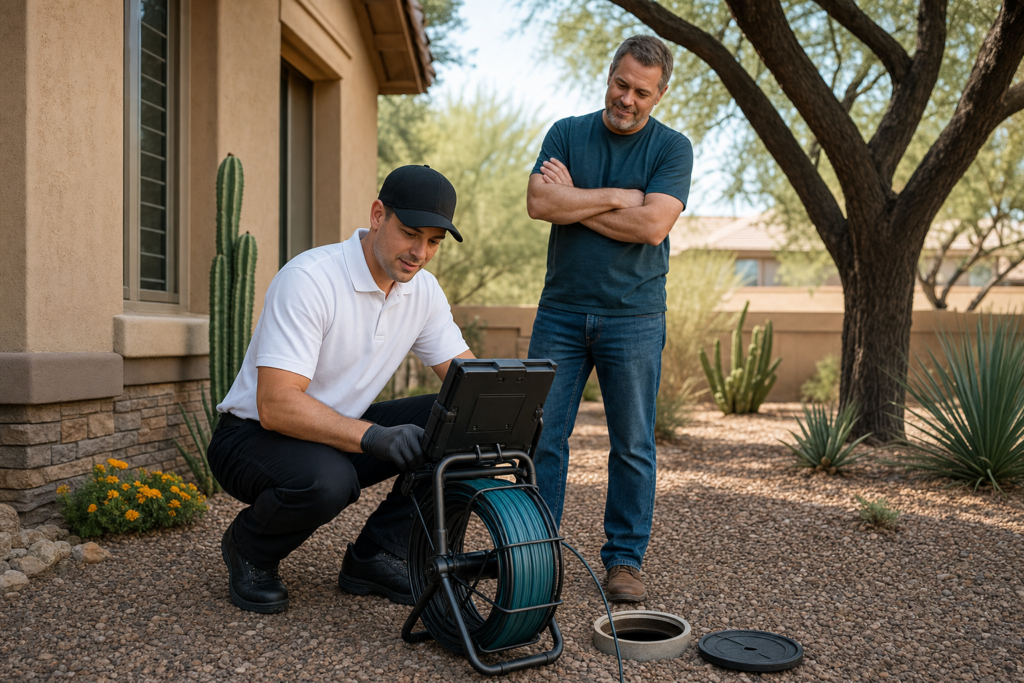
Before clearing roots, most experienced plumbers will recommend running a small camera through the sewer line. A camera inspection shows exactly where the roots are entering, how far they have spread, and — critically — whether the pipe itself is still intact.
This matters because the answer to that question changes everything about what you need and what it will cost. If the pipe is structurally sound, clearing the roots and setting up a maintenance schedule may be all that is required. If the camera shows cracks, offsets, or partial collapse, clearing alone will not solve the problem, and the plumber should explain your repair options clearly before any additional work begins.
Many plumbing companies apply the camera inspection fee toward the cost of the clearing service if you proceed with the work. This is a common industry practice, though it is not universal — it is worth asking about when you call.
What a Typical Phoenix Service Call Actually Costs
Individual method costs are useful, but what most homeowners really want to know is what they will actually pay when the plumber leaves. Here is what that tends to look like in Phoenix, based on the severity of the root problem.
Minor Root Intrusion
Roots have entered at one or two joints but have not filled the line. The pipe is still in good condition. A camera inspection plus mechanical snaking typically runs $300 to $700 total. This is the most common scenario for homeowners catching the problem early.
Moderate Root Intrusion
Roots have spread further into the line, possibly with grease or mineral buildup compounding the blockage. A camera inspection plus hydro jetting typically runs $500 to $1,200 total. This is common in older Phoenix neighborhoods where clay pipes and mature trees have been interacting for decades.
Severe or Recurring Root Intrusion
Roots keep coming back quickly after clearing, or the camera inspection reveals that the pipe is cracked, offset, or partially collapsed. In this case, clearing may still be performed to restore flow temporarily, but the plumber should discuss repair or replacement options. How much you pay overall will depend on what the inspection uncovers and which next steps are warranted.
A good plumber will review the camera findings with you in plain language, lay out your options clearly, and confirm pricing before any additional work gets started. If a plumber is not prepared to do that, seeking a second opinion is a reasonable move.
When Clearing Is Not Enough: Root Damage vs. Root Intrusion
This is the most important distinction for homeowners to understand, and it is one that most generic plumbing articles do not explain well.
Root intrusion means roots have entered the pipe through joints, small cracks, or connection points, but the pipe is still structurally sound. Clearing the roots restores flow, and periodic maintenance keeps the line working. This is the more common and less expensive situation.
Root damage means roots have cracked, broken, shifted, or collapsed sections of the pipe. Clearing the roots may restore flow temporarily, but the damage remains. Roots will return faster through the larger openings, and the pipe itself may eventually fail. When the pipe has reached this condition, repair or replacement becomes the logical path forward.
Trenchless Pipe Lining
With trenchless lining, a resin-saturated liner is fed into the existing pipe and then hardened in place, forming a new pipe within the original one. Because the process works from the inside out, it typically eliminates the need for large-scale excavation. In the Phoenix area, pricing generally runs in the range of $80 to $250 or more per linear foot, depending on pipe diameter, depth, and access. For a typical residential sewer line, the total may range from $4,000 to $8,000 or more depending on the scope of work.
Pipe Bursting and Full Replacement
When the existing pipe is too damaged for lining, pipe bursting pulls a new pipe through the old one while breaking the old pipe apart. Full excavation and replacement is sometimes necessary for severely collapsed or misaligned sections. These options typically range from $3,000 to $15,000 or more depending on the length of the line, depth, access, and site conditions.
These are repair costs, not clearing costs. A thorough camera inspection is the only reliable way to determine whether your situation is a clearing job or a repair job. Any plumber who recommends major repair work without first running a camera should raise a question in your mind.
Why Tree Roots Are a Particular Problem in Phoenix
Phoenix has a combination of conditions that make tree root intrusion more common and sometimes more aggressive than in other parts of the country.
- Desert trees seek water aggressively. Species common throughout the Valley — mesquite, eucalyptus, ficus, citrus, and some varieties of ash and mulberry — send roots deep and wide in search of moisture. A sewer line with even a minor leak or joint gap is a reliable water source that roots will find.
- Older neighborhoods have vulnerable pipe materials. Many Phoenix homes built from the 1950s through the early 1980s were plumbed with clay or cast iron sewer lines. These materials degrade over time, and the joints between sections are particularly susceptible to root penetration. Neighborhoods like Arcadia, Encanto, and parts of central and north Phoenix have a high concentration of these older pipe materials.
- Hard water and mineral buildup compound the problem. Phoenix’s hard water can leave mineral deposits inside pipes that catch root fibers, grease, and debris, accelerating blockages once roots gain a foothold.
- Soil and temperature cycles stress pipes. The Phoenix soil profile and the extreme temperature swings between summer and winter can cause older pipes to shift slightly over time, opening joints and creating new entry points for roots.
None of these factors mean your home is guaranteed to have a root problem. But if you live in an older Phoenix neighborhood with mature trees and you have been dealing with recurring drain issues, root intrusion is a realistic possibility worth investigating.
Warning Signs That Roots May Be in Your Sewer Line
Tree root intrusion usually develops gradually. Here are the signs Phoenix homeowners most commonly notice:
- Slow drains in multiple fixtures throughout the house, not just one sink or tub
- Gurgling sounds from toilets or floor drains, especially after flushing or running water elsewhere
- Recurring backups that return within weeks or months after the last clearing
- Sewage odors near the yard, foundation, or cleanout access point
- An unusually green, lush, or soft patch of grass or soil in the yard above the sewer line path
- Backups that seem worse during or after rainy periods, when soil moisture changes and root activity increases
Any one of these could indicate root intrusion, but other plumbing issues can cause similar symptoms. A camera inspection is the most reliable way to confirm whether roots are the actual cause.
How Often Do Phoenix Homeowners Need to Clear Roots?
There is no universal schedule. How quickly roots return depends on the tree species, how close the trees are to the line, the pipe material, the condition of the joints, and how thoroughly the roots were cleared the first time.
As a general range, homeowners with a known root history often need professional clearing every one to three years. Some lines with aggressive root conditions may need attention more frequently. Others, especially after hydro jetting followed by chemical maintenance treatment, may go longer between service calls.
An honest plumber will tell you what to expect based on what the camera showed in your specific line, rather than giving you a one-size-fits-all answer. If a plumber says the problem is permanently solved after a single clearing, that is worth questioning — root intrusion is typically a recurring maintenance issue unless the pipe is repaired or replaced.
Does Homeowners Insurance Cover Tree Roots in Sewer Lines?
In most cases, standard homeowners insurance does not cover sewer line maintenance, root clearing, or damage caused by root intrusion. Sewer line problems are generally considered a maintenance responsibility of the homeowner.
It is also worth understanding that in Phoenix, homeowners are typically responsible for the sewer lateral — the section of pipe that runs from the home to the city’s main sewer line. If the blockage or damage is in your lateral, it is your responsibility regardless of what caused it.
The City of Phoenix has partnered with American Water Resources to offer an optional sewer line protection program that covers certain sewer line repairs for a monthly fee. Information about this program is available on the City of Phoenix website. Whether that program makes sense for your situation depends on your pipe’s age, material, and condition.
For specific questions about your coverage, check your homeowners insurance policy directly or contact your insurer. This article is not insurance advice.
Questions to Ask Before You Hire a Plumber for Root Clearing
Whether you call Fast Layne Plumbing or another licensed plumber, these questions help you evaluate any quote you receive and make sure you understand what you are paying for:
- Will you run a camera inspection first? A camera inspection before clearing gives both you and the plumber a clear picture of what is actually happening in the line. If a plumber recommends a service method without first looking inside the pipe, ask why.
- Is the camera inspection included in the clearing cost, or is it separate? This varies by company. Knowing upfront avoids a surprise on the bill.
- What clearing method do you recommend, and why? A plumber who can explain the reasoning behind their recommendation in plain language is giving you a good sign.
- If you find damage during the inspection, what are my options? You want to know before the work starts whether repair conversations will happen, and whether you will have the chance to review options and pricing before committing.
- Is this a flat-rate quote or hourly? Flat-rate pricing gives you more certainty. If the quote is hourly, ask for an estimated time range.
- What does the quote include, and what might add to the cost? The clearest quotes spell out exactly what is covered. If a quote feels vague, ask for specifics.
- How soon are the roots likely to come back? Any honest plumber will tell you that root clearing is typically a maintenance solution, not a permanent fix, unless the pipe is repaired.
How Fast Layne Plumbing Handles Root Intrusion in Phoenix
At Fast Layne Plumbing, our approach to tree root problems starts with understanding what is actually going on in your line before recommending any service.
That means we typically begin with a camera inspection so we can see the root growth, evaluate the pipe condition, and show you what we find. We explain the situation in plain English — what the roots have done, whether the pipe is still in good shape, and what your realistic options are. From there, we give you firm pricing before a single tool goes in the ground, so there are no surprises when the job is finished.
Our recommendations are based on what your line actually needs. When mechanical snaking is the right call, that is what we will say. When hydro jetting makes more sense given what the camera showed, we will walk you through the reasoning. And when the inspection turns up damage that clearing alone cannot address, we will lay out the repair options in straightforward terms so you can decide what to do next with full information.
We are a family-owned company serving Phoenix homeowners, and we treat every home the way we would treat our own. That means showing up when we say we will, doing the work right, cleaning up after ourselves, and making sure you feel confident about what was done and why.
Call Fast Layne Plumbing at 480.485.4659 to schedule a camera inspection or sewer line service. We will take a look, tell you what we find, and give you clear options with honest pricing.
Frequently Asked Questions
How much does it cost to remove tree roots from a sewer line in Phoenix?
Most Phoenix homeowners pay between $150 and $950 for root clearing, depending on the method used. Mechanical snaking typically costs $150 to $500. Hydro jetting typically costs $350 to $950. When you include a camera inspection, the total for a complete service call often falls in the $300 to $1,200 range depending on the severity of the root intrusion.
Is snaking or hydro jetting better for tree roots?
It depends on how extensive the roots are and what condition the pipe is in. Snaking breaks through the root mass and restores flow, but does not clean the pipe walls. Hydro jetting is more thorough and removes more root material, but is not always safe for older or weakened pipes. A camera inspection helps determine which method is appropriate for your specific line.
Can tree roots break my sewer pipe?
Yes. Over time, roots that enter through joints or small cracks can expand and put pressure on the pipe walls. In older clay or cast iron pipes, this can eventually lead to cracks, offsets, or partial collapse. This is why a camera inspection is important — it reveals whether the pipe is still structurally sound or whether repair may be needed beyond clearing.
How do I know if my pipe is damaged or just clogged by roots?
The only reliable way to tell is with a camera inspection. A plumber runs a small camera through the line and can see whether roots have simply entered through joints in an otherwise intact pipe, or whether roots have cracked, shifted, or collapsed sections of the pipe. The answer to that question determines whether clearing is enough or whether repair should be discussed.
How often should I clear roots from my sewer line?
For homes with a known root history, professional clearing is typically needed every one to three years. The exact frequency depends on the tree species, proximity to the line, pipe material, and how thoroughly the roots were cleared. Chemical root maintenance treatments between clearings can help extend the interval.
Will the city fix it if roots are in the main sewer line?
If the blockage is in the city’s main sewer line, the city is generally responsible for addressing it. If the roots are located within your sewer lateral — meaning the pipe that connects your home to the municipal main — that portion falls under the homeowner’s responsibility to address. Your plumber can help determine where the blockage is located during a camera inspection.
What happens if I ignore tree roots in my sewer line?
Roots that are not addressed will continue to grow inside the pipe. Over time, this can lead to increasingly frequent backups, slow drains throughout the house, and potential damage to the pipe itself. A minor root intrusion that could be cleared for a few hundred dollars can eventually turn into a pipe replacement job costing several thousand dollars if it is left unaddressed long enough. Early inspection and clearing are almost always less expensive than waiting.