Slow Draining Shower in Phoenix? What’s Causing It and When to Call a Plumber
A slow draining shower in a Phoenix home is usually caused by one of three things: hair and soap scum buildup near the drain opening, hard water mineral scale inside the pipe, or a partial blockage deeper in the drain line. The right fix depends on which one it is — and a licensed plumber can figure that out quickly with the right tools.
If you have been standing in a few inches of water every time you shower, or you have noticed a musty smell coming from the drain, you are not alone. Slow shower drains are one of the most common plumbing calls in the Phoenix area, and the local water conditions here make the problem more persistent than in many other parts of the country. This guide explains what is likely going on, when the issue is bigger than it looks, and what a professional plumber actually does to fix it.
Why Shower Drains Slow Down in Phoenix
Shower drains do not slow down for one universal reason. The cause matters because it determines whether a simple clearing will hold or whether the problem will keep coming back. Here are the three most common causes Phoenix homeowners deal with.
Hair and Soap Scum Buildup
This is the most frequent cause of a slow shower drain in any home. Hair collects around the drain cover or just inside the opening, and soap residue binds it together into a dense mat that water cannot pass through easily. Over time, this buildup tightens and the drain slows further. Most homeowners notice it gradually — the water pools a little more each week.
This type of clog is usually close to the surface. It is the easiest to address professionally and the least likely to indicate a deeper issue. However, when it keeps returning every few weeks despite cleaning the drain cover, there may be buildup further down the line that surface-level maintenance cannot reach.
Hard Water Mineral Buildup
This is where Phoenix plumbing differs from most of the country. The municipal water supply in the Phoenix metro area is notably hard, meaning it contains elevated levels of dissolved calcium and magnesium. Over time, those minerals leave deposits inside your pipes — a chalky, sometimes gritty scale that narrows the inside diameter of the drain line.
Mineral scale does not form overnight. It builds gradually over months and years, which is why many Phoenix homeowners with older homes notice slow drains even when there is no obvious hair clog at the surface. That same scale leaves the pipe’s interior uneven, giving hair and soap residue more places to catch and accumulate, which compounds the restriction over time. If you have lived in your Phoenix home for several years and your shower drain has slowly gotten worse, hard water buildup could be a contributing factor.
You may also notice white or off-white deposits around faucet aerators, showerheads, and the edges of glass shower doors. Those same minerals are building up where you cannot see them — inside the pipe.
A Partial Blockage Deeper in the Drain Line
Sometimes the issue is not at the shower drain at all. A partial blockage further down the drain line — or even in the main sewer line — can cause water to back up and drain slowly from individual fixtures. This is especially worth considering if more than one drain in your home is slow, or if you hear gurgling sounds from nearby drains when the shower is running.
Deeper blockages can be caused by root intrusion into the sewer line, accumulated grease and scale, pipe damage, or debris that has collected at a low point in the line. These are not issues a homeowner can diagnose from the surface, and they require professional tools to locate and clear.
The Most Important Question: Is It Just Your Shower, or Are Multiple Drains Slow?
Before you call any plumber, take a minute to check the other drains in your home. This single observation is the most useful piece of information you can bring to the phone call, and it helps a plumber understand what they are likely dealing with before they arrive.
If Only the Shower Drain Is Slow
A single slow drain usually points to a localized issue — buildup or a partial clog in that specific drain line. The fix is typically straightforward. A plumber can clear the line with professional equipment and confirm that the drain is flowing properly before leaving. This is the most common scenario and the most routine type of service call.
If Multiple Drains Are Slow
When more than one fixture is draining slowly — the shower and a bathroom sink, or the shower and a floor drain — it may indicate a partial blockage in a shared drain line or in the main sewer line. This does not automatically mean a major repair, but it does mean the plumber will want to investigate further down the system, possibly with a sewer camera inspection, to understand where the restriction is and what is causing it.
The key takeaway: a single slow drain and multiple slow drains often have different causes and different solutions. Knowing which situation you are in helps the plumber prepare the right tools and give you a more accurate assessment from the start.
What a Licensed Plumber Does That DIY Cannot
Many homeowners hesitate to call a plumber for a slow shower drain because it does not feel like a big enough problem to justify a service call. That is understandable. But there is a meaningful difference between what you can do at the surface and what a licensed plumber can do with professional equipment.
Drain Snaking
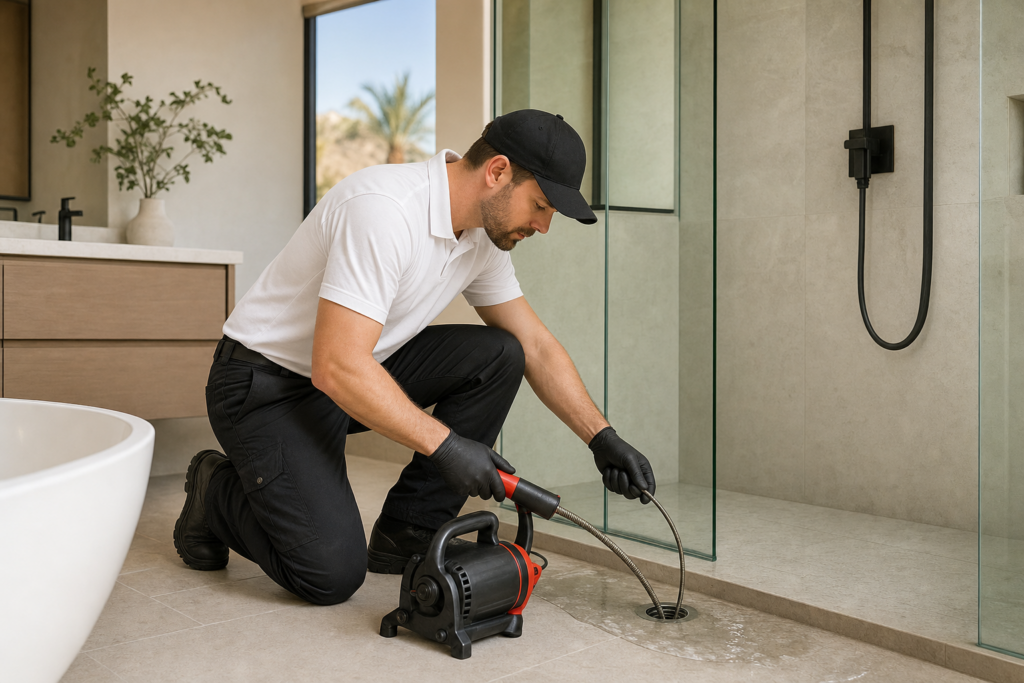
A motorized drain snake — also called a drain auger — is a flexible cable that a plumber feeds into the drain line to break through clogs and pull out debris. Unlike a small hand tool from a hardware store, a professional-grade drain snake can reach further into the line, handle tougher blockages, and clear material that is stuck well below the drain opening. For most standard shower drain clogs, this is the go-to method a plumber will use first.
Hydro Jetting
Hydro jetting directs a concentrated, high-pressure flow of water along the interior walls of the pipe, stripping away accumulated deposits that mechanical snaking may leave behind. This approach works particularly well when the slow drain stems from mineral scale, grease, or compacted residue that has gradually reduced the pipe’s flow capacity over time. It is not the right tool for every situation, but when a plumber recommends it, the buildup has typically progressed beyond what a snake alone can fully address.
In Phoenix homes with hard water and older plumbing, hydro jetting can be particularly helpful because it addresses the mineral scale that contributes to recurring clogs — not just the surface-level blockage.
Sewer Camera Inspection
A sewer camera inspection involves feeding a small waterproof camera into the drain or sewer line to see what is happening inside the pipe. This is a diagnostic tool, not a cleaning method. A plumber uses it when the cause of the slow drain is unclear, when multiple drains are affected, or when the problem keeps coming back after clearing.
The camera shows the plumber exactly what the issue is — whether it is a buildup, a root intrusion, a cracked pipe, or a section of line that has shifted or settled. It takes the guesswork out of the diagnosis and helps ensure the recommended solution matches the actual problem.
A Note on Chemical Drain Cleaners
Chemical drain cleaning products sold at hardware stores can seem like a quick fix, but they come with real downsides. Many of these products contain harsh chemicals that can corrode older pipes over time, especially the cast iron and galvanized lines found in many Phoenix homes built between the 1950s and 1990s. They may temporarily open a path through a clog, but they rarely clear it completely — and they do not address mineral scale or deeper blockages at all.
Most licensed plumbers recommend against routine use of chemical drain cleaners. Professional clearing is more thorough, safer for your pipes, and more likely to resolve the issue for the longer term.
When to Call a Plumber for a Slow Shower Drain
Not every slow shower drain requires a service call the moment you notice it. But there are clear signals that professional help is the right next step.
Consider calling a plumber if:
- The drain is noticeably slower than it was a few weeks ago and continues getting worse
- You have cleaned the drain cover and removed visible hair, but the problem persists
- More than one drain in your home is draining slowly
- You hear gurgling sounds from a nearby sink or toilet when the shower runs
- There is an unpleasant odor coming from the drain that does not go away
- You have used a chemical drain cleaner and it did not resolve the issue
- The slow drain has come back after a previous clearing
A slow shower drain may not feel urgent, but it is rarely a problem that improves on its own. In most cases, the buildup that is causing the restriction continues to accumulate. Addressing it sooner often means a simpler and less costly fix than waiting until the drain stops completely.
What to Expect When You Call a Plumber for a Slow Shower Drain
If you have never called a plumber for something like this, or if past experiences left you uncertain about the process, here is what a professional service call should look like.
Honest diagnosis first. A good plumber starts by asking you what you have noticed — how long the drain has been slow, whether other drains are affected, and what you have already tried. Then they inspect the drain and the surrounding plumbing to determine what is causing the issue. The goal is to find the real problem, not to recommend the most expensive service.
Clear explanation in plain English. Before any work begins, the plumber should explain what they found, what they recommend, and why. You should never feel confused about what is being done or pressured into a service you do not understand.
Upfront pricing before work starts. You should know the cost before the plumber picks up a tool. No surprises on the bill. No charges that were not discussed. This is one of the most common concerns homeowners have, and it is one of the easiest to address when the plumber communicates clearly from the beginning.
Respectful treatment of your home. The plumber should protect your floors, clean up after the work, and leave the area the way they found it. Your bathroom should not look like a job site when the service is done.
Before You Call: What to Have Ready
When you call to schedule a slow drain service, having a few details ready helps the plumber prepare and gives you a more useful conversation from the start.
- Which drain is slow. Is it the shower in the master bathroom, a guest bath, or a tub and shower combination? Knowing the specific fixture helps.
- How long it has been slow. A drain that slowed down last week may have a different cause than one that has been gradually worsening for months.
- Whether other drains are affected. Check the bathroom sink, the tub, and any nearby floor drains. This is the single most useful piece of diagnostic information.
- What you have already tried. Mention if you have pulled hair from the drain, used a chemical product, or tried a hand snake. This helps the plumber understand what has already been ruled out.
- Any unusual sounds or smells. Gurgling from other drains, sewer odors, or water backing up in another fixture are all important details worth mentioning.
You do not need to diagnose the problem yourself. That is what the plumber is for. But these details help them arrive prepared and make the most of the service visit.
How Fast Layne Plumbing Handles Slow Shower Drains in Phoenix
Fast Layne Plumbing is a family-owned plumbing company serving Phoenix, AZ. We handle slow draining showers as part of our professional drain cleaning services, and we approach every call the same way — with honest diagnosis, upfront pricing, and a commitment to finding the real issue.
When you call us for a slow shower drain, we start by listening. We want to understand what you are experiencing, how long it has been going on, and whether there are other signs that could point to a deeper issue. When we arrive, we inspect the drain and use professional equipment — drain snaking, hydro jetting, or camera inspection — based on what the situation calls for, not based on what costs the most.
We explain everything in plain English before we start. You will know what we found, what we recommend, and what it costs before any work begins. We do not upsell services you do not need, and we do not leave until the job is done and the area is clean.
We understand that calling a plumber for something that does not feel like an emergency can feel like a hard decision — especially if a past experience with another plumber left you feeling overcharged, ignored, or confused. That is exactly why we do things the way we do. We want you to feel informed, respected, and confident that you called the right team.
Call Fast Layne Plumbing at 480.485.4659 to schedule service.
Frequently Asked Questions
Why is my shower draining slowly but not completely clogged?
A partial blockage — from hair, soap scum, mineral scale, or a combination — allows some water to pass through but restricts the flow enough to cause pooling. The drain may still work, just more slowly than it should. This is usually a sign that buildup is narrowing the inside of the pipe, and it tends to get worse over time rather than resolving on its own.
Do I need a plumber for a slow shower drain, or can I fix it myself?
If removing visible hair from the drain cover restores normal flow, you may not need a plumber right away. But if the drain stays slow after surface-level cleaning, or if the problem keeps coming back, there is likely buildup deeper in the line that requires professional equipment to clear. A licensed plumber can also determine whether the slow drain is a sign of a larger issue in the drain system.
How does Phoenix hard water make shower drain problems worse?
Phoenix’s municipal water supply is high in dissolved minerals, primarily calcium and magnesium. As those minerals settle along the interior walls of drain pipes over time, they form a layer of scale that both narrows the pipe’s opening and leaves a textured surface where hair and soap residue collect more readily. In homes that have been on Phoenix water for many years, mineral scale can be a significant contributor to recurring slow drains.
What tools do plumbers use to clear shower drains?
The most common tools are a motorized drain snake, which physically breaks through and removes clogs, and hydro jetting, which uses high-pressure water to scour the inside of the pipe. For diagnostic purposes, a plumber may also use a sewer camera to inspect the pipe and identify the cause of the blockage before deciding on the best method.
When does a slow shower drain become a bigger plumbing problem?
A slow shower drain can indicate a bigger issue when multiple drains in the home are affected, when there are gurgling sounds from other fixtures, or when sewer odors are present. These signs may point to a partial blockage in a shared drain line or the main sewer line. A plumber can evaluate the system and determine whether the issue is isolated to the shower or part of a broader problem.
Why is my brand new shower draining slowly?
A newly installed shower that drains slowly could indicate an issue with the drain assembly, the slope of the drain pipe, or a venting problem. Venting allows air into the drain system so water can flow freely — if the vent is blocked or improperly installed, it can cause slow drainage even in a brand new fixture. A licensed plumber can evaluate the installation and identify what is restricting the flow.
The Right Next Step
A slow draining shower is a small problem that usually has a clear fix — but it does require the right tools and the right diagnosis to solve properly. If you are dealing with a shower that is not draining the way it should, and especially if the problem has been getting worse or keeps coming back, a professional evaluation is the most reliable way to get it resolved.
Fast Layne Plumbing serves homeowners and property owners across Phoenix, AZ. We are a family-owned company that believes in honest work, clear communication, and treating every home with respect.
Call Fast Layne Plumbing at 480.485.4659 to schedule service or talk with a local Phoenix plumber about your slow drain.