What to Ask When You Call for After-Hours Emergency Drain Cleaning in Phoenix
The most important things to ask before committing to an after-hours drain cleaning call in Phoenix are the dispatch fee, the pricing structure, the estimated arrival window for your area, what equipment the technician carries, and whether the company is licensed in Arizona. These questions help you make a confident decision, even when you are stressed and the timing is inconvenient.
A drain backup that happens on a Saturday night or at two in the morning puts you in a tough spot. You need help, but you also do not want to overpay or end up with a technician who cannot actually finish the job. The good news is that a short list of clear questions — asked before you agree to anything — can protect you from surprise bills and wasted time.
This guide walks through exactly what to ask, why each question matters, and what a straightforward answer should sound like. It is written for Phoenix homeowners who want to handle the situation calmly and hire wisely.
Before You Call: Describe the Problem Clearly
The way you describe the issue on the phone directly affects how well the plumber can prepare — and how accurate any estimate will be. Take thirty seconds to check a few things before you dial.
Single Drain, Multiple Drains, or Main Line Backup
If only one sink or shower is slow or backed up, the clog is likely in that individual fixture’s drain line. If multiple fixtures are affected — or if water is coming up through a floor drain or bathtub when you flush a toilet — the problem may be in your main sewer line. This distinction matters because it changes the scope of work, the equipment needed, and the cost.
Symptoms Worth Mentioning
- Water backing up into a sink, tub, shower, or floor drain
- Gurgling sounds from drains when other fixtures are used
- Sewage smell inside the home or near an exterior cleanout
- Slow drains in more than one area of the house
- Standing water that will not go down at all
The more clearly you can describe the situation, the better a plumbing company can send the right technician with the right tools — and give you a more realistic idea of what the service will involve.
Questions About Pricing and Fees
Cost uncertainty is one of the biggest concerns homeowners have when calling for after-hours plumbing work. These questions help you understand the full picture before anyone shows up at your door.
What Is the Dispatch or Service Call Fee?
A dispatch fee is the flat charge for sending a technician to your home, separate from the cost of the actual work. Some companies charge this fee regardless of whether you proceed with the repair. Others apply it toward the final bill if you move forward.
What a transparent answer sounds like: The company tells you the dispatch fee amount upfront and confirms whether it applies toward the total cost if you hire them for the job.
Is the Rate Flat or Hourly for After-Hours Work?
Flat-rate pricing means you pay a set amount for the service regardless of how long it takes. Hourly pricing means the final cost depends on time spent. Both structures are legitimate, but they create very different billing experiences — especially during after-hours calls where a job may take longer than expected.
What a transparent answer sounds like: The company explains which pricing model they use and gives you a clear idea of the expected range before any work begins.
Are There Surcharges for Nights, Weekends, or Holidays?
Some companies add a surcharge for after-hours service. Others do not. This is a fair question and any honest company will answer it directly. The key is knowing before the technician arrives, not after the invoice is printed.
Does the Dispatch Fee Apply Toward the Final Bill?
This is a detail many homeowners forget to ask. If the dispatch fee is separate from the service cost, your total will be higher than the quoted price for the drain cleaning itself. Knowing this upfront prevents a frustrating surprise at the end.
Questions About Timing and Logistics
When you are dealing with a drain problem at an inconvenient hour, knowing when help will arrive and what to expect matters almost as much as the work itself.
How Long Until a Technician Can Arrive in My Area?
Response times across the Phoenix metro area can vary depending on time of day, technician availability, and where you are located. A company that serves Phoenix specifically will usually have a better sense of realistic arrival times than a national dispatch service routing calls from out of state.
What a transparent answer sounds like: The company gives you a realistic arrival window rather than a vague promise. If they cannot give an estimate, that is worth noting.
Will the Technician Call or Text Before Arriving?
This is a small detail that makes a big difference, especially late at night. A heads-up call or text lets you know when to expect someone at your door, and it is a basic sign of professional courtesy.
Does the Truck Carry the Equipment Needed to Finish the Job in One Visit?
Some plumbing trucks are fully stocked with motorized drain snakes, hydro-jetting equipment, and sewer cameras. Others carry limited tools and may need to schedule a follow-up visit. For a drain emergency after hours, the last thing you want is a technician who arrives, looks at the problem, and tells you they need to come back tomorrow with different equipment.
Asking this question upfront helps you understand the likelihood of getting the issue resolved in a single visit.
Questions About the Work Itself
Understanding what the technician plans to do — and why — is one of the most important parts of the conversation. You do not need to be a plumbing expert, but you deserve a plain-English explanation.
How Will You Diagnose the Clog?
A good technician starts by understanding the problem before jumping into a solution. That might mean asking you questions about what you have noticed, checking multiple fixtures, or using a sewer camera to see inside the line. The diagnosis should come before the recommendation — not the other way around.
Will You Use a Drain Snake, Hydro-Jetting, or Something Else?
These are the two most common professional drain cleaning methods, and they work differently.
- Drain snaking uses a motorized cable to break through or pull out a clog. It is effective for many common blockages and works well for individual fixture drains and some main line clogs.
- Hydro-jetting uses high-pressure water to scour the inside of the pipe, clearing buildup, grease, scale, and roots more thoroughly. It is typically used for more stubborn or recurring blockages, especially in main sewer lines.
Not every situation requires hydro-jetting. A trustworthy technician will explain which method they recommend and why it fits your specific situation, rather than defaulting to the more expensive option without an explanation.
Do You Include a Sewer Camera Inspection, or Is That a Separate Charge?
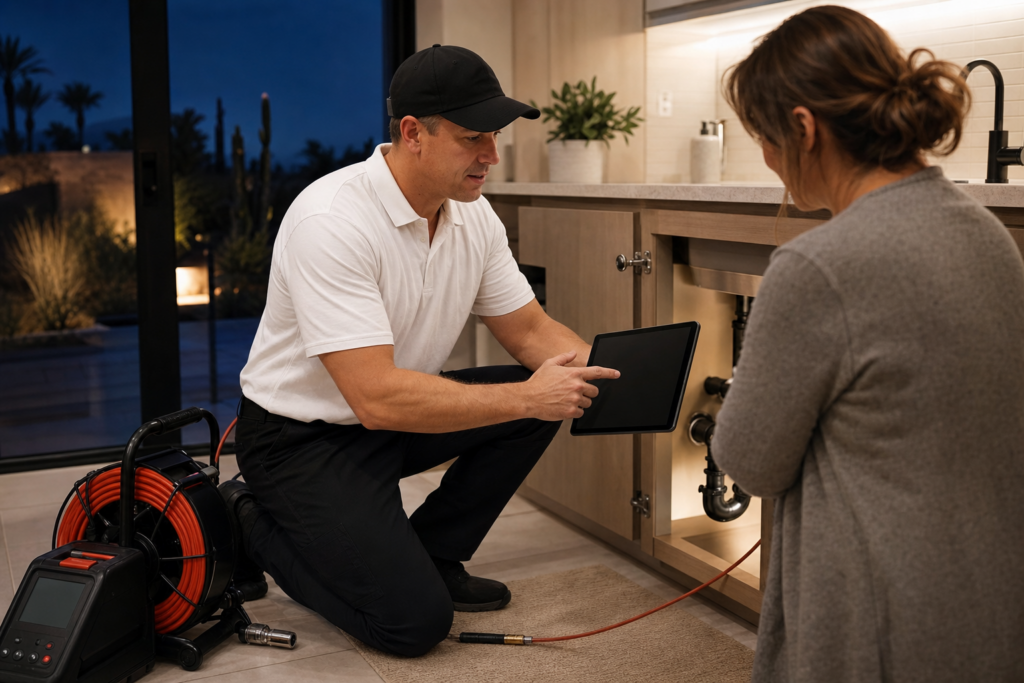
A sewer camera inspection lets the technician see the inside of your drain or sewer line on a live video feed. It helps identify the cause of the clog — whether it is a buildup of grease and debris, tree root intrusion, a cracked pipe, or something else entirely. Some companies include a camera inspection as part of the service. Others charge separately for it.
Knowing the answer to this question helps you understand the total scope and cost of the visit.
Is the Method Safe for My Specific Pipes?
Older homes in Phoenix — particularly those built from the 1950s through the 1980s — may have cast iron, clay, or Orangeburg sewer lines. These materials can be more vulnerable to damage from certain cleaning methods. A qualified technician will consider the type and condition of your pipes before recommending an approach.
Questions About Credentials and Accountability
When someone is coming to your home after hours, it is reasonable to want to know who they are and whether they are qualified.
Are You Licensed and Insured in Arizona?
A licensed, insured plumbing company protects both you and your property. In Arizona, plumbing contractors are licensed through the Arizona Registrar of Contractors, commonly known as the ROC.
How to Verify a Plumber’s License in Arizona
You can verify a plumbing contractor’s license through the Arizona Registrar of Contractors (ROC) website. The ROC maintains a searchable database where you can look up a company’s license standing, license classification, and any complaints on record. This takes a few minutes and can give you peace of mind before letting someone into your home.
Will the Technician Performing the Work Be a Licensed Plumber?
Some companies send subcontractors or apprentices to after-hours calls. There is nothing necessarily wrong with that, but you have the right to ask. Knowing who is actually doing the work — and whether they are an employee of the company or a subcontractor — helps you understand the level of accountability involved.
Do You Offer a Warranty or Guarantee on the Drain Clearing?
Ask whether the company stands behind its work and for how long. A confident, reputable plumber will be willing to explain what happens if the same clog returns shortly after the service.
Questions About Payment
Payment logistics can be an afterthought until the job is done and you realize you are not sure how to pay at midnight. A quick question upfront prevents an awkward situation later.
What Forms of Payment Do You Accept After Hours?
Confirm whether the company accepts credit cards, debit cards, checks, or other payment methods during after-hours calls. Not every technician carries a card reader, and not every company processes payments the same way outside of normal business hours.
Will I Receive an Itemized Receipt?
An itemized receipt shows you exactly what you paid for — dispatch fee, labor, materials, and any additional charges. This is a basic standard of transparent billing, and any company that does honest work should provide one without hesitation.
What to Do While Waiting for the Technician
Once you have made the call, there are a few simple, safe steps you can take while waiting.
- Stop using water in the affected area. If the main line is backed up, avoid flushing toilets, running sinks, or using the washing machine until the technician arrives. Additional water can make the backup worse.
- Do not use chemical drain cleaners. Products like Drano or Liquid-Plumr can damage older pipes, create hazardous conditions for the technician, and often do not solve the underlying problem. They can also make the clog harder to clear with professional equipment.
- Know where your main water shut-off valve is located. If the backup is severe or water is actively flowing where it should not be, shutting off the water supply can help limit the mess. In most Phoenix homes, the main shut-off valve is near the front of the house or near the water meter.
- Clear the area around the affected drains. Move towels, rugs, stored items, or anything else that could get in the way. This gives the technician room to work and protects your belongings.
These are not repairs — they are simple preparation steps to keep the situation manageable until help arrives.
Phoenix-Specific Drain Issues Worth Mentioning on the Call
Phoenix has plumbing characteristics that matter when it comes to drain problems, especially in older homes. Mentioning these details when you call can help the technician prepare.
Desert Tree Roots
Trees like mesquite, palo verde, and ficus are common in Phoenix yards. Their root systems actively seek moisture, and sewer lines are a prime target. Root intrusion is one of the most common causes of main sewer line blockages in the Phoenix metro area. If you have mature trees near your sewer line, it is worth mentioning when you call.
Hard Water Mineral Buildup
Phoenix has notably hard water. Over time, mineral deposits can build up inside drain and sewer lines, narrowing the pipe diameter and contributing to slow drains and recurring clogs. This is especially common in homes that do not have a water softener.
Older Pipe Materials
Many Phoenix homes built before 1990 still have original cast iron, clay, or galvanized steel drain lines. These materials are more susceptible to corrosion, root intrusion, and internal buildup. If you know the approximate age of your home or the material of your pipes, sharing that with the plumber helps them prepare the right equipment and approach.
How Fast Layne Plumbing Approaches After-Hours Drain Calls
Fast Layne Plumbing is a family-owned plumbing company serving Phoenix, Arizona. When homeowners call with a drain problem — whether it is a weeknight or a weekend — the approach is straightforward.
- We answer the phone and listen to what is happening.
- We explain the pricing structure clearly before scheduling the visit.
- We send a licensed technician who carries professional drain cleaning equipment, including motorized drain snakes, hydro-jetting equipment, and sewer cameras.
- The technician diagnoses the problem first, explains what they find in plain English, and walks you through the recommended approach before any work begins.
- Pricing is upfront. There are no surprise charges after the fact.
- We treat your home with respect and clean up after the work is done.
We understand the frustration of dealing with a drain emergency at an inconvenient time. We also understand the frustration of calling a plumber who does not show up, does not explain the issue clearly, or leaves you with a bill that does not match what you were told. That is not how we operate.
If you have a drain problem in Phoenix and want honest answers to the questions in this guide, call Fast Layne Plumbing at 480.485.4659.
Frequently Asked Questions
What qualifies as a drain emergency?
A drain emergency is generally a situation where water or sewage is actively backing up into your home, multiple drains are affected at the same time, or there is a sewage smell that indicates a main line problem. A single slow drain that is still functional may not require an emergency call — it could likely wait until regular business hours for a scheduled appointment.
Should I use chemical drain cleaners while waiting for the plumber?
No. Chemical drain cleaners can corrode older pipes, create unsafe fumes, and may make the blockage harder for a technician to clear with professional equipment. The safest thing to do while waiting is to stop using water in the affected area and avoid adding anything to the drain.
What is the difference between a drain snake and hydro-jetting?
A drain snake is a motorized cable that breaks through or retrieves a clog. Hydro-jetting uses high-pressure water to scour the full interior of the pipe, removing grease, scale, roots, and buildup more thoroughly. A qualified technician will recommend the method that fits your specific situation and pipe type.
How do I check if a plumber is licensed in Arizona?
Visit the Arizona Registrar of Contractors (ROC) website and use their public search tool. Type in the company name or license number to review the license standing, classification, and any complaints on file. This is a free state-maintained resource available to all Arizona residents.
What if the clog comes back shortly after the service?
A recurring clog can indicate a deeper issue — such as root intrusion, a damaged pipe section, or significant internal buildup — that cleaning alone may not permanently resolve. A sewer camera inspection can help identify whether there is an underlying condition that needs repair. Ask the technician about warranty coverage on the drain clearing before the work begins.
How can I understand after-hours drain service pricing before I commit?
Ask about the dispatch fee, whether the rate is flat or hourly, whether there are after-hours surcharges, and whether the dispatch fee applies toward the final bill. A company that operates with upfront pricing will answer all of these questions clearly before scheduling the visit.
The Right Call Starts with the Right Questions
A drain backup at an inconvenient hour does not have to mean an expensive mistake. The questions in this guide give you a practical way to evaluate any plumber before you commit — and a clear picture of what honest, respectful service should look like.
If you are dealing with a drain problem in Phoenix and want straight answers from a local, family-owned plumbing company, call Fast Layne Plumbing at 480.485.4659. We will explain what we find, what it costs, and what we recommend — in plain English, before any work begins.