Emergency Drain Cleaning in Phoenix: What to Do Tonight and What to Expect When You Call
If your drain just backed up and you need help tonight, Fast Layne Plumbing serves Phoenix homeowners with emergency drain cleaning service — including evenings and after-hours calls. You do not have to wait until morning with water pooling in your shower, a toilet that will not flush, or a kitchen sink that has stopped draining entirely.
This guide covers how to tell whether your drain problem needs immediate attention, what you can safely do right now before a plumber arrives, what the service visit actually involves, and why Phoenix homes deal with drain emergencies that homeowners in other cities rarely see. If you already know you need help, call Fast Layne Plumbing at 480.485.4659.
How to Tell If Your Drain Problem Is an Emergency
Not every slow drain needs a plumber at ten o’clock at night. But some situations should not wait. The simplest way to assess your situation is to ask one question: is one fixture affected, or more than one?
One Fixture Is Backing Up
If only your kitchen sink, one bathroom sink, or a single shower drain is clogged and no other drains in the house are affected, the blockage is most likely in the drain line connected to that specific fixture. This is still frustrating, but it usually means the rest of your plumbing is working normally. In many cases, a single-fixture clog can wait a few hours if you are able to avoid using that drain.
Multiple Fixtures Are Backing Up
If more than one drain is slow or backing up at the same time — especially if water comes up through a floor drain, a shower drain, or a toilet when you run water elsewhere in the house — that pattern can indicate a blockage in the main sewer line. A main line issue affects the entire home and typically needs same-day or same-night attention.
Signs That Suggest You Should Call Tonight
- Water is backing up into multiple fixtures at once
- Sewage or dark water is coming up through a floor drain, shower, or bathtub
- You notice a sewage smell inside the home that was not there earlier
- A toilet overflows and will not stop even after you shut off the supply valve
- Water is pooling on the floor and you cannot contain it
- You cannot use any bathroom in the home
If your situation matches any of these, it is reasonable to call for emergency service rather than waiting until morning. A licensed plumber can evaluate what is happening and recommend the right approach based on what the inspection shows.
Situations That Can Usually Wait
- A single sink drains slowly but still drains
- One shower takes longer than usual to empty
- A garbage disposal is not draining but no other fixtures are affected
These are still worth addressing, but they are unlikely to cause further problems overnight if you stop using that fixture until a plumber can take a look.
What to Do Right Now While You Wait for a Plumber
If you have called for service or plan to call shortly, there are a few things you can do in the meantime that are safe and genuinely helpful.
- Stop using the affected fixtures. If the kitchen sink is backing up, do not keep running water into it. If multiple drains are involved, avoid running any water in the house until the plumber arrives. Every additional gallon of water makes a main line backup worse.
- Do not pour chemical drain cleaner into the drain. Store-bought drain cleaners are not designed for main sewer line blockages, and they can make the situation harder for the plumber to work on safely. Chemical cleaners can also damage older pipes — and many Phoenix homes have drain lines that are several decades old.
- If you can find your sewer cleanout, note where it is. The cleanout is a capped pipe fitting, usually located outside the home near the foundation or in the yard. You do not need to open it. Just knowing where it is saves your plumber time when they arrive. If you cannot find it, that is completely fine — the technician will locate it.
- Clear the area around affected drains. Move towels, toiletries, rugs, and anything stored under sinks away from the area. This gives the plumber room to work and protects your belongings.
- If water is on the floor, contain what you can with towels. Do not use electrical appliances near standing water. If the backup is significant, turn off any electronics in the affected area as a precaution.
These steps will not fix the problem, but they prevent the situation from getting worse and help the plumber get to work faster when they arrive.
What Emergency Drain Cleaning Service Actually Involves
If you have never called a plumber for an emergency drain issue, you may not know what the visit looks like. Here is what typically happens, step by step.
When the Plumber Arrives
The technician will ask you to describe what happened — when the problem started, which fixtures are affected, and whether you have noticed any unusual sounds, smells, or changes. This conversation helps narrow down whether the issue is likely in a single drain line or in the main sewer line before any equipment comes out.
At Fast Layne Plumbing, this initial conversation matters. Understanding the real problem — not just the symptom — is how the right repair gets recommended. The technician explains what they are seeing, what they think is causing it, and what the options are before any work begins. You get upfront pricing and a clear explanation in plain English so you can make an informed decision.
Drain Snaking
A drain snake — also called an auger — is a flexible cable that a plumber feeds into the pipe to break apart or retrieve a blockage. Snaking performs well against clogs involving hair, soap buildup, food debris, or small obstructions in individual drain lines. It is one of the most common tools used during an emergency drain call and can often restore flow quickly.
Snaking works by physically contacting the clog and either breaking it into pieces that flush away or pulling it back out. It is a targeted approach that works well when the blockage is in a specific section of pipe.
Hydro Jetting
Hydro jetting sends high-pressure water through the pipe to scour the interior walls clean, rather than simply punching through a single obstruction. This makes it more thorough than snaking for situations involving heavy grease buildup, mineral scale, or root intrusion that has narrowed the pipe over time.
Hydro jetting is not always necessary for a straightforward clog, and a trustworthy plumber will not recommend it unless the situation calls for it. When it is the right tool, it clears the line more completely than snaking alone and can help restore full pipe diameter.
Camera Inspection
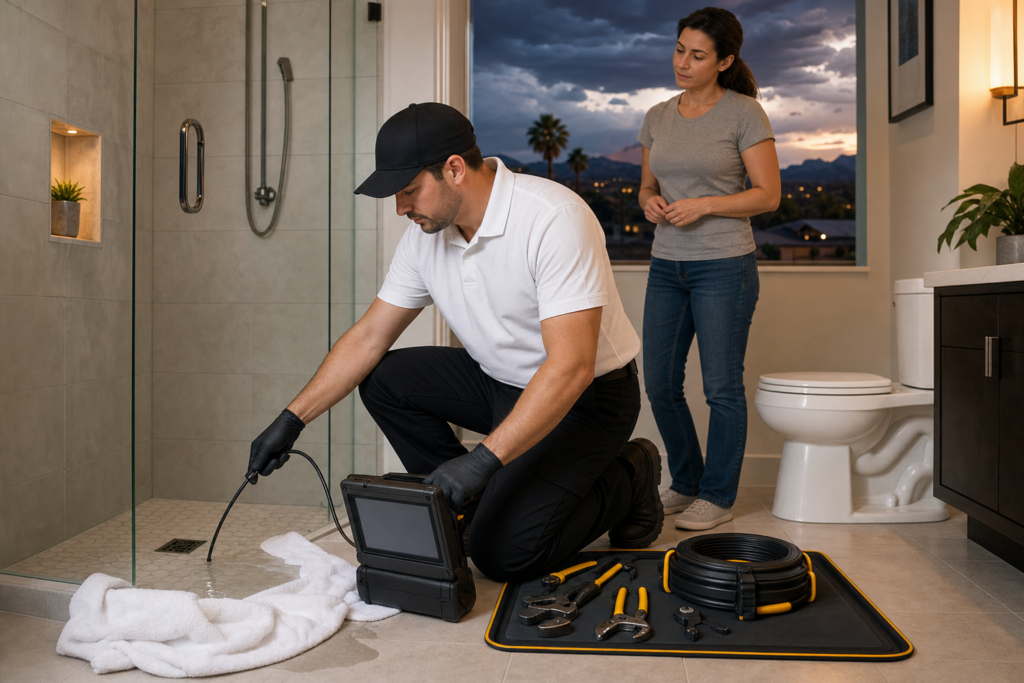
A camera inspection involves feeding a small, waterproof camera into the drain or sewer line to see what is happening inside the pipe. The camera shows the plumber — and you, if you want to see — exactly where the blockage is, what caused it, and whether there is any damage to the pipe itself, such as cracks, root intrusion, or a collapsed section.
Camera inspection is one of the most important tools in honest diagnosis. It takes the guesswork out of what is going on underground, which matters because the right repair depends entirely on what the inspection reveals. At Fast Layne Plumbing, camera inspection is used when it is needed to provide an accurate diagnosis, not as a routine upsell.
What Happens After the Service
Once the drain is cleared, the technician will explain what they found, what was done to resolve it, and whether there are any signs of a deeper issue that may need attention down the road. If the blockage was caused by something likely to recur — like root intrusion or a pipe condition issue — the plumber can explain what follow-up options exist without pressuring you into immediate additional work.
Why Phoenix Homes Deal with Drain Emergencies Other Cities Do Not
Phoenix is not like most cities when it comes to what happens inside your drain and sewer lines. The desert climate, local soil conditions, and the age of many Phoenix homes create specific challenges that directly contribute to drain problems.
Monsoon Season and Sudden Drain Overload
Phoenix monsoon storms can drop heavy rain in a very short period of time. When that happens, the volume of water entering the drainage system can overwhelm lines that have even a small amount of buildup or partial blockage. A drain that was working fine in June may back up in July after a heavy storm pushes debris, sediment, or additional water into an already narrowed line.
Desert Vegetation and Root Intrusion
Trees and large shrubs in the Phoenix area — including many species common in Sonoran Desert landscaping — send roots deep into the ground looking for moisture. Sewer lines carry water, which makes them a target. Over time, roots can enter the pipe through small cracks or joints, gradually narrowing the line until flow is restricted or completely blocked. Root intrusion is one of the most common causes of main sewer line backups in older Phoenix neighborhoods.
Hard Water and Mineral Buildup
Phoenix has notably hard water. Over years of use, mineral deposits can accumulate inside drain and sewer pipes, slowly reducing the pipe’s interior diameter. This buildup does not cause a sudden clog on its own, but it creates conditions where a smaller blockage — grease, hair, debris — turns into a full backup much faster than it would in a clean pipe.
Aging Pipe Materials
Many Phoenix homes built from the 1950s through the early 2000s have drain and sewer lines made of materials that deteriorate over time, including cast iron, clay, and older types of plastic. As these pipes age, they become more vulnerable to cracking, root intrusion, and interior buildup. If your home is more than 20 years old and you have not had your lines inspected, the condition of the pipes may be a contributing factor to recurring drain problems.
How Fast Layne Plumbing Approaches Emergency Drain Calls
Fast Layne Plumbing is a family-owned plumbing company serving Phoenix, Arizona. Emergency drain calls are a core part of what we do, and we approach every one the same way — with honest diagnosis, clear communication, and respect for your home.
We Answer the Phone
One of the most common frustrations homeowners share with us is that they called another plumber and nobody picked up, or they were told someone would call back and never heard anything. When you call Fast Layne Plumbing, we answer. If you have a drain backing up tonight, you should not have to leave a voicemail and hope for the best.
Honest Diagnosis Before Any Work Begins
We do not start work before explaining what we think is happening and what it will take to address it. If a simple snake will clear the line, we say so. If the situation calls for hydro jetting or a camera inspection, we explain why and what those tools will help us determine. You get upfront pricing before we start — no surprises on the bill.
Plain-English Explanations
Plumbing can feel like a black box to homeowners. You cannot see what is happening inside the pipe, and it can be hard to know whether a recommendation is necessary or just an upsell. At Fast Layne Plumbing, we explain the issue in plain English so you understand what is going on and can make an informed choice. We do not pressure you into work you do not need.
Respect for Your Home
Emergency calls sometimes happen at inconvenient hours, and they often involve water in places it should not be. Our technicians treat your home with respect — we protect your floors, clean up after the work, and leave the space the way we found it. You are letting us into your home during a stressful moment, and we take that seriously.
Frequently Asked Questions
How do I know if I have a main sewer line backup?
The clearest sign is that multiple fixtures in the home are affected at the same time. If water surfaces through a floor drain, a shower, or a bathtub when you flush a toilet or run a sink, the blockage is most likely in the main sewer line rather than in an individual drain. A licensed plumber can verify this with a proper inspection.
What is the difference between drain snaking and hydro jetting?
A drain snake uses a flexible cable to dislodge or pull out a blockage inside the pipe. It works well for common clogs such as hair accumulation or food debris. Hydro jetting, by contrast, propels high-pressure water through the full interior of the pipe, making it better suited for grease accumulation, mineral deposits, or root intrusion. Which method is appropriate depends on the source of the blockage and the overall condition of the pipe.
Why should I avoid chemical drain cleaners?
Chemical drain cleaners are formulated for minor clogs located near the drain opening. They offer little to no benefit against main sewer line blockages, and their caustic ingredients can deteriorate older pipes — particularly cast iron and clay lines found in many Phoenix homes. Applying chemical cleaners before a plumber arrives can also create a less safe working environment for the technician.
What will the plumber be able to tell me before starting work?
After an initial assessment — which includes asking about your symptoms and visually inspecting the affected fixtures — the plumber can usually narrow down whether the issue is in an individual drain line or the main sewer line. A camera inspection can then confirm the exact location and cause of the blockage. At Fast Layne Plumbing, we provide upfront pricing and a clear explanation before any work begins so you know exactly what you are agreeing to.
Does emergency drain service cost more than a scheduled appointment?
Pricing can vary depending on the time of the call, the nature of the problem, and what is needed to resolve it. The best way to get a clear answer is to call and describe your situation. Fast Layne Plumbing provides upfront pricing before beginning any work, so you will know the cost before anything starts — no matter when you call.
What causes drain emergencies during monsoon season in Phoenix?
Heavy monsoon rains can push debris and sediment into drain systems and overwhelm lines that already have partial buildup. A drain that functioned normally during dry months may back up during or after a monsoon storm because the sudden water volume exceeds what a partially narrowed pipe can handle.
When You Need Help Tonight, Fast Layne Plumbing Is Here
A backed-up drain at night is stressful. You cannot use your bathroom, your kitchen, or sometimes any plumbing in the house — and you are not sure who to call or what it is going to cost. That uncertainty is one of the hardest parts.
Fast Layne Plumbing exists to take that weight off your shoulders. We answer the phone, we show up, we explain what is happening in plain English, and we give you upfront pricing before we start. No surprises, no unnecessary upsells, no mess left behind.
If you have a drain emergency in Phoenix right now — or you want to get ahead of a problem before it becomes one — call Fast Layne Plumbing at 480.485.4659.