How Fast Layne Plumbing Uses Sewer Camera Inspections to Verify Your Line Condition Before Recommending Any Work
Fast Layne Plumbing incorporates high-resolution sewer camera inspections into the diagnostic process for drain cleaning, sewer cleaning, and sewer line repair services in Phoenix, AZ. Before any work on your sewer line is suggested, a licensed technician can insert a waterproof camera directly into the pipe to observe what is actually occurring inside — and then walk you through the footage so you have a clear picture of what was found.
This matters because a camera inspection replaces uncertainty with visual evidence. Rather than relying on a description of what might be causing the problem, you can observe the interior condition of the line for yourself. Any recommendation you receive is grounded in what the footage actually shows, not an educated guess.
This article covers what a sewer camera inspection involves, what it can uncover, when Fast Layne incorporates one into the service process, and what homeowners should expect.
What a Sewer Camera Inspection Actually Involves
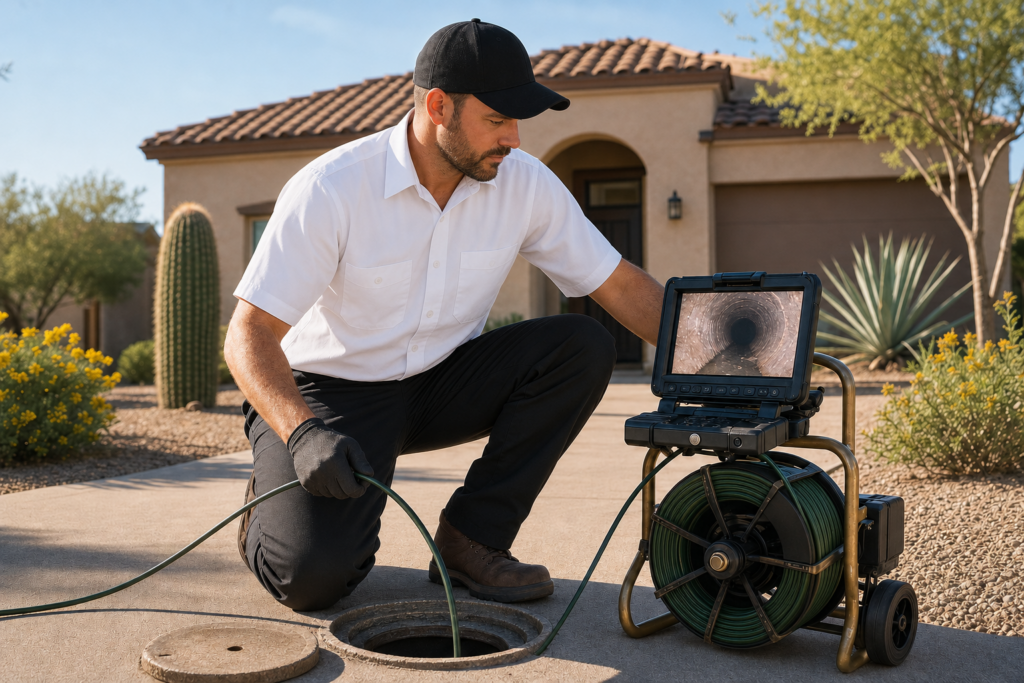
A sewer camera inspection — also referred to as a video pipe inspection or push camera inspection — relies on a compact, waterproof camera mounted to a flexible cable. The technician introduces the camera into the sewer line through an available access point, and the camera sends a live video feed to a monitor as it moves through the pipe.
The camera is built to travel the length of the pipe, capturing footage of the interior walls, pipe joints, and any obstructions encountered along the way. This provides the technician with a direct view of conditions inside the line without requiring excavation, demolition, or assumptions about what might be there.
For homeowners, the practical value is clear: the camera allows your plumber to see the issue rather than speculate about it.
What the Camera Is Designed to Reveal Inside Your Line
A sewer camera inspection can help identify several types of conditions that affect how your sewer line performs. The following are among the most common findings:
Blockages and Buildup
Grease deposits, mineral scale, soap residue, and accumulated debris can restrict flow inside a pipe over time. The camera shows where buildup is concentrated and how much of the pipe’s diameter is affected. This information helps determine whether standard drain cleaning or hydro jetting is the more appropriate approach.
Root Intrusion
Tree roots can work their way into sewer lines through small cracks or gaps at pipe joints, particularly in older Phoenix homes with clay or cast iron pipes. When viewed on camera, root intrusion appears as fibrous material growing inward along the pipe wall. The footage helps the technician gauge how far roots have advanced and whether clearing or a repair is the more suitable course of action.
Cracks, Breaks, and Pipe Damage
Fractures in the pipe wall, separated joints, and broken sections are all visible through the camera. This is where the inspection provides particular value — a cracked pipe calls for a different solution than a simple obstruction. Without visual confirmation, distinguishing between the two based on symptoms alone can be unreliable.
Collapsed or Offset Sections
In some situations, a section of pipe may have shifted, settled, or failed entirely. These structural conditions cannot be addressed through cleaning alone and generally require repair or replacement. The camera identifies precisely where the problem exists and how significant it appears, which helps the technician describe the situation clearly and recommend a suitable repair path.
The Important Distinction
The camera helps distinguish between cleanable conditions and structural problems. A grease blockage is a cleaning job. A fractured pipe with root intrusion may require repair. These two scenarios differ considerably in scope, timeline, and cost — and the camera footage is what allows that distinction to be made honestly.
What the Camera Does Not Replace
A sewer camera is a diagnostic instrument, not a repair tool. It documents the interior condition of the pipe, but it does not resolve anything on its own. It also has practical limitations worth understanding:
- The camera captures the inside of the pipe. It does not detect moisture in the surrounding soil or conditions outside the pipe wall.
- Heavy debris or standing water in the line can sometimes limit what is visible until the line has been partially cleared.
- A camera inspection informs the recommendation — it does not guarantee that every possible issue will be captured in every situation.
Being straightforward about what the camera can and cannot do is part of providing an honest assessment. At Fast Layne Plumbing, the objective is to show you what the footage reveals and explain what it means in plain language — not to overstate what the tool is capable of.
When Fast Layne Uses Camera Inspection in the Service Process
A sewer camera inspection is not a requirement for every service call, but it is a standard part of the diagnostic process when the circumstances warrant it. The following are the most common situations:
Before Recommending Hydro Jetting
Hydro jetting applies high-pressure water to clear stubborn buildup, grease, and roots from sewer lines. However, it is not the right approach for every pipe. When a line has existing structural damage — fractures, breaks, or weakened sections — high-pressure jetting could worsen the condition. Running a camera inspection before hydro jetting helps confirm that the pipe is sound enough to handle the service without risk.
Before Recommending Sewer Line Repair or Replacement
When a technician suspects that damage to the sewer line goes beyond what cleaning can address, a camera inspection helps identify the precise location of the problem, its depth, and how severe it appears. This is especially relevant for significant decisions like trenchless sewer repair or full sewer line replacement. The footage supports the recommendation so you are not asked to approve a major repair based solely on a verbal description.
After Clearing a Line
In certain cases, the technician may run the camera after a cleaning is complete to confirm that the line is flowing properly and to check for any underlying conditions the blockage may have been concealing. This follow-up step helps verify that the service was effective and flags anything that may need attention in the future.
For Proactive Assessment
Some Phoenix homeowners request a camera inspection as a preventive measure — before any problem has surfaced. This is particularly common during a home purchase evaluation or when an older property has never had its sewer line examined. Many Phoenix homes constructed between the 1950s and early 2000s still have original clay, cast iron, or Orangeburg pipe that may be approaching the end of its serviceable life. A camera inspection can provide a clear picture of the line’s current condition before an unexpected backup triggers an emergency call.
What You Can Expect During the Inspection
If you have not had a sewer camera inspection before, here is a general sense of what the process looks like from your perspective:
- The technician locates an access point such as a cleanout to introduce the camera into the sewer line. This typically involves no digging or disruption to your yard or interior.
- The camera is fed into the pipe and begins transmitting live footage to a screen the technician monitors in real time.
- The technician reviews the footage as the camera advances through the line, taking note of any areas of concern — buildup, blockages, cracks, root intrusion, offsets, or other damage.
- You can view what the camera captures. The technician can walk you through the footage and explain each finding in straightforward terms, so you have a clear understanding of your line’s condition.
- The inspection is recorded so the findings can be referenced when discussing what the appropriate next step should be.
The aim is transparency. You should not have to rely on someone’s verbal account of what is happening inside your sewer line when footage exists that can show you directly.
How Camera Inspection Supports Honest Diagnosis and Upfront Pricing
One of the most common frustrations among Phoenix homeowners is uncertainty about whether a recommended repair is genuinely necessary. A previous plumber may have quoted a significant service without clearly explaining why it was needed, or a technician may have described a problem verbally without offering any supporting evidence.
This is where camera inspection connects directly to how Fast Layne Plumbing approaches every service call. The footage becomes the foundation for the conversation — not a sales pitch. When a technician recommends hydro jetting, sewer cleaning, or a repair, that recommendation is tied to what the camera actually documented inside the pipe.
That connection between what was found and what is recommended is what gives upfront pricing its meaning. You are not estimating the cost of an unknown condition. You are pricing a documented one.
Fast Layne Plumbing is a family-owned company serving the Phoenix area, and the approach is consistent: locate the actual problem, show it to you, explain it in plain terms, and present honest options. The camera is one of the tools that makes that possible.
Signs That May Suggest a Camera Inspection Is a Good Next Step
Not every slow drain calls for a camera inspection, but certain patterns may indicate that a closer look inside the line would be worthwhile. Consider reaching out for an inspection if you are experiencing any of the following:
- Recurring clogs in the same drain, even after it has been cleared previously
- Multiple slow drains throughout the home occurring at the same time
- Foul odors coming from drains or near cleanout access points
- Gurgling sounds from toilets or drains while water is running elsewhere in the house
- Sewage backup into a tub, shower, or floor drain
- Unexplained wet areas in the yard along the path of the sewer line
- An older home whose sewer line has never been inspected
These symptoms do not automatically point to a serious problem, but they can signal that the line deserves a closer look. A camera inspection gives a licensed technician the information needed to evaluate what is actually happening so you receive the right recommendation — not an unnecessary one.
Frequently Asked Questions
Does Fast Layne Plumbing provide the camera footage to the customer?
The inspection is recorded, and the technician can walk you through the footage during the visit. If you have questions about what was found, the recording serves as a reference point for the discussion about recommended next steps.
Is a camera inspection required before every sewer service?
Not in every case. A straightforward drain obstruction may not require one. However, when the situation involves recurring problems, suspected pipe damage, or a recommendation for hydro jetting or sewer line repair, a camera inspection is typically part of the diagnostic process to ensure the recommendation is supported by evidence.
How long does a sewer camera inspection typically take?
The inspection itself generally does not require a significant amount of time, though the exact duration depends on the length and condition of the line. The technician can give you a more accurate estimate once they assess the access point and the overall situation.
Can a sewer camera see through standing water in the pipe?
The camera can see through moderate amounts of standing water, but elevated water levels or dense debris can reduce visibility. In those situations, partial clearing of the line may be necessary before a complete camera inspection can be performed.
Is a sewer camera inspection the same as a sewer scope?
These terms are frequently used interchangeably. A sewer scope, sewer camera inspection, and video pipe inspection all describe the same general process: advancing a camera through the line to view its interior condition.
What happens if the camera finds something serious?
The technician will walk you through what the footage shows, describe what it likely means for the condition of your line, and outline the available options. You will not be pushed toward an immediate decision. The objective is to give you the information you need to make a confident, informed choice about how to move forward.
Should I get a camera inspection before buying a home in Phoenix?
A pre-purchase sewer camera inspection can be a valuable step, particularly for older Phoenix properties where the original sewer line may be several decades old. The inspection can surface conditions that a standard home inspection may not address, giving you a clearer understanding of what you are purchasing before you close.
The Bottom Line
A sewer camera inspection is one of the most direct ways to remove uncertainty from a sewer line diagnosis. It allows you to see what is happening inside the pipe, understand what the findings indicate, and feel assured that any recommendation you receive is grounded in documented evidence rather than assumption.
Fast Layne Plumbing incorporates camera inspections into the diagnostic process for drain cleaning, sewer cleaning, and sewer line repair throughout Phoenix, AZ. Whether you are dealing with recurring drain problems, a persistent sewer odor, a suspected line issue, or simply want to understand the current condition of your sewer line, a camera inspection is a solid place to begin.
Call Fast Layne Plumbing at 480.576.6307 to schedule a sewer camera inspection or to speak with a local Phoenix plumber about what is going on with your drains.