How Long Does a Drain Cleaning Appointment Actually Take?
Most residential drain cleaning appointments take somewhere between 30 minutes and 2 hours. A straightforward clog in a single fixture — like a bathroom sink or shower drain — usually falls on the shorter end. A stubborn blockage in the main sewer line, or a job that requires hydro jetting, can push closer to two hours or occasionally longer.
The honest answer is that a good plumber can give you a more accurate estimate after a quick assessment of the situation. The type of drain, the severity and location of the clog, the cleaning method needed, and the condition of your pipes all play a role. This article walks through what actually affects that timeline, what happens during the appointment from start to finish, and how you can prepare so the visit goes smoothly.
Time Estimates by Drain Type and Cleaning Method
Not every drain cleaning job is the same. A slow bathroom sink is a different scope of work than a backed-up main sewer line. Here is a general idea of what to expect based on where the clog is and how it needs to be cleared.
| Drain Type | Typical Time Range | Common Method |
|---|---|---|
| Bathroom sink, shower, or tub | 30–45 minutes | Motorized drain snake |
| Kitchen sink | 30 minutes–1 hour | Drain snake, sometimes hydro jetting for grease buildup |
| Toilet drain | 30 minutes–1 hour | Drain snake or auger |
| Main sewer line | 1–2+ hours | Drain snake, hydro jetting, often with camera inspection |
| Severe blockage (roots, heavy buildup, multiple fixtures) | 2–3+ hours | Hydro jetting and/or camera inspection |
These are typical ranges, not guarantees. Your plumber should be able to give you a clearer picture once they see what they are working with.
Drain Snaking vs. Hydro Jetting: Why the Method Matters for Time
A drain snake (also called an auger) is a flexible cable that a plumber feeds into the drain to break through or pull out a clog. For a single fixture with a straightforward blockage, snaking is usually the faster method — often 30 to 45 minutes including setup.
Hydro jetting uses high-pressure water to scour the inside of the pipe and clear buildup like grease, mineral scale, or tree roots. It is more thorough than snaking, but it takes longer — typically adding 30 minutes to an hour to the appointment, depending on the length of pipe being cleaned and the severity of the buildup.
Your plumber will recommend whichever method fits the situation. Not every clog needs hydro jetting, and a trustworthy technician will explain why one approach makes more sense than the other before the work begins.
What Actually Happens During a Drain Cleaning Appointment
If you have never scheduled a professional drain cleaning before, it helps to know what the visit looks like from your side — not just the plumber’s task list.
Step 1: Arrival and Initial Assessment
The plumber arrives, introduces themselves, and asks about the problem. They will want to know which drains are affected, when the issue started, and whether you have noticed anything like gurgling sounds, slow drainage in multiple fixtures, or sewage odors. This conversation usually takes just a few minutes, but it helps the technician narrow down where the clog likely is and what approach to start with.
Step 2: Locating Access Points
Depending on the drain involved, the plumber may need access to a sewer cleanout — a capped pipe, usually located outside the home, that provides direct entry to the main sewer line. If the cleanout is buried, hidden under landscaping, or hard to reach, this step can add a few minutes to the visit. For single fixture clogs, the plumber typically works directly through the drain opening or the fixture itself.
Step 3: Camera Inspection (When Needed)
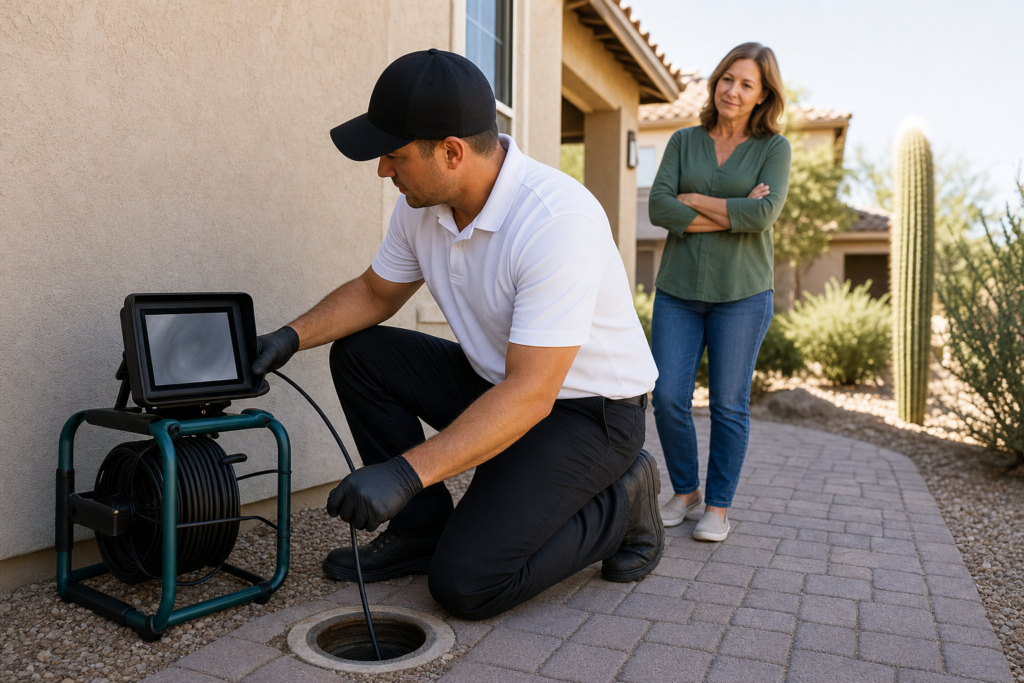
A camera inspection involves feeding a small waterproof camera into the pipe to see what is causing the blockage and to check the overall condition of the line. Not every appointment requires a camera inspection, but it is common for main sewer line issues or recurring clogs. A camera inspection typically adds 15 to 30 minutes to the appointment. It is one of the most useful tools a plumber has — it takes the guesswork out of the diagnosis.
Step 4: Clearing the Clog
This is the main event. The plumber uses either a drain snake or hydro jetting equipment to clear the blockage. You may hear the equipment running, and the plumber may need to run water through the affected fixtures during the process. For a single-fixture clog, this stage often takes 15 to 30 minutes. For main line work or heavy buildup, it can take an hour or more.
Step 5: Testing and Walkthrough
After clearing the drain, the plumber will test the flow by running water through the affected fixtures. If a camera was used, they may show you what the line looks like now compared to before. A good plumber will also explain what they found, whether the issue is likely to come back, and what — if anything — you should keep an eye on. This step usually takes 5 to 15 minutes, but it is one of the most important parts of the visit.
What Can Make an Appointment Take Longer
Sometimes a drain cleaning appointment runs longer than the typical range. That is not necessarily a bad sign — it usually means the plumber is being thorough rather than rushing through a job that needs more attention. Here are the most common reasons an appointment may take longer than expected.
- Access to the cleanout is difficult. If the sewer cleanout is buried under dirt, concrete, or landscaping, the plumber needs to locate and uncover it before they can begin. In some older Phoenix neighborhoods, cleanouts may be in unexpected locations or may not be clearly marked.
- The pipes are older or made of more fragile material. Many homes in Phoenix — especially those built from the 1950s through the 1980s — have cast iron or clay sewer pipes. These materials are more prone to root intrusion, corrosion, and buildup, which can make the cleaning process slower and more careful.
- The clog is deeper in the line than expected. A clog that seems like a single-fixture issue can sometimes turn out to be further down the line, closer to the main sewer connection. That changes the scope of the work.
- Multiple drains are affected. If more than one fixture is backing up, the plumber may need to clear multiple points or address a main line issue, which adds time.
- Hard water mineral buildup. Phoenix has notably hard water. Over time, mineral deposits can build up inside pipes and contribute to slow drains or stubborn blockages that take longer to clear, especially in older plumbing systems.
- Tree root intrusion. In parts of Phoenix, tree roots — especially from certain desert-adapted species — can work their way into sewer lines through small cracks or joints. Root intrusion can require hydro jetting or more extensive clearing, which adds time.
- The plumber discovers something unexpected. Sometimes a drain cleaning reveals a cracked pipe, a collapsed section, or damage that goes beyond what a simple cleaning can fix. A trustworthy plumber will stop, explain what they found, and discuss options with you — they will not just keep working without your input.
Preventive Cleaning vs. Reactive Clog Clearing
There is a meaningful difference between scheduling a drain cleaning as routine maintenance and calling because something is already backed up. The distinction matters for how long the appointment takes.
A preventive maintenance cleaning — where the drain is still flowing but you want to clear early-stage buildup before it becomes a problem — tends to be more predictable in scope and time. The plumber knows what they are doing going in, and there are usually no surprises.
A reactive clog clearing — where a drain is slow, fully backed up, or causing problems in the home — is less predictable. The plumber may need to diagnose the location and cause of the clog before they can start clearing it, and the severity is not always obvious from the surface. This type of appointment is more likely to run closer to the longer end of the time range.
Both are normal, common appointments. The difference is just in how much the plumber can anticipate before they arrive.
How to Prepare for Your Appointment
A little preparation on your end can help the appointment go smoothly and avoid unnecessary delays.
- Know which drains are affected. Before the plumber arrives, take note of which drains are slow or backed up. Mention if multiple fixtures are involved — that information helps the technician plan their approach.
- Note when the problem started. Did the drain slow down gradually over weeks, or did it back up suddenly? This helps the plumber understand what they are likely dealing with.
- Clear the area around affected drains. Move any items stored under sinks or near floor drains. If the plumber needs to access a sewer cleanout outside, make sure the area is accessible.
- Know where your cleanout is, if possible. The sewer cleanout is typically a white or black capped pipe near the foundation of the home or in the yard. If you know where it is, point it out when the plumber arrives. If you do not know, that is fine — the plumber can locate it.
- Avoid using the affected drains right before the appointment. Running water through a backed-up drain can make the situation messier and does not help the plumber clear the clog faster.
Frequently Asked Questions
How long does it take to snake a drain?
Snaking a single fixture drain — like a bathroom sink or shower — typically takes 30 to 45 minutes, including setup and testing. A main sewer line snaking can take an hour or more depending on the location and severity of the clog.
How long does hydro jetting take compared to snaking?
Hydro jetting generally takes longer than snaking because it involves a more thorough cleaning of the pipe interior. Expect a hydro jetting appointment to run 1 to 2 hours for most residential jobs, depending on the length of pipe and the amount of buildup.
Does a camera inspection add a lot of time?
A camera inspection typically adds 15 to 30 minutes. It is not always needed, but when it is, it gives the plumber — and you — a clear picture of what is happening inside the pipe. It can also save time by pinpointing the problem quickly instead of guessing.
What if the plumber finds something unexpected?
It happens. A drain cleaning can sometimes reveal a cracked pipe, significant root intrusion, or a section of line that needs repair rather than just cleaning. A good plumber will explain what they found in plain language, walk you through your options, and give you upfront pricing before doing any additional work. You should never feel pressured to approve something on the spot.
Do I need to be home during the appointment?
For most drain cleaning jobs, it is a good idea to be home — especially at the beginning and end of the visit. The plumber may need to ask you questions, access areas inside or outside your home, and walk you through what they found. For main line work, the plumber may spend most of the time outside near the cleanout, but they will still want to communicate with you about the results.
Can I use my other drains while the plumber is working?
It depends on which drain is being cleaned. If the plumber is working on a single fixture, your other drains are usually fine to use. If the main sewer line is being cleared, the plumber may ask you to hold off on running water until they are done, since everything flows to the same line.
How often should drains be professionally cleaned?
There is no single rule that fits every home. Some homeowners schedule preventive drain cleaning every year or two, especially for older homes or kitchens with heavy use. Others only call when there is a noticeable problem. A plumber can recommend a maintenance schedule based on the age of your plumbing, your water quality, and what they see during the first visit.
The Bottom Line for Phoenix Homeowners
For most residential drain cleaning appointments, plan to set aside about one to two hours. Simple, single-fixture clogs are often done in under an hour. Main line work, hydro jetting, or jobs with unexpected findings may take longer. The best way to get a more specific estimate is to describe the issue to your plumber when you call — they can give you a realistic idea of what to expect based on what you are seeing.
At Fast Layne Plumbing, we answer the phone, show up when we say we will, and give you a clear explanation of what we find — in plain English, with upfront pricing, before any work begins. We are a family-owned Phoenix plumbing company, and we treat every home with the same care and respect we would want in our own.
If you have a slow drain, a backed-up line, or just want to get ahead of a problem before it gets worse, call Fast Layne Plumbing at 480.485.4659 to schedule service.