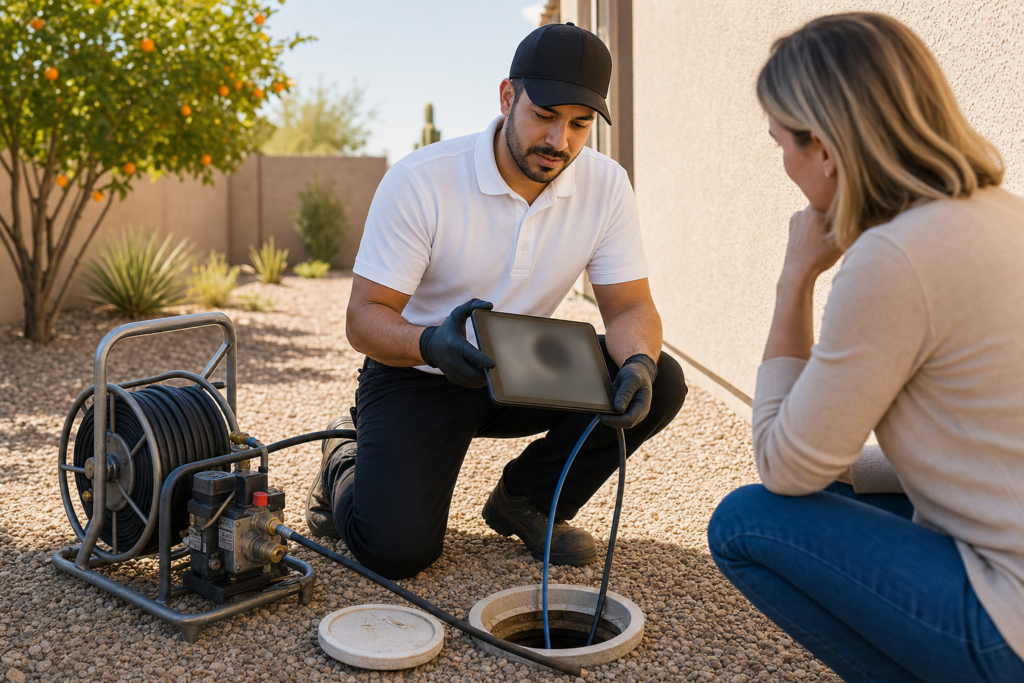
Hydro Jetting Cost for Phoenix Homeowners: What Drives the Price and How to Know What You Actually Need
Most Phoenix homeowners can expect to pay somewhere between $350 and $600 for a standard residential hydro jetting service on a main sewer or drain line. Simpler jobs on a single branch line — a kitchen sink or bathroom drain — often fall in the $250 to $400 range. More complex situations involving heavy mineral scale, tree root intrusion, difficult access, or older pipe materials can push costs above $700, and occasionally past $1,000.
Those ranges are broad for a reason. The actual cost of hydro jetting depends on what is happening inside your specific pipes, how accessible the line is, and what a technician finds during the inspection. This article explains what drives those differences in Phoenix specifically, when hydro jetting is the right service versus when a simpler option makes more sense, and what to ask before you book.
What Hydro Jetting Actually Does
Hydro jetting uses a specialized nozzle fed through your drain or sewer line, blasting water at very high pressure — typically between 3,000 and 4,000 PSI — to scour the inside walls of the pipe. It does not just punch a hole through a clog the way a standard drain snake does. It cleans the full interior diameter of the pipe, removing grease, soap scum, mineral scale, sediment, and in many cases tree roots.
That distinction matters. A drain snake can clear a path through a blockage, but it leaves buildup clinging to the pipe walls. Hydro jetting removes that buildup, which is why it is typically recommended for recurring drain problems, heavy grease lines, or sewer lines with significant scale or root intrusion.
What Affects Hydro Jetting Cost in Phoenix
Not every hydro jetting job is the same. Here are the factors that most commonly affect what Phoenix homeowners pay.
Which Line Needs Service
A single branch drain — the line running from your kitchen sink, shower, or washing machine to the main line — is a shorter, more accessible run. Clearing a branch line with hydro jetting is typically less expensive than servicing a full main sewer line, which runs from your home to the city connection and may be 50 feet or longer.
Hard Water Mineral Scale
Phoenix has some of the hardest municipal water in the country. Dissolved calcium and magnesium minerals accumulate along the interior walls of drain and sewer pipes over time, gradually constricting the pipe diameter and slowing flow. Heavy mineral scale requires more time, more passes with the jetting nozzle, and sometimes specialized descaling tips. This is one of the most common cost factors in the Phoenix market — and one that plumbing companies in other parts of the country rarely deal with at this level.
Pipe Material and Age
Many Phoenix homes built before the 1980s have cast iron or clay sewer lines. These materials can be more sensitive to high-pressure water than modern PVC. A careful technician will adjust pressure settings and inspect the line before jetting to make sure the pipe can handle the service safely. Older pipes may also require a more cautious approach, which can take additional time.
Tree Root Intrusion
Mesquite, citrus, and other desert trees are common throughout Phoenix neighborhoods. Root systems are drawn toward any available moisture source and can infiltrate sewer line joints or exploit minor cracks in the pipe wall. Clearing root intrusion with hydro jetting requires specialized cutting nozzles and more time than a standard grease or scale cleaning. It is also worth noting that hydro jetting can clear roots from a line, but it cannot repair a cracked or collapsed pipe — that is something a camera inspection will reveal.
Cleanout Access
A cleanout is the access fitting that allows a plumber to insert equipment directly into the sewer line. Homes with a clearly accessible outdoor cleanout are faster and easier to service. Many older Phoenix homes do not have an accessible cleanout, which means the technician may need to access the line through a toilet or roof vent stack. That adds time and can increase cost. Some homeowners choose to have a cleanout installed, which is a separate service but can make future maintenance simpler and less expensive.
Severity of the Blockage
A line with moderate grease buildup is a different job than a line that has been neglected for years and has heavy scale, root mass, and debris compounding the problem. More severe blockages may require multiple jetting passes or a combination of snaking and jetting to fully clear.
Cost by Service Type
| Service Type | Typical Range | When This Usually Applies |
|---|---|---|
| Single branch drain line | $250–$400 | Kitchen sink, bathroom drain, laundry line — shorter runs with easier access |
| Main sewer line — standard job | $350–$600 | Full sewer line clearing with moderate grease, soap, or mineral buildup |
| Complex or severe job | $600–$1,000+ | Heavy mineral scale, significant root intrusion, no cleanout access, older pipe materials, or multiple passes needed |
These ranges reflect what Phoenix homeowners commonly encounter when getting quotes. Your actual cost depends on what a technician finds during the inspection. A trustworthy plumber will explain what the job involves and provide clear pricing before any work begins.
What About the Camera Inspection
A sewer camera inspection uses a small waterproof video camera fed into the line to show the interior condition of the pipe in real time. It is one of the most important steps in any hydro jetting service, and here is why.
Before jetting: A camera inspection can confirm the type and location of the blockage, check whether the pipe is in good enough condition to handle high-pressure water, and identify any cracks, bellies, or collapses that jetting alone cannot fix. This step is especially important for older Phoenix homes with cast iron or clay pipes.
After jetting: A follow-up camera pass confirms the line is fully clear and documents the condition of the pipe. If there is structural damage that was hidden behind buildup, the camera will show it.
Camera inspection is sometimes included in the hydro jetting price and sometimes billed separately. When quoted separately, it typically runs between $150 and $400 depending on the length and complexity of the line. Before booking any hydro jetting service, it is worth asking whether camera inspection is included and whether the technician will inspect before jetting — not just after.
Hydro Jetting vs. Drain Snaking: When Does Each Make Sense
Not every clogged drain needs hydro jetting. Here is a practical way to think about when each service is the right call.
Drain snaking is often the right first step when:
- You have a single clog in one drain that has not happened before
- The blockage is localized and relatively close to the drain opening
- You need the drain cleared quickly and the clog is straightforward
Hydro jetting tends to be the better option when:
- The same drain keeps clogging, even after snaking
- There is heavy grease or mineral scale buildup inside the line
- Multiple drains are slow or backing up at the same time, which can indicate a main sewer line issue
- A camera inspection shows buildup that snaking will not fully remove
- Previous snaking cleared a path but did not solve the underlying problem
A good plumber will tell you which service your situation actually needs — not default to the more expensive option. If snaking will solve the problem, that is what should be recommended. If hydro jetting is genuinely the right call, a trustworthy technician will explain why and show you what the camera found.
Signs Your Phoenix Drain May Need Professional Attention
These symptoms do not automatically mean you need hydro jetting, but they can indicate that something is happening inside your drain or sewer line that is worth having a licensed technician evaluate:
- Slow drains that do not improve after basic clearing
- The same drain clogging repeatedly over weeks or months
- Multiple drains backing up at the same time
- Gurgling sounds coming from drains or toilets when water is running elsewhere
- Sewage odors coming from floor drains, bathroom drains, or around the home’s foundation
- Water backing up in unexpected places — for example, the toilet bubbles when you run the kitchen sink
These symptoms can point to different problems — from a simple branch-line clog to a main sewer line issue. The only way to know for certain is an inspection.
What to Ask When Getting a Hydro Jetting Quote in Phoenix
If you are getting quotes from plumbing companies, these questions can help you understand what you are paying for and whether the service is being handled properly:
- Is a camera inspection included, or is it a separate charge? — This tells you whether the company plans to look inside the pipe before blasting it with high-pressure water.
- Will you inspect the line before jetting to confirm the pipe can handle the pressure? — Especially important for older Phoenix homes with cast iron or clay pipes.
- Is this a flat-rate price, or could it change once you start the work? — You want to know upfront what you are agreeing to.
- What happens if you find a cracked or collapsed pipe during the inspection? — A responsible company will stop and explain the options rather than jetting a damaged line.
- Will you show me the camera footage and explain what you found? — A plumber who explains the situation in plain English is a plumber who respects your time and your decision.
Why Phoenix Homes Face These Drain Issues More Than Most
Phoenix’s plumbing conditions are different from most of the country in ways that directly affect drain health and hydro jetting frequency.
Hard water. The Phoenix municipal water supply carries a high concentration of dissolved minerals — primarily calcium and magnesium. Over years, these minerals deposit along the inside of drain and sewer lines, gradually narrowing the pipe. In homes where no water softener is installed, this buildup can become significant enough to restrict flow and contribute to recurring clogs. Hydro jetting is one of the most effective ways to remove this scale.
Desert landscaping and root-seeking trees. Many Phoenix homeowners have mesquite, palo verde, citrus, or ficus trees in their yards. In a dry climate, tree roots are aggressive about seeking moisture — and a sewer line with even a small joint gap or hairline crack becomes a target. Root intrusion is one of the most common reasons Phoenix homeowners end up needing hydro jetting on their main sewer line.
Older housing stock. Phoenix experienced major housing booms in the 1950s through the 1980s. Homes from those decades often have original sewer lines made of clay, Orangeburg, or cast iron — materials that are more prone to deterioration, root penetration, and scale accumulation than modern PVC. If you own a home built during that era, the age and material of your sewer line is worth understanding before any high-pressure service is performed.
How Fast Layne Plumbing Approaches Hydro Jetting
At Fast Layne Plumbing, we treat hydro jetting the way we treat every service: we start by understanding the real problem, explain what we find in plain English, and give you clear options with upfront pricing before any work begins.
That means we do not recommend hydro jetting when a simpler drain cleaning will solve the issue. It also means that when hydro jetting is the right call — heavy grease, mineral scale, root intrusion, or a recurring backup that snaking has not resolved — we explain exactly why and what the service will involve.
We are a family-owned plumbing company serving Phoenix homeowners. We answer the phone, show up when we say we will, and respect your home throughout the process. If you have been quoted a price that felt too high, had a plumber not show up, or are not sure whether the service you were told you need is actually necessary — we understand that frustration. Our goal is to help you feel informed and confident in the decision, not pressured.
If you are dealing with recurring drain problems, slow drains, or a sewer line concern and want a straight answer about what is going on, call Fast Layne Plumbing at 480.485.4659 to schedule an inspection. We will take a look, tell you what we find, and give you honest options.
Frequently Asked Questions
How much does hydro jetting cost in Phoenix?
For most residential jobs, Phoenix homeowners can expect to pay between $250 and $600, depending on whether it is a single drain line or a main sewer line, the severity of the buildup, and the accessibility of the line. Complex jobs involving heavy scale, root intrusion, or older pipe materials can run higher. The best way to get an accurate number is to have a licensed plumber inspect the line and provide upfront pricing before starting work.
Is hydro jetting worth the cost?
It depends on the situation. For recurring clogs, heavy grease or mineral scale, or a main sewer line with root intrusion, hydro jetting cleans the full pipe interior in a way that snaking cannot. For a one-time clog in a single drain, snaking may be all you need. A trustworthy plumber will help you understand which service fits your situation rather than defaulting to the more expensive option.
Can hydro jetting damage my pipes?
It can, if the pipes are already weakened, cracked, or deteriorated — which is why a camera inspection before jetting is so important, especially for older Phoenix homes with cast iron or clay sewer lines. A qualified technician will check the pipe condition first and adjust the pressure accordingly. If the pipe has structural damage, jetting may not be appropriate, and the technician should explain that before proceeding.
How long does hydro jetting last?
There is no single answer. How long a hydro-jetted line stays clean depends on what caused the buildup in the first place, the condition of the pipe, and whether contributing factors — such as grease disposal habits or root-producing trees — are still present. In some cases, a thorough jetting can keep a line flowing well for several years. In others, particularly where roots are active or hard water scale is aggressive, more frequent maintenance may be needed. A technician can give you a better sense of what to expect after inspecting your specific line.
Is hydro jetting safe for residential PVC pipes?
Modern PVC pipe in good condition is generally well suited for hydro jetting. PVC is smooth-walled, durable, and handles high-pressure water well. The concern is more relevant for older materials like clay, cast iron, or Orangeburg, which can be more brittle or deteriorated. Regardless of pipe material, a pre-jetting camera inspection is the safest way to confirm the line is in good enough condition for the service.
Does hydro jetting include a camera inspection?
It depends on the plumbing company. Some include camera inspection as part of the hydro jetting service, while others charge for it separately. Before booking, ask whether a camera inspection is included, whether it will be done before jetting, and whether you will be able to see the footage and have the findings explained to you.
Next Step
If you are dealing with a recurring drain problem, a slow sewer line, or a backup that standard methods have not resolved, a professional evaluation is the right next step. At Fast Layne Plumbing, we will inspect the line, explain what we find, and give you clear pricing and honest options — no pressure, no surprises.
Call Fast Layne Plumbing at 480.485.4659 to schedule service.