Residential Drain Cleaning in Phoenix: What to Know Before You Call a Plumber
If you’re searching for a plumber near you for residential drain cleaning in Phoenix, you probably have a drain that’s slow, backing up, or making sounds it shouldn’t. The right next step depends on where the clog is, what’s causing it, and how your home’s plumbing is built — and a licensed plumber can help you figure all of that out before any work begins.
This guide covers what residential drain cleaning actually involves in Phoenix, why homes here face specific drain challenges, what to expect during a service call, and how to choose a plumber you can trust — especially if you’re new to the area or haven’t found a reliable one yet.
What Residential Drain Cleaning Actually Involves
Drain cleaning is not one thing. It’s a category of plumbing work that covers several different methods, and the right approach depends on what’s happening inside your pipes. A good plumber will evaluate the situation first and explain your options in plain language before starting any work.
Drain Snaking
Drain snaking — sometimes called augering — uses a motorized cable to physically break through a clog and restore flow. It works well for blockages caused by hair, soap buildup, food waste, or other organic material lodged in a single drain line. When a kitchen sink or bathroom drain stops moving water properly, snaking is typically among the first approaches a plumber will assess.
Hydro Jetting
Hydro jetting sends pressurized water through the pipe at high force, scouring the interior walls and flushing out grease, mineral deposits, root growth, and other accumulated debris that a standard snake may not fully address. It’s a more comprehensive cleaning approach and is generally applied when the problem extends beyond a straightforward clog — or when the same line keeps blocking up. Not every situation requires hydro jetting, and a plumber should walk you through the reasoning before recommending it.
Camera Inspection
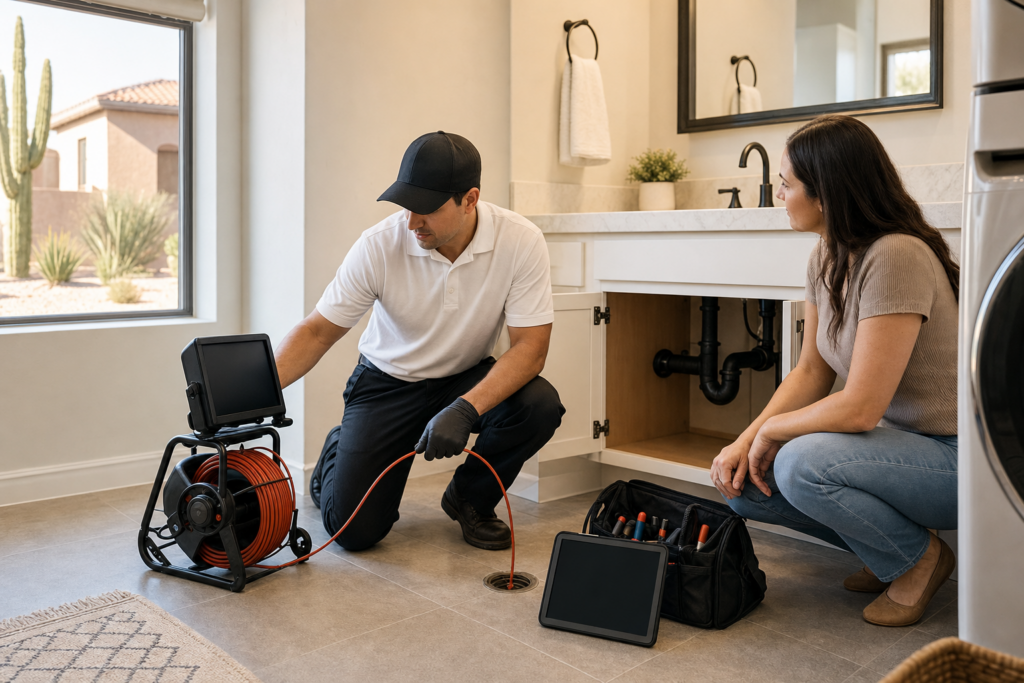
A camera inspection involves feeding a small waterproof video camera into the drain line so the plumber can see the inside of the pipe in real time. This helps identify the exact location and cause of a blockage — whether it’s a buildup of grease, a root growing into the line, a cracked section of pipe, or something else entirely. Camera inspections are especially useful when the cause of a recurring problem isn’t obvious, or when a plumber needs to confirm the condition of the line before recommending a specific repair.
Key point: The right method depends on what the inspection reveals. A plumber who explains the diagnosis clearly — before recommending a service — is doing the job the right way.
Common Signs Your Phoenix Home Needs Drain Cleaning
Not every slow drain is an emergency, but some symptoms do warrant a call to a licensed plumber. Here’s what to watch for and what each sign could mean.
A Single Fixture Draining Slowly
If one sink, shower, or tub is draining slower than normal, the issue is usually a localized clog in that fixture’s branch line. This is common and often straightforward to resolve with professional drain snaking.
Multiple Fixtures Backing Up at the Same Time
When more than one drain in your home is slow or backing up — or when using one fixture causes water to appear in another — the problem may be further down the line. This could indicate a blockage in the main sewer line rather than a single branch. A plumber can evaluate whether the issue is localized or systemic.
Gurgling Sounds or Sewer Odors
Gurgling from a drain or toilet can indicate that air is being trapped in the line due to a partial blockage. Sewer odors inside the home may point to a drain or sewer issue that’s preventing proper venting. Both are worth having a licensed technician evaluate.
Clogs That Keep Coming Back
If you’ve cleared a drain yourself and the same clog returns within weeks or months, there may be a deeper issue — buildup along the pipe walls, root intrusion, or a section of pipe that’s deteriorating. Recurring clogs are one of the strongest signals that professional cleaning, possibly with a camera inspection, is the right move.
Why Phoenix Homes Face Specific Drain Challenges
Phoenix is not like every other city when it comes to residential plumbing. The climate, water quality, soil, and age of the housing stock all create conditions that affect how drains perform over time.
Hard Water and Mineral Scale Buildup
Phoenix has notably hard water. As water moves through pipes, it leaves behind calcium, magnesium, and other dissolved minerals that accumulate on interior pipe surfaces, slowly reducing the available diameter and impeding flow. This mineral scale buildup can accelerate clogging, especially in kitchen and bathroom drain lines where grease and soap residue mix with mineral deposits.
Older Cast-Iron Drain Lines
Many Phoenix homes built before the 1980s have cast-iron drain pipes. Cast iron is durable, but after decades of use it can develop internal corrosion, rough surfaces that trap debris, and even cracks or weak spots. If your home is from the 1950s through the 1970s, there’s a reasonable chance your drain lines are cast iron — and they may behave differently than modern PVC lines.
Tree Root Intrusion
Even in a desert environment, tree roots seek moisture. Mature trees — both native and landscaped — can send roots into sewer and drain lines through small cracks or joints. Root intrusion is a common cause of recurring main line backups in older Phoenix neighborhoods, and it often requires professional clearing followed by an inspection to assess the pipe’s condition.
Caliche Soil and Underground Pipe Stress
Caliche is a dense, calcium-rich soil layer found throughout the Phoenix metro area. It can put pressure on underground pipes over time, and it makes excavation more difficult when repairs are needed. Caliche doesn’t cause drain clogs directly, but it’s part of the broader environment that affects how plumbing systems age in Arizona.
Key point: These local conditions are why a Phoenix-specific approach to drain cleaning matters. A plumber familiar with the realities of Arizona plumbing — hard water, aging pipe materials, desert soil — can provide a more accurate diagnosis than a generic national service.
What to Expect During a Professional Drain Cleaning Visit
If you’ve never hired a plumber for drain cleaning before — or if you’ve had a bad experience with one in the past — it helps to know what good service actually looks like.
Honest Diagnosis Before Any Work Begins
A trustworthy plumber will ask questions about the problem, look at the affected fixtures, and assess what’s happening before recommending any specific service. They should explain what they think is causing the issue and why they’re recommending a particular approach — not just jump straight to the most expensive option.
Clear Options and Upfront Pricing
You should know what the service will cost before work begins. Upfront pricing means the plumber explains the scope of work and the price, and you agree before they start. No surprises on the bill. If additional work is needed once they begin, a good plumber will stop and explain the situation before proceeding.
What the Plumber Will Do
Depending on the situation, the plumber may use a drain snake, hydro jetting equipment, or a camera to inspect the line. They’ll work at the affected fixture or at the home’s main cleanout access point. The work itself can range from straightforward to more involved, depending on the location and severity of the blockage.
What Happens After the Service
Once the line is cleared, the plumber should confirm that flow has been restored and explain what they found. If the inspection revealed a deeper issue — like root intrusion, pipe damage, or heavy scale buildup — they should explain that clearly and discuss what options exist, without pressuring you into an immediate decision.
What Affects the Cost of Drain Cleaning in Phoenix
The cost of drain cleaning varies depending on several factors. Rather than quoting a single number, it’s more useful to understand what drives the price so you can evaluate a quote with confidence.
- Location of the clog: A blockage in a single branch line (like a bathroom sink) is typically less involved than a main sewer line blockage.
- Severity and depth of the blockage: A soft clog near the drain opening requires less time and equipment than a deep, compacted blockage further down the line.
- Method required: Drain snaking is generally less costly than hydro jetting. The right method depends on what the plumber finds, not on price alone.
- Whether a camera inspection is needed: If the plumber recommends a camera inspection to understand the root cause — especially for recurring clogs — that’s an additional step with its own cost, but it can prevent paying for the same cleaning repeatedly.
- Access to the line: Some homes have easily accessible cleanout points. Others don’t, which can add time to the job.
A plumber who provides upfront pricing should be able to explain these factors clearly before any work starts. If a quote feels unclear or unexpectedly high, it’s reasonable to ask the plumber to walk you through what’s included and why.
How to Evaluate a Plumber Before You Hire Them
Especially if you’re new to the Phoenix area or trying a plumber for the first time, asking the right questions before work begins can save you a lot of frustration.
Questions Worth Asking
- Do you provide upfront pricing before starting work?
- What method do you plan to use, and why?
- Will you explain what you find before recommending additional work?
- Is there a diagnostic fee, and does it apply toward the cost of the service?
- Are you licensed and insured to perform plumbing work in Arizona?
What Upfront Pricing Should Look Like
Upfront pricing means you receive a clear price for the defined scope of work before anything begins. It does not mean the cheapest quote — it means the most transparent one. A plumber who can explain what the price covers, and who stops to communicate if the scope changes during the job, is demonstrating the kind of honesty that protects you from surprise bills.
Licensing in Arizona
Arizona requires plumbing contractors to be licensed through the Arizona Registrar of Contractors. A licensed plumber has met the state’s requirements for training, insurance, and accountability. You can verify a plumber’s license status through the Registrar of Contractors website before scheduling service.
Why Chemical Drain Cleaners Are Not Recommended for Most Phoenix Homes
Store-bought liquid drain cleaners are tempting because they’re inexpensive and available immediately. However, most licensed plumbers — including ours — discourage their regular use for several reasons:
- They rely on caustic chemicals that can damage older pipe materials, particularly cast iron and certain types of PVC joints common in Phoenix homes.
- They often clear only a narrow channel through the clog without removing the underlying buildup, which means the clog returns.
- They can mask a more serious issue — like root intrusion or a failing pipe section — by temporarily restoring partial flow.
- The chemicals left in the line can make professional cleaning more difficult and create a hazard for the technician.
If a drain is slow or backing up, the more effective approach is to have a plumber diagnose the cause and clear it properly.
Simple Habits That Help Prevent Drain Problems
While no amount of prevention eliminates the need for professional service entirely — especially in older Phoenix homes — these habits can reduce how often drains clog:
- Use drain screens in showers and tubs to catch hair before it enters the line.
- Avoid pouring grease or cooking oil down the kitchen sink. Let it cool and dispose of it in the trash.
- Run cold water for several seconds after using the garbage disposal to flush debris through the line.
- Be mindful of what goes into toilets — only waste and toilet paper. Products labeled “flushable” can still contribute to clogs.
These steps won’t fix an existing clog, but they can help extend the time between professional cleanings.
How Fast Layne Plumbing Approaches Residential Drain Cleaning in Phoenix
Fast Layne Plumbing is a family-owned plumbing company serving homeowners across Phoenix, AZ. We built this company around a straightforward idea: show up, find the real problem, explain it honestly, price it fairly, and do the work right.
When you call us for drain cleaning, here’s what that looks like in practice:
- We answer the phone. When you call 480.485.4659, a real person helps you schedule service.
- We show up. We understand that a no-show plumber is one of the most frustrating experiences a homeowner can have. We take scheduling seriously.
- We diagnose before we sell. Our technicians evaluate the situation first — asking questions, checking the affected fixtures, and determining what’s actually going on before recommending any specific service.
- We explain in plain English. You’ll know what we found, what we recommend, and why — without jargon or pressure.
- We provide upfront pricing. You’ll know the cost before we start work. No surprise charges.
- We don’t upsell work you don’t need. If a drain snake will solve the problem, we’re not going to push hydro jetting. If we think a camera inspection would help, we’ll explain why and let you decide.
- We treat your home with respect. We clean up after the work is done and leave your home the way we found it.
We work on homes across Phoenix — including older homes from the 1950s through the 2000s where cast-iron pipes, hard water damage, and root intrusion are everyday realities. We’re familiar with the plumbing challenges that come with living in the Valley, and we bring that knowledge to every service call.
If you’ve been looking for a plumber you can actually trust — whether it’s your first time calling one in Phoenix or you’re trying to find someone better than the last company you used — we’d welcome the chance to earn your confidence.
Call Fast Layne Plumbing at 480.485.4659 to schedule residential drain cleaning service in Phoenix.
Frequently Asked Questions About Drain Cleaning in Phoenix
How do I know if I need drain snaking or hydro jetting?
The right method depends on what’s causing the clog and where it’s located. A single-fixture clog from hair or food buildup can often be resolved with snaking. Recurring clogs, heavy grease or mineral buildup, or root intrusion deeper in the line may call for hydro jetting. A plumber can evaluate the situation and recommend the appropriate method after inspecting the drain.
What causes drains to clog repeatedly in Phoenix homes?
Common causes of recurring clogs in Phoenix include hard water mineral scale that narrows pipe walls over time, tree root intrusion into older sewer lines, internal corrosion in cast-iron drain pipes, and grease or soap buildup that accumulates gradually. A camera inspection can help identify the underlying cause so it can be addressed rather than just cleared temporarily.
Is it safe to use store-bought drain cleaners?
Most licensed plumbers do not recommend regular use of chemical drain cleaners. They can damage pipe materials — especially cast iron and certain PVC joints — and they typically carve only a limited opening through the obstruction rather than clearing the accumulated buildup entirely. They can also conceal more serious underlying problems such as root intrusion or deteriorating pipe sections.
How do I know if my main sewer line is clogged?
Indicators of a potential main sewer line problem include several drains slowing or backing up simultaneously, water surfacing in one fixture while another is in use, gurgling noises coming from drains or toilets, and sewage smells detected inside or around the home. A licensed plumber can evaluate whether the issue is in a branch line or the main sewer line.
How long does a drain cleaning service usually take?
A straightforward drain cleaning — such as snaking a single clogged fixture — can often be completed relatively quickly. More involved situations, like clearing a main sewer line or performing hydro jetting with a camera inspection, take longer. Your plumber should be able to give you a reasonable time expectation once they assess the situation.
Do I need a camera inspection every time I have a drain cleaned?
Not necessarily. A camera inspection is most useful when the cause of the clog isn’t clear, when clogs keep recurring in the same line, or when the plumber suspects pipe damage or root intrusion. For a simple, one-time clog, a camera inspection may not be needed. A trustworthy plumber will recommend it only when it adds genuine diagnostic value.
What should I tell the plumber when I call?
The more detail you can share, the better prepared the technician will be when they arrive. Helpful information includes which fixtures are affected, when the problem started, whether it’s getting worse, whether multiple drains are involved, and whether you’ve noticed any unusual sounds or odors. You don’t need to diagnose the problem — just describe what you’re experiencing.
The Right Next Step
A slow drain or a backed-up line is frustrating, but it doesn’t have to be stressful. The right plumber will answer your questions, explain what’s happening, give you clear options, and treat your home with respect.
If you’re a Phoenix homeowner looking for honest, professional drain cleaning service — whether it’s your first time calling a local plumber or you’re ready to find one you can count on — Fast Layne Plumbing is here to help.
Call Fast Layne Plumbing at 480.485.4659 to schedule service.