When Does Fast Layne Plumbing Recommend a Camera Inspection with Drain or Sewer Service?
Fast Layne Plumbing recommends a camera inspection when looking inside the pipe is the only dependable way to know what is truly happening in your drain or sewer line. It is not something we add to every service call. It is a diagnostic step we suggest when the symptoms point to something a standard clearing cannot fully explain — recurring backups, multiple affected drains, unusual odors that persist after cleaning, or any situation where recommending a major repair without first looking inside the line would be guesswork.
If you are a homeowner in Phoenix wondering whether a camera inspection is genuinely necessary or just an extra charge, this article explains exactly when we recommend one, why, and what it changes about the service you receive.
What a Sewer Camera Inspection Actually Does
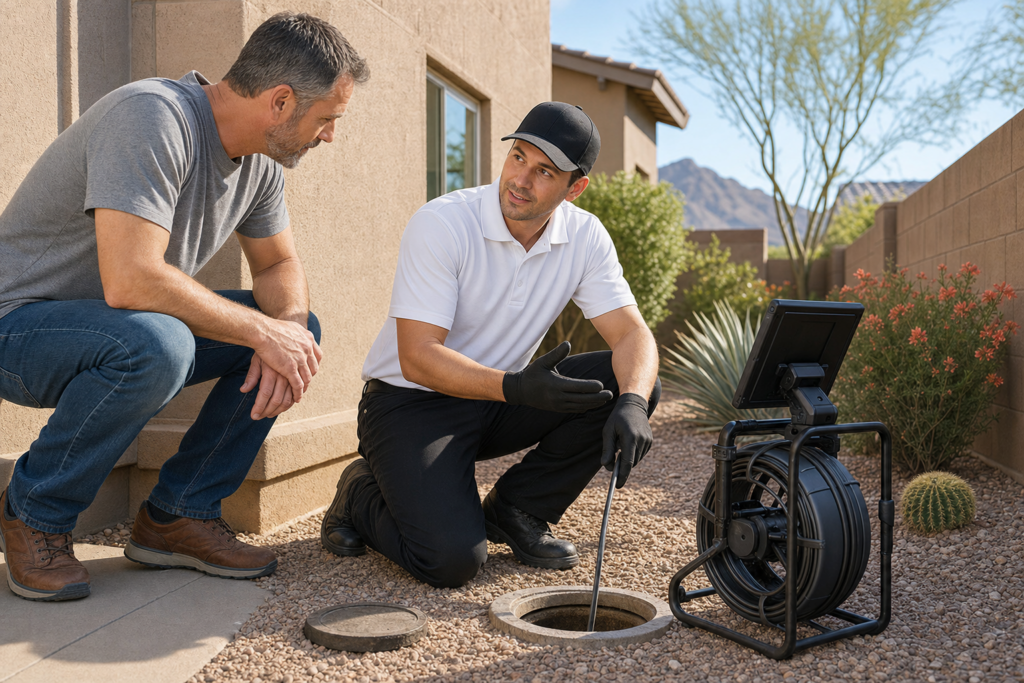
A sewer camera inspection uses a small, waterproof camera attached to a flexible cable. A technician feeds it into the pipe through a cleanout or drain opening and monitors a live video feed of the interior of the line as it happens. The camera shows what is in the pipe, where it is located, and what condition the pipe itself is in.
What a camera inspection can show:
- The type and location of a blockage — grease, roots, debris, or collapsed material
- Root intrusion at pipe joints
- Cracks, breaks, or separations in the pipe wall
- A pipe belly — a sag or low point where waste and water collect instead of flowing through
- Scale buildup or corrosion inside older pipes
- The overall condition and material of the pipe
What a camera inspection does not do: it does not fix anything. It is a diagnostic tool. It gives the technician and the homeowner a clear picture so the right service decision can be made based on what is actually there, not assumptions.
The Specific Situations Where We Recommend a Camera Inspection
Not every drain call needs a camera. But there are specific situations where recommending service without one would mean guessing — and guessing is how homeowners end up paying for work that does not solve the real problem.
When the Cause of a Blockage Is Not Obvious
A kitchen sink clogged with grease buildup is usually straightforward. But when a drain backs up and the cause is not clear from the symptoms alone — no obvious food waste, no visible debris, no recent change in usage — a camera inspection helps identify what is actually blocking the line. It could be root intrusion, a shifted pipe section, or buildup deep in the sewer line that is not reachable with a standard snake. Without seeing it, the technician would be working blind.
When a Clog Keeps Coming Back
If you have had the same drain cleared two or three times and the problem returns within weeks or months, something deeper is going on. A recurring clog often means the blockage is a symptom of a structural issue — roots growing back into a joint, a belly in the pipe trapping waste, or a partial collapse that narrows the line. Clearing the clog each time treats the symptom. The camera shows whether there is an underlying reason it keeps happening.
Before Recommending Hydro Jetting or Major Sewer Work
Hydro jetting uses high-pressure water to clean the inside of a sewer line. It is effective for heavy grease, scale, and root buildup — but it is not the right approach for every pipe. If the line has cracks, separations, or structural damage, jetting could make things worse. A camera inspection before hydro jetting confirms that the pipe can handle the pressure and that jetting is the right method for the situation.
The same principle applies before any major sewer repair recommendation. At Fast Layne Plumbing, we do not recommend sewer line repair, trenchless sewer repair, or sewer line replacement without understanding the condition of the pipe first. A camera inspection is how we confirm what the pipe actually needs before discussing options or pricing.
When Symptoms Suggest a Structural Problem
Certain signs can indicate that the issue is with the pipe itself, not just what is inside it. These may include:
- A persistent sewer smell near drains or in the yard, even after the line has been cleared
- Soggy spots in the yard near where the sewer line runs
- Gurgling sounds from multiple fixtures
- Slow drainage that affects more than one area of the house
These symptoms do not automatically mean the pipe is damaged, but they can indicate a crack, root intrusion, or a belly that needs to be confirmed visually. A camera inspection is the most practical way to check without digging.
When Multiple Drains Are Affected at the Same Time
If your kitchen sink, shower, and toilet are all draining slowly or backing up around the same time, the problem is likely in the main sewer line rather than in any single branch drain. Main line issues are harder to diagnose from the surface because the pipe is underground and often runs a significant distance from the house to the street connection. A camera lets the technician see the full length of the line, locate the problem, and determine what kind of service is appropriate.
When a Camera Inspection Is Probably Not Necessary
Honesty matters here. Not every service call needs a camera, and recommending one when it is not warranted would be the kind of upsell that makes homeowners distrust plumbers in the first place.
A camera inspection is generally not necessary when:
- A single drain is clogged and the cause is clear — hair in a shower drain, food in a kitchen line, a known object dropped down the drain
- The drain clears completely with standard snaking and there is no history of the problem recurring
- The issue is isolated to one fixture and there are no signs of a deeper line problem
In these situations, a professional drain cleaning with a motorized snake is usually enough to restore flow and confirm that the line is clear. If we do not see a reason to recommend a camera inspection, we will not recommend one.
How Camera Findings Change the Service Recommendation
The most important thing a camera inspection does is connect the diagnosis to the right service — not just any service, but the one that actually fits the situation.
Here is how that works in practice:
| What the Camera Shows | What That Typically Means for Service |
|---|---|
| Grease or scale buildup with no pipe damage | Hydro jetting may be recommended to clean the line thoroughly |
| Root intrusion at a joint with the pipe still intact | Root clearing followed by a discussion about long-term options |
| A pipe belly collecting waste | The affected section may need repair or replacement — cleaning alone will not resolve a structural sag |
| Cracks, breaks, or collapsed sections | Sewer line repair or replacement may be necessary — the technician will explain the options |
| A clear line with no visible damage | No further work needed beyond the initial clearing |
The point is that the camera turns a guess into a confirmed finding. A technician can explain what they see on the screen, show the homeowner the footage, and walk through the options based on what the pipe actually looks like — not based on assumptions about what might be wrong.
This is part of how Fast Layne Plumbing approaches diagnosis. We walk through the issue in straightforward terms, share pricing for any recommended work before it begins, and give the homeowner what they need to make a confident decision. The camera inspection is the step that makes that process honest.
Common Problems a Camera Reveals in Phoenix-Area Pipes
Phoenix homes — especially those built between the 1950s and early 2000s — can have pipe conditions that are specific to the area. A camera inspection is often the first time a homeowner sees what is actually happening underground.
Root Intrusion from Desert Trees
Trees like mesquite, palo verde, and ficus are common across Phoenix neighborhoods. Their root systems are aggressive and will seek out moisture wherever it is available, including through small gaps at pipe joints. Root intrusion is one of the most common findings during a sewer camera inspection in the Phoenix area. The camera shows exactly where roots are entering and how much of the pipe they are affecting.
Older Clay or Cast Iron Pipes
Many established Phoenix neighborhoods still have original clay or cast iron sewer lines. These materials deteriorate over decades — clay can crack and shift, cast iron can corrode and scale from the inside. A camera inspection reveals the current condition of the pipe material and helps determine whether the line can be cleaned and maintained or whether a section needs repair or replacement.
Grease and Scale Buildup in Kitchen Lines
Grease buildup is common in kitchen drain lines, especially in older homes where the pipe diameter may already be reduced by scale. A camera can show how much buildup is present, how far it extends, and whether hydro jetting or mechanical snaking is the better approach for clearing it.
Pipe Belly from Soil Movement
A pipe belly is a sag or low point in the sewer line where waste and water collect instead of flowing through. In the Phoenix area, soil shifting — from dry-to-wet cycles, construction activity, or settling over time — can cause sections of pipe to dip. A camera inspection identifies where the belly is and how severe it is, which determines whether the line needs to be repaired or whether monitoring is appropriate.
What to Expect During a Camera Inspection with Fast Layne Plumbing
If a camera inspection is recommended during your service call, here is what the process typically looks like:
- The technician locates a cleanout or suitable access point for the camera
- The camera is fed into the drain or sewer line while the technician watches the live video feed
- The technician notes the location, type, and severity of anything found — blockages, damage, buildup, or root intrusion
- The findings are explained to the homeowner in plain language, with the option to view the footage
- Based on what the camera shows, the technician recommends the appropriate next step — whether that is a specific cleaning method, a repair option, or no further action
The goal is to make sure you understand what is happening in your pipes before any major work is discussed. At Fast Layne Plumbing, we believe the homeowner deserves to see what we see and hear an honest explanation of what it means.
Frequently Asked Questions
Is a camera inspection required before every drain cleaning?
No. Many drain clogs can be diagnosed and cleared without a camera. A camera inspection is recommended when the cause of the problem is unclear, when a clog keeps coming back, or when the symptoms suggest a deeper issue in the main sewer line. If a standard drain cleaning resolves the problem and there is no sign of a recurring issue, a camera inspection may not be necessary.
Can a sewer camera detect all types of blockages?
A sewer camera can identify most common blockages and pipe conditions, including root intrusion, grease buildup, scale, collapsed sections, and pipe bellies. However, it shows what is visible inside the pipe at the time of the inspection. In some cases — such as a line that is completely full of standing water — visibility can be limited until the line is partially cleared. The technician will explain any limitations during the inspection.
Does a camera inspection add to the cost of a service call?
A camera inspection is a separate diagnostic service. If it is recommended during your service call, the technician will explain why it is being suggested and discuss the cost with you before proceeding. Fast Layne Plumbing provides upfront pricing, so there are no surprise charges added to your bill without your knowledge.
Can a camera go down a toilet or only through a cleanout?
Sewer cameras are typically inserted through a cleanout — an access point designed for maintenance. In some situations, other access points may be used depending on the layout of the plumbing. The technician will determine the best point of entry based on the specific setup of your home.
What is a pipe belly and why does it matter?
A pipe belly is a section of pipe that has sagged or dipped below its intended slope, creating a low point where waste and water collect. Over time, this can lead to recurring clogs, slow drainage, and buildup that normal cleaning cannot permanently resolve. Pipe bellies are relatively common in the Phoenix area due to soil conditions and are one of the problems a camera inspection is specifically designed to identify.
What happens if the camera finds something serious?
If the camera reveals damage, significant root intrusion, or a structural issue that requires repair, the technician will explain the findings, show you the footage when possible, and walk through the available options. Fast Layne Plumbing does not pressure homeowners into immediate decisions on major work. We provide clear information and upfront pricing so you can make the choice that is right for your home and your situation.
The Bottom Line
A camera inspection is not a routine add-on. It is a diagnostic step that Fast Layne Plumbing recommends when it is the most honest way to understand what your drain or sewer line actually needs. It protects you from paying for the wrong service, and it protects us from recommending work based on incomplete information.
If you are dealing with a drain or sewer problem in Phoenix — especially one that keeps coming back or does not have an obvious cause — a camera inspection may be the clearest path to an honest answer.
Call Fast Layne Plumbing at 480.485.4659 to schedule service or ask about camera inspection for your drain or sewer line.