Why Your Laundry Room Floor Drain Keeps Backing Up and How Fast Layne Plumbing Finds the Real Cause
Yes — Fast Layne Plumbing diagnoses and fixes recurring laundry room floor drain backups for homeowners across Phoenix, AZ. If your floor drain has backed up more than once, the problem is usually deeper than a simple clog, and clearing it with a basic snake may not be enough to keep it from coming back. Fast Layne Plumbing uses camera inspections, hydro jetting, and sewer line repair to find the actual cause — not just treat the symptom — so the right fix can be matched to the real problem.
A drain that backs up once is frustrating. A drain that keeps backing up after it has already been cleared is a different situation entirely. If you have been through this cycle — called a plumber, had it snaked, watched it drain fine for a few weeks, and then found water pooling on your laundry room floor again — you are not dealing with a routine clog anymore. Something else is going on inside the line, and understanding what that is changes everything about how the repair should be handled.
This article explains what causes laundry room floor drains to back up repeatedly, how a licensed plumber approaches the diagnosis, what services may be involved, and what to expect if you call Fast Layne Plumbing for help.
What Makes a Laundry Room Floor Drain Backup “Recurring”
A one-time backup usually means something is blocking the line — a wad of lint, a buildup of soap residue, or an object that should not be there. A plumber snakes the drain, clears the blockage, and flow returns to normal. That is a straightforward fix.
A recurring backup is different. It means the clog keeps forming in the same place, or the drain keeps slowing down even after it has been professionally cleaned. When that happens, snaking may be clearing a path through the middle of the buildup without actually removing the buildup itself. Or there may be a structural problem inside the pipe — a crack, a sag, or root intrusion — that traps debris in the same spot every time.
The distinction matters because the solution for a recurring backup is not just “clean it harder.” It is finding out why the clog keeps returning and addressing that underlying condition. That is where diagnosis becomes more important than the cleaning itself.
Why Laundry Room Floor Drains Are Prone to Recurring Backups
Laundry room floor drains deal with a specific combination of waste that makes them more vulnerable to repeated problems than most other household drains. Understanding what goes into that drain helps explain why it keeps coming back.
Lint, Soap Scum, and Detergent Residue
Washing machines produce a steady stream of lint fibers, detergent residue, and fabric softener. Over time, these materials coat the inside walls of the drain pipe. A snake can punch through the center of the buildup, but the coating remains on the pipe walls. As soon as the next few loads of laundry run, lint and soap begin collecting on that coating again, and the clog reforms in the same location.
This is one of the most common reasons a laundry floor drain keeps backing up after being snaked. The tool that cleared it was not designed to scour the pipe walls — it was designed to break through a single point of blockage.
A Partially Blocked Branch Line
Your laundry room floor drain connects to a branch drain line, which then feeds into your home’s main sewer line. If the branch line has a partial blockage — from accumulated buildup, a minor root intrusion, or a section of damaged pipe — it may drain slowly enough to handle light use but back up whenever the washing machine sends a large volume of water through the system at once.
This is a common pattern: the floor drain seems fine most of the time, but backs up during or immediately after a wash cycle. That pattern usually points to a restriction in the branch line rather than a problem at the drain opening itself.
Pipe Bellies, Sags, or Structural Damage
In many Phoenix homes — especially those built between the 1950s and early 2000s — drain pipes may have shifted over time due to soil movement or settling. If a section of pipe settles unevenly and forms a low point, sometimes called a belly or sag, wastewater and debris pool in that area rather than continuing through the line. Snaking can clear the debris temporarily, but the low spot remains, and new debris settles into the same place.
A cracked or collapsed section of pipe creates a similar trap. Until the damaged section is repaired or replaced, the backup will keep returning regardless of how many times the drain is cleaned.
Tree Root Intrusion
In the Phoenix area, tree roots can reach drain lines even in desert landscaping. Roots seek moisture, and a small crack or joint gap in a drain pipe is enough to allow entry. Once inside, roots catch lint, soap, and debris, creating a blockage that reforms quickly after each cleaning. Root intrusion is one of the most common causes of recurring sewer and drain backups in older Phoenix neighborhoods.
Venting Issues
Every drain in your home relies on proper venting to maintain air pressure in the system. If the vent serving your laundry room drain is partially blocked or improperly installed, the drain may gurgle, drain slowly, or back up under heavy use even when the pipe itself is clear. Venting problems are less common than buildup or pipe damage, but they can explain recurring backups that do not respond to cleaning.
The Diagnostic Question That Helps Narrow It Down
Before a plumber arrives, there is one observation that can help point toward the likely cause: does the backup happen only when the washing machine drains, or does it happen whenever multiple fixtures in the house are running?
This matters because the answer changes where the problem probably is.
- Backup only during or after a wash cycle: This usually suggests the issue is in the branch line that connects your laundry drain to the main sewer line. The pipe can handle small flows but cannot keep up with the volume of water the washing machine produces.
- Backup when multiple fixtures run at the same time — such as when someone showers while the washer is going, or when the dishwasher and washer run together: This pattern may indicate a restriction or blockage deeper in the main sewer line, not just the laundry branch.
Paying attention to when the backup happens and what else is running at the time gives your plumber useful information before they even open a cleanout. It is worth noting what you have observed so you can share it during the call.
How Fast Layne Plumbing Approaches a Recurring Floor Drain Backup
Fast Layne Plumbing treats a recurring backup differently than a first-time clog. The goal is not just to get the drain flowing again — it is to find out why it keeps stopping.
Starting with a Drain Cleaning Assessment
The first step is a professional drain cleaning to restore flow and allow the technician to evaluate how the drain responds. In some cases, this may involve motorized drain snaking or hydro jetting, depending on what the technician finds. But unlike a quick-clear approach, Fast Layne Plumbing uses this step as the beginning of a diagnosis, not the end of the service call.
Sewer Camera Inspection — What It Finds and Why It Matters
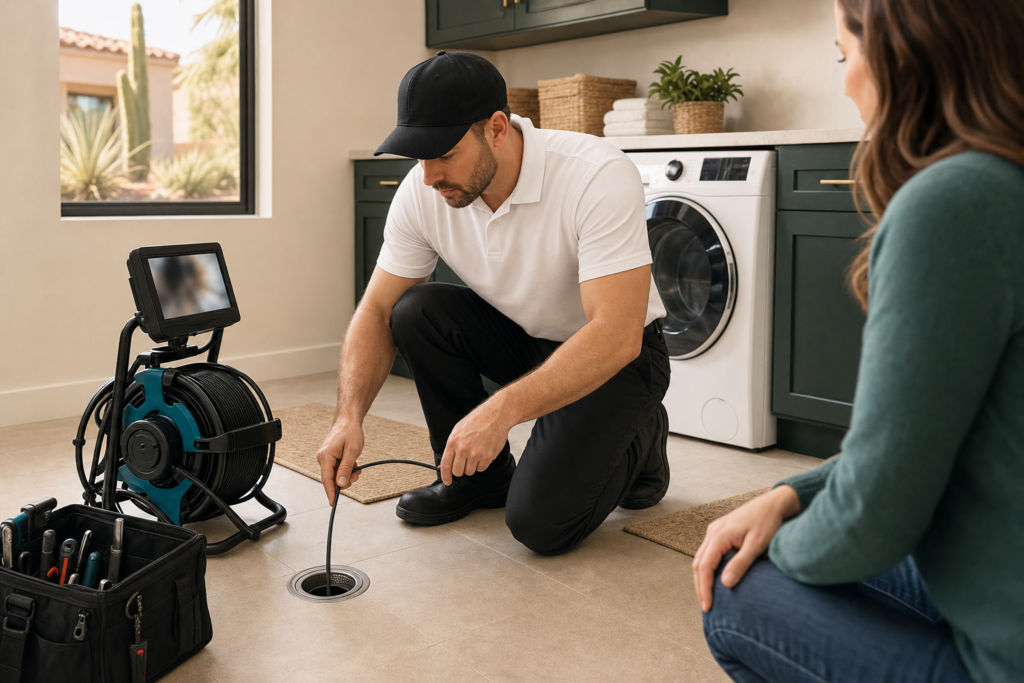
For recurring backups, a camera inspection is often the most important step. A small waterproof camera is fed into the drain line so the technician can see the inside of the pipe on a live video feed.
What the camera can reveal includes:
- Buildup coating the pipe walls even after snaking
- A belly or sag in the pipe where debris collects
- Cracks, joint separations, or partial collapses
- Root intrusion through pipe joints or fractures
- Improper connections or slope issues from the original installation
Each of these findings leads to a different recommendation. A pipe coated with buildup may call for hydro jetting. A belly may require a section of pipe to be repaired. Root intrusion may need clearing followed by a repair to seal the entry point. The camera inspection is what connects the symptom — a recurring backup — to the specific condition causing it.
Fast Layne Plumbing explains the camera findings in plain English so you understand what was found, what it means, and what the options are before any work begins.
Hydro Jetting — When Snaking Is Not Enough
Snaking works by pushing a cable through the pipe to break apart or push through a blockage. It is effective for single clogs, but it does not clean the pipe walls. For laundry drains that keep backing up due to lint and soap buildup, snaking may clear the center of the pipe while leaving the coating intact — which is why the clog comes back.
Hydro jetting directs high-pressure water through the pipe to thoroughly clean the interior walls, flushing away the layered buildup that a snake leaves behind. For recurring laundry drain problems caused by buildup, hydro jetting is often the more thorough cleaning method because it addresses the pipe wall condition rather than just the immediate blockage.
Hydro jetting is not always the right choice. If the camera inspection shows structural damage, jetting could make the problem worse. That is why Fast Layne Plumbing uses camera inspection to evaluate the pipe’s condition before recommending hydro jetting. The method should match what the pipe actually needs.
Sewer Line Repair — When the Problem Is Structural
If the camera inspection reveals a cracked pipe, a collapsed section, a significant belly, or root intrusion that has damaged the line, cleaning alone will not solve the recurring backup. In those cases, repair or replacement of the affected section may be the appropriate next step.
Fast Layne Plumbing offers both traditional sewer repair and trenchless sewer repair options, depending on the location and severity of the damage. Trenchless methods — including pipe lining and pipe bursting — can reduce disruption to your yard and landscaping when conditions allow.
Not every recurring backup requires sewer line repair. Many can be resolved with hydro jetting or a targeted cleaning approach once the real cause is identified. Fast Layne Plumbing evaluates what the inspection shows and provides honest recommendations based on what the pipe actually needs, not on what generates the biggest invoice.
What to Tell Fast Layne Plumbing When You Call
The more your plumber knows before arriving, the better prepared they are to diagnose efficiently. If you are calling about a recurring laundry room floor drain backup, here is what is helpful to share:
- How often the backup happens — weekly, monthly, every few months
- Whether it seems connected to the washing machine running
- Whether other drains in the house are also slow or backing up
- Whether you have had the drain snaked before, and how recently
- Whether you have noticed any foul odors near the drain between backups
- The approximate age of your home, if you know it
None of this replaces an in-person inspection, but it helps the technician arrive with the right tools and a clearer starting picture of what may be going on.
When a DIY Approach Is Not the Right Move
For a first-time slow drain, a homeowner might try a basic plunger or a small hand snake from a hardware store. That is reasonable for minor surface-level clogs.
But for a drain that keeps backing up, chemical drain cleaners and repeated DIY snaking can cause more harm than good. Chemical cleaners can corrode older pipes, and aggressive snaking without knowing the pipe’s condition can damage a line that is already compromised.
If your laundry room floor drain has backed up more than once, or if it backs up every time you run the washing machine, that is a strong signal to have a licensed plumber evaluate the line with a camera before any further cleaning is attempted. The goal is to understand what is happening inside the pipe, not just force it open again.
Why Phoenix Homeowners Deal with This More Than You Might Expect
Phoenix has a large inventory of homes built across several decades, with a range of pipe materials and installation practices. In older homes, cast iron drain lines can deteriorate from the inside out over time, developing rough interior surfaces that snag lint and debris far more readily than newer pipe materials. Homes from the 1970s through the 1990s may have clay or early PVC connections that are more susceptible to root intrusion at the joints.
Phoenix’s hard water also plays a role. Mineral deposits can gradually narrow the inside diameter of drain pipes, reducing flow capacity and making buildup problems worse over time.
These are not reasons to panic — they are reasons why recurring drain backups in Phoenix homes are not unusual, and why a diagnostic-first approach matters. Understanding the pipe material, age, and condition helps a plumber recommend the right solution rather than a one-size-fits-all approach.
Frequently Asked Questions
Why does my laundry room floor drain keep backing up?
Recurring backups usually mean something is going on inside the drain line beyond a simple clog. Common causes include lint and soap buildup coating the pipe walls, a low spot or belly in the pipe where debris collects, root intrusion, or a partially blocked branch line. A camera inspection can help identify the specific cause so the right fix can be applied.
Why does the backup come back after the drain has been snaked?
Snaking clears a path through a blockage, but it does not clean the pipe walls. If the recurring backup is caused by buildup on the pipe walls or a structural issue like a sag or crack, the clog will reform after snaking because the underlying condition has not changed. That is why recurring problems often require a camera inspection and potentially hydro jetting or repair.
What is the difference between snaking and hydro jetting?
Snaking uses a rotating cable to break through or pull out a clog. Hydro jetting sends pressurized water through the pipe to strip away buildup from the interior walls. Snaking is effective for one-time clogs. Hydro jetting is typically more appropriate when buildup on the pipe walls is causing the drain to clog repeatedly.
Does a recurring backup always mean I need sewer line repair?
No. Many recurring backups can be resolved with hydro jetting once the buildup is thoroughly removed. Sewer line repair becomes the relevant path forward when a camera inspection uncovers physical damage to the pipe — such as fractures, collapsed sections, root damage, or pronounced bellies. A licensed plumber can evaluate what the inspection shows and recommend the appropriate option.
What does a floor drain backup only during the wash cycle mean?
If the backup happens specifically when the washing machine drains, it usually points to a restriction in the branch line connecting your laundry drain to the main sewer line. The pipe may handle small flows fine but cannot keep up with the volume of water the washing machine sends at once. A camera inspection of the branch line can help confirm what is causing the restriction.
Can I fix a recurring floor drain backup myself?
For a recurring problem, DIY approaches like chemical drain cleaners or repeated hand snaking are unlikely to resolve the issue and may cause additional damage to older pipes. If your laundry floor drain has backed up more than once, a professional evaluation with a camera inspection is the safer and more effective next step.
Is Fast Layne Plumbing available for same-day service in Phoenix?
Fast Layne Plumbing offers same-day availability for drain cleaning and plumbing services in Phoenix, AZ. Call 480.485.4659 to check current scheduling and book a service visit.
The Right Next Step for a Drain That Keeps Coming Back
A laundry room floor drain that backs up once is an inconvenience. A drain that keeps backing up is telling you something about the condition of the pipe. The longer it goes without a proper diagnosis, the more likely it is to keep happening — and the more frustrating each round of cleaning becomes.
Fast Layne Plumbing is a family-owned plumbing company serving Phoenix, AZ. We answer the phone, show up when we say we will, and focus on finding the real problem — not just clearing the symptom. If your laundry room floor drain keeps backing up, we can evaluate the line, explain what we find in plain English, and walk you through your options with upfront pricing and no pressure.
Call Fast Layne Plumbing at 480.485.4659 to schedule service.