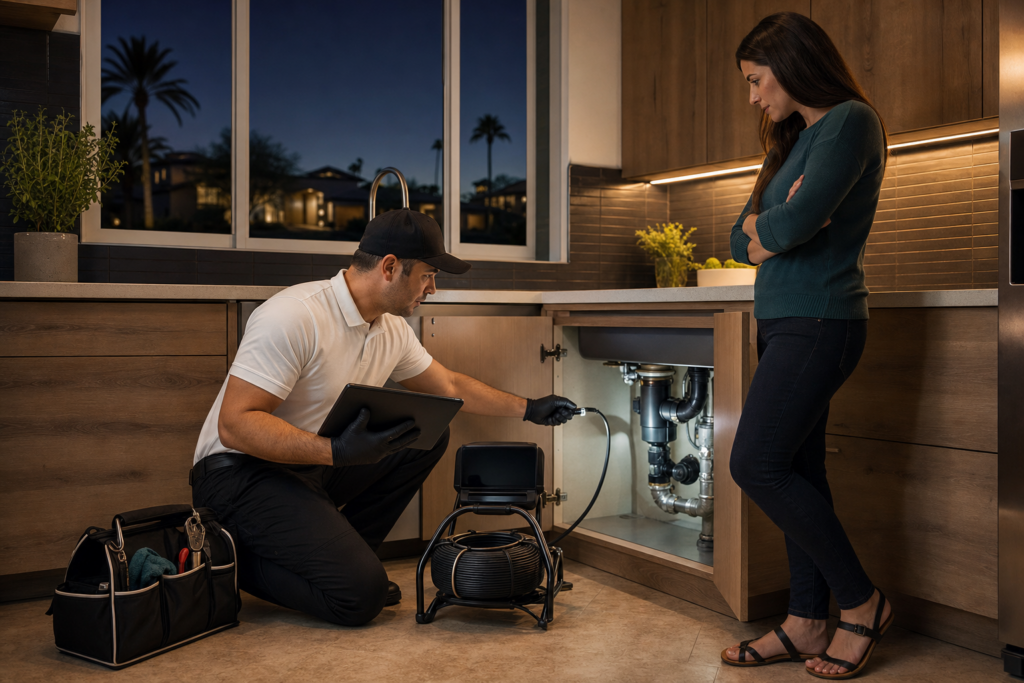
After-Hours Drain Cleaning in Phoenix: What It Actually Costs and How to Decide If You Should Call Tonight
Yes, most Phoenix plumbers charge more for drain cleaning outside of regular business hours. The premium is real, and it applies to evenings, weekends, and holidays. But the size of that premium — and whether it makes sense to pay it right now — depends on a few things that are worth understanding before you pick up the phone.
This article explains how after-hours pricing works in the Phoenix plumbing market, what the fees actually cover, what drives the total cost beyond the time of day, and how to figure out whether your drain situation genuinely needs attention tonight or can safely wait until morning. If you are standing in your kitchen at 10 p.m. wondering whether to call or wait, this is written for you.
How After-Hours Drain Cleaning Pricing Works in Phoenix
After-hours service in the plumbing industry generally means any time outside of standard weekday business hours — typically before 8 a.m. or after 5 p.m. on weekdays, plus all day on Saturdays, Sundays, and holidays. The exact window varies from company to company, but that is the general framework in the Phoenix market.
When you call a plumber during those hours, the pricing structure usually works in one of two ways. Understanding the difference helps you ask better questions and compare what you are actually being quoted.
The Dispatch Fee Model
Some plumbing companies charge a separate dispatch fee or call-out fee for after-hours service. This is a flat charge just to send a technician to your home, and it is billed on top of the regular labor and service costs. Think of it as paying for the availability — the fact that someone is on call and ready to come out at an unusual hour.
The dispatch fee is typically separate from the actual cost of the drain cleaning work itself. So you pay the fee for the visit, and then you pay for whatever service is performed once the technician diagnoses the problem.
The Elevated Rate Model
Other companies do not charge a separate dispatch fee. Instead, they apply a higher hourly rate or a higher flat rate for after-hours work. The overtime multiplier in the plumbing trade is commonly somewhere in the range of 1.5 to 2 times the standard rate, though this varies by company. Some companies use flat-rate pricing that simply has a different tier for after-hours calls.
Either way, you are paying a premium. The structure just looks different on the invoice.
Standard Hours, After-Hours, Weekends, and Holidays
Most Phoenix plumbing companies use a tiered pricing structure that looks something like this:
- Standard weekday hours — the lowest rate tier, typically Monday through Friday during normal business hours
- After-hours weekday — evenings and early mornings on weekdays, usually at a moderate premium
- Weekends — Saturdays and Sundays, often at a higher premium than weekday evenings
- Holidays — the highest pricing tier, reflecting the fact that a technician is giving up a holiday to respond to your call
The gap between the lowest and highest tier can be significant. That is why it matters to understand what tier you are calling in and what the company charges for that tier before you authorize any work.
What the Fees Actually Cover
It is easy to feel frustrated about paying more just because a drain backed up on a Saturday instead of a Tuesday. But the after-hours premium is not arbitrary. Here is what is actually behind it.
Why Dispatch Fees and Call-Out Fees Exist
A dispatch fee covers the cost of maintaining after-hours availability. That means a plumbing company is keeping a technician on call, a service vehicle stocked and ready, and a dispatch system staffed to answer the phone. None of that is free, even when no calls come in. The fee helps cover the infrastructure of being available when most businesses are closed.
When you see a dispatch fee on a quote, that is what you are paying for — the readiness to respond, not just the work itself.
What Overtime Multipliers Mean for You
When a plumbing company pays its technicians overtime rates for evening, weekend, or holiday work — which labor law often requires — those costs get passed along in the service rate. A 1.5x or 2x multiplier on the hourly rate reflects the actual cost of compensating a skilled technician who is working outside normal hours.
This is not a mark-up designed to take advantage of your situation. It is a real cost of doing business at unusual hours.
Why Holiday Rates Are the Highest Tier
Holiday pricing tends to be the most expensive because it stacks multiple cost factors: overtime pay at the highest multiplier, reduced technician availability, and the simple reality that fewer companies are operating at all. When fewer plumbers are available and the ones who are available are earning premium pay, the rate reflects that scarcity.
What Drives the Total Bill Beyond the Time of Day
The time you call matters, but it is not the only thing that affects your total cost. Several other factors can move the bill up or down, regardless of whether the call happens at noon on a Wednesday or midnight on a Sunday.
Single Fixture Clog Versus Main Sewer Line Backup
A single slow drain in a bathroom sink is a very different job than a main sewer line backup that is affecting every drain in the house. Main line work typically requires heavier equipment, more time, and more expertise. The scope of the problem is one of the biggest cost drivers in drain cleaning — and it is something a technician usually cannot fully assess until they are on-site.
Snaking Versus Hydro-Jetting
A standard mechanical drain snake can clear many common clogs — hair, soap buildup, minor blockages. But when the clog is deeper, more stubborn, or caused by grease, scale, or root intrusion, hydro-jetting may be the more effective option. Hydro-jetting uses high-pressure water to clear the line more thoroughly, but it involves specialized equipment and typically costs more than standard snaking.
A good plumber will explain which method the situation calls for and why, so you understand what you are paying for before the work begins.
Clog Location and Access
A clog near a cleanout that is easy to reach is a simpler job than one buried deep in the line or in a hard-to-access spot. The physical logistics of getting to the blockage affect how long the job takes and what equipment is needed, both of which affect cost.
The Claim That After-Hours Service Costs Nothing Extra
You may have seen plumbing companies in Phoenix advertise that they do not charge extra for emergency or after-hours calls. It is worth understanding what that claim usually means in practice.
In many cases, companies that advertise no overtime fees or no after-hours surcharges have built the premium into their standard pricing. Their base rate for any service call — day or night — may be higher than what another company charges during normal business hours. The result is that you may pay a similar total amount either way. The fee structure just looks different.
This is not necessarily dishonest. It is a different pricing model. But it means that the most useful question to ask is not whether a company tacks on a surcharge for after-hours work. The better question is what the total cost will be for this specific service, and whether you will have that number confirmed before anything starts.
What matters most is whether the company gives you a clear, upfront price before any work begins — not how the marketing describes the fee structure.
Is This a Genuine Emergency, or Can It Wait Until Morning?
This is the question that actually matters most when you are staring at a drain problem at 11 p.m. and weighing whether to call now or wait. Not every drain issue requires an immediate response, and being honest about that can save you money without putting your home at risk.
Signs Your Drain Situation May Need Attention Right Away
- Sewage or wastewater is actively backing up into your home through floor drains, toilets, or tubs
- Multiple drains in your home are affected at the same time, which could indicate a main line problem
- Standing water is spreading to areas where it could cause damage to flooring, walls, or personal belongings
- There is a strong sewer smell accompanied by visible backup or water that will not drain at all
- You cannot use any plumbing in the home — no toilets, no sinks, no showers
These situations may get worse with time, and addressing them sooner can help limit the disruption. If any of these describe what you are dealing with, it is reasonable to call a plumber now.
Signs It May Be Safe to Schedule for the Next Business Day
- A single drain is slow but still moving — water eventually goes down, just not quickly
- The problem is limited to one fixture, and you can use other drains and toilets normally
- There is no sewage backup, no standing water spreading, and no sewer smell
- The issue is more of an inconvenience than a disruption — a slow kitchen sink, for example, that you can work around until morning
If the problem is contained and not actively getting worse, waiting until regular business hours is often a reasonable choice. You will likely pay less, and you will have more options for scheduling.
A note of honesty: no article can diagnose your specific situation remotely. These are general guidelines, not a substitute for a professional evaluation. If you are unsure, calling a plumber to describe the situation is always a reasonable step — a good company will help you decide whether it needs immediate attention.
What to Ask Before You Authorize After-Hours Work
If you do decide to call a plumber after hours, a short list of questions can help you feel confident about the decision and avoid surprises on the bill.
- Is there a dispatch fee or call-out fee, and how much is it? This tells you what you are paying just for the visit, before any work begins.
- What is the after-hours rate, and how is it structured? Find out whether you are being quoted a flat rate for the service or an hourly rate with an overtime multiplier.
- Will I receive a clear price before any work starts? A trustworthy plumber will give you an upfront price or estimate after diagnosing the problem and before beginning repairs. You should never feel pressured to authorize work without knowing what it will cost.
- What happens if the problem turns out to be more complex than expected? Ask how the company handles situations where the initial diagnosis changes once the work is underway. A good company will communicate with you before the scope or cost changes.
- Is there a diagnostic or camera inspection fee? If the plumber needs to run a camera inspection to identify the issue, ask whether that is included in the service call or billed separately.
These are not confrontational questions. They are the kind of questions a reputable plumber expects and welcomes, because they are the same questions that lead to a clear, respectful working relationship.
How Fast Layne Plumbing Handles After-Hours Drain Calls in Phoenix
At Fast Layne Plumbing, we understand what it feels like to deal with a drain problem at the worst possible time. A backed-up drain does not wait for Monday morning, and neither should your peace of mind.
Here is how we approach these calls:
- We answer the phone. That sounds simple, but if you have ever called a plumber and gotten a voicemail — especially on a weekend — you know it matters.
- We explain what we find in plain English. When a technician arrives and evaluates your drain, you will hear a clear explanation of what the problem appears to be, what the recommended approach is, and why. No jargon, no pressure.
- We provide upfront pricing before work begins. You will know what the service will cost before we start. If the situation turns out to be more involved than initially expected, we communicate that clearly so you can make an informed decision.
- We do not upsell services you do not need. If a standard drain snake will solve the problem, we are not going to push hydro-jetting. If a single drain cleaning will handle it, we are not going to recommend a full sewer line replacement. The recommendation matches what the inspection actually shows.
- We treat your home with respect. We clean up after the work, we are careful with your space, and we do not leave until the job is done right.
We are a family-owned plumbing company serving Phoenix, and we built this business on the idea that homeowners deserve a plumber who is honest, reliable, and clear. That does not change because the clock says 9 p.m.
A Note for Landlords and Property Managers
If you manage rental properties in Phoenix, after-hours drain emergencies come with an extra layer of complexity. You may need to coordinate access with tenants, make authorization decisions remotely, and document what was done for your records.
When you call Fast Layne Plumbing, we can work with you on that process. Clear communication is part of how we operate, and that extends to landlords and property managers who need to understand exactly what happened, what was done, and what it cost — even if they were not on-site during the service call.
Frequently Asked Questions
Do all Phoenix plumbers charge extra for nights and weekends?
Most do, though the structure varies. Some add a separate dispatch or call-out fee. Others apply a higher hourly or flat rate for after-hours work. Some advertise no extra fees but build the premium into higher base pricing. The most important thing is to ask for the total cost before authorizing work, regardless of how the company describes its fee structure.
What is a dispatch fee?
A dispatch fee — sometimes called a call-out fee — is a flat charge for sending a technician to your home. It covers the cost of availability and travel, and it is typically billed separately from the actual labor and service charges for the work itself.
Is it worth waiting until morning to save money?
It depends on the severity of the situation. If you have a single slow drain, no sewage backup, and the rest of your plumbing works normally, waiting until regular business hours is often a reasonable choice that may cost less. If sewage is actively backing up, multiple drains are affected, or the problem is spreading, calling sooner can help prevent further disruption. When in doubt, call and describe what is happening — a trustworthy plumber will help you assess whether it needs immediate attention.
What is the difference between snaking and hydro-jetting?
Snaking uses a motorized cable to physically break through or pull out a clog. It is effective for many common blockages. Hydro-jetting uses high-pressure water to scour the inside of the pipe, clearing buildup, grease, scale, and roots more thoroughly. Hydro-jetting is typically used for more stubborn or recurring problems and costs more than standard snaking. A licensed technician can evaluate which method your situation calls for.
Does a main line backup cost more than a single drain clog?
Generally, yes. Main sewer line work involves larger equipment, more time, and greater complexity than clearing a single fixture drain. The exact cost depends on what the inspection reveals — including the location of the blockage, the condition of the line, and the method needed to clear it.
What should I ask a plumber before they start after-hours work?
Ask about any dispatch or call-out fees, the rate structure for after-hours service, whether you will receive an upfront price before work begins, and how the company handles situations where the problem turns out to be more complex than expected. These questions help you understand the total cost and avoid surprises.
The Bottom Line
After-hours drain cleaning in Phoenix does typically cost more than a scheduled weekday visit. That premium is real, and it reflects the genuine costs of maintaining availability outside normal business hours. But understanding how the pricing works, knowing what questions to ask, and being able to assess whether your situation truly requires an immediate call — those things put you in control of the decision.
If you are dealing with a drain problem in Phoenix and you are not sure whether it can wait, or if you just want to talk through what is happening with someone who will give you a straight answer, give us a call.
Call Fast Layne Plumbing at 480.485.4659. We will pick up, we will listen, and we will help you figure out the right next step.