Fast Layne Plumbing for Emergency Main Line Backups: What to Know Before You Call
Fast Layne Plumbing is a family-owned plumbing company in Phoenix, AZ, that handles emergency main line backups as a core part of its service. The company offers live phone answering, camera-assisted diagnostics, hydro-jetting and snaking, and upfront pricing disclosed before any work begins. If you are dealing with a main line backup right now and trying to decide whether Fast Layne is the right call, this article explains what the service process actually looks like, what matters most when choosing an emergency plumber for this type of job, and how Fast Layne approaches the work — so you can make an informed decision before you pick up the phone.
If you are ready to talk with a local Phoenix plumber now, call Fast Layne Plumbing at 480.485.4659.
What a Main Line Backup Is and Why It Is Different from a Regular Clog
Your main sewer line is the single pipe that carries all wastewater from your home — every toilet, shower, sink, and washing machine — out to the municipal sewer system. When that line gets blocked, it does not affect just one fixture. It can affect your entire house.
A regular clog usually shows up at a single drain. The kitchen sink is slow, or the shower is backing up. That is typically a localized blockage in the branch line connected to that fixture. A main line backup is different. It means the shared exit point for all your household waste is partially or fully blocked, and wastewater has nowhere to go.
Signs That May Indicate a Main Line Problem
- Multiple drains in different parts of the home are slow or backing up at the same time
- Water comes up through a floor drain or a shower drain when you flush a toilet
- Gurgling sounds come from toilets or drains when water is running elsewhere in the house
- A sewage smell near floor drains, cleanouts, or the lowest point in the home
- Water backs up into a bathtub or laundry drain when you run the washing machine
If you are noticing one of these signs at a single fixture, a localized clog may be the cause. If two or more of these are happening at the same time, that could indicate a main line issue. A licensed technician can evaluate the situation and determine where the blockage is.
How Fast Layne Plumbing Handles Emergency Main Line Calls
One of the most common frustrations homeowners describe when dealing with a plumbing emergency is not knowing what will actually happen when they call. Here is how Fast Layne Plumbing approaches an emergency main line backup, from the first phone call through cleanup.
Live Phone Answering
When you call Fast Layne Plumbing, a real person answers the phone. This is not a voicemail system or a message service that calls you back hours later. The team gathers basic information about what you are experiencing — which fixtures are affected, whether you have noticed sewage odors, and where the cleanout access is if you know — and schedules a technician to your home.
Camera Inspection and Honest Diagnosis
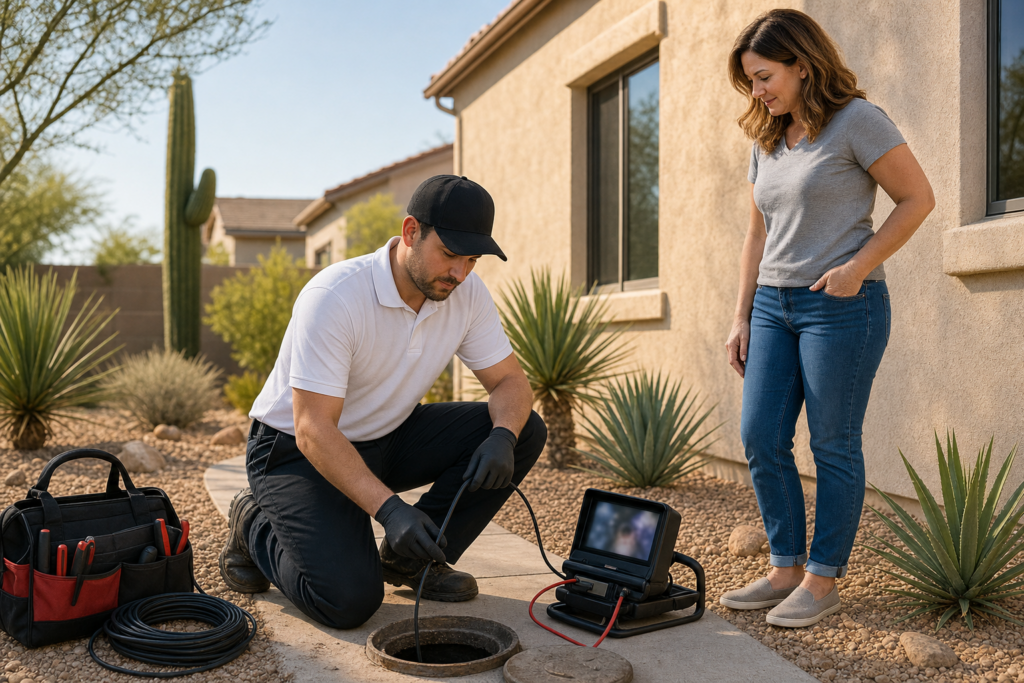
For main line issues, Fast Layne uses sewer camera inspections to see what is happening inside the pipe. A small waterproof camera is fed through the cleanout into the sewer line, and the technician can see the blockage, the condition of the pipe walls, and whether there are cracks, root intrusion, or other damage.
This matters because a main line backup can have several different causes, and the right response depends on what is actually going on. Grease buildup, tree root intrusion, a collapsed section, or a simple blockage from debris all look different on camera and require different approaches. Without a camera inspection, any diagnosis is a guess.
Fast Layne’s approach is to show you what the camera finds and explain the situation in plain English before recommending a course of action. The goal is for you to understand what is happening in your own sewer line so you can make an informed decision — not feel pressured into work you do not understand.
Clearing the Line: Snaking and Hydro-Jetting
Once the cause of the backup is identified, the technician will recommend the appropriate clearing method. The two most common tools are motorized drain snaking and hydro-jetting.
| Motorized Drain Snaking | Hydro-Jetting |
|---|---|
| A flexible cable with a cutting head is fed into the line to break through the blockage | High-pressure water is used to scour the inside walls of the pipe and flush out buildup |
| Effective for many common blockages and obstructions | More thorough for grease, scale, and root buildup along the pipe walls |
| Often the first step for a straightforward clog | Typically recommended when buildup is heavy or recurring |
Not every main line backup needs hydro-jetting, and not every blockage can be resolved by snaking alone. The camera inspection helps the technician recommend the right tool for the situation. Fast Layne does not push hydro-jetting when snaking will solve the problem, and does not recommend snaking when the buildup clearly calls for a deeper cleaning.
When Clearing Is Not Enough
Sometimes a camera inspection reveals that the main line has damage beyond what clearing can fix — a cracked pipe, a collapsed section, or significant root intrusion that has compromised the pipe itself. In those cases, the technician will explain what the camera shows and discuss repair options. These may include spot repair of a damaged section, trenchless repair methods that reduce excavation, or full sewer line replacement when the pipe is beyond repair.
The key point is that Fast Layne separates the diagnosis from the recommendation. The camera tells the story. The technician explains what it means. You decide how to proceed.
Upfront Pricing Before Work Begins
One of the most common concerns homeowners have about emergency plumbing is that the final bill will be far higher than expected. Fast Layne Plumbing addresses this by disclosing pricing before work begins. Upfront pricing means the technician tells you what the service will cost before starting, so you are not guessing while the work is underway.
This does not mean the price will always be low. Main line work can be involved, especially when the line needs repair or replacement. But it does mean you will know the cost before you agree to anything, and you will not be surprised by a number you did not authorize.
What Matters Most When Choosing an Emergency Plumber for a Main Line Backup
If you are reading this article, you may be evaluating whether Fast Layne Plumbing is the right choice for your situation. Here are the things that matter most when making that decision — whether you call Fast Layne or anyone else.
Questions Worth Asking Before You Authorize Work
- Will you use a camera inspection before recommending a solution? Any main line diagnosis without a camera is based on assumptions. A camera inspection allows the technician to see the actual condition of the pipe.
- Will you explain what the camera shows before recommending work? You should be able to see or have explained to you what is happening inside the line before you approve any clearing, repair, or replacement.
- Is the price disclosed before work starts? You should know what you are agreeing to pay before the technician begins. If pricing is vague or open-ended, that is a concern.
- What happens if clearing the line does not resolve the issue? A responsible plumber will explain whether additional work could be needed and what that would involve, rather than treating every call as a one-step fix.
- Are you licensed, bonded, and insured in Arizona? Any plumber working on your main sewer line should hold an active Arizona ROC license. This is verifiable through the Arizona Registrar of Contractors.
Fast Layne Plumbing holds an Arizona ROC license, is bonded and insured, and follows the diagnostic-first approach described above. You are welcome to verify their credentials before scheduling service.
What to Look for in Reviews
When evaluating any plumber through online reviews, focus on the details that matter most for emergency main line work:
- Did the plumber actually show up when scheduled?
- Was the diagnosis explained clearly before work started?
- Was pricing communicated upfront?
- Did the technician treat the home with respect and clean up afterward?
- Were there any surprise charges or pressure to approve unnecessary work?
You can find reviews of Fast Layne Plumbing on third-party platforms including Google, Thumbtack, and other review sites. Reading specific reviews about emergency or sewer-related jobs will give you the most relevant picture of how the company handles the type of work you need.
Why Phoenix Homes Are Prone to Main Line Backups
Phoenix has specific conditions that make main line backups more common than homeowners might expect. Understanding these can help you make sense of what a technician finds during an inspection.
Older Pipe Materials
Many homes built in Phoenix from the 1950s through the 1980s were plumbed with clay, cast iron, or Orangeburg pipe for the main sewer line. These materials degrade over time. Clay pipe develops cracks at the joints. Cast iron corrodes from the inside. Orangeburg — a tar-paper product — can collapse entirely. A home that has gone more than three decades without a sewer line inspection may be dealing with pipe deterioration as the underlying issue.
Tree Root Intrusion
Across the Phoenix area, established trees and landscaping send out extensive root systems in search of water sources. Underground sewer lines, which carry moisture-rich waste, are a frequent target. Once roots find a way in through a joint or a hairline crack, they expand inside the pipe over time, steadily narrowing the opening until a complete blockage forms. This is among the most frequently encountered problems when camera inspections are performed on aging sewer lines throughout the Valley.
Desert Soil Movement
Phoenix’s desert soil expands and contracts with moisture changes and temperature shifts. Over decades, this movement can shift pipe alignment, separate joints, or create low spots in the sewer line where waste collects. These conditions are not visible from above ground and can only be identified through a camera inspection.
None of these conditions mean your sewer line is failing. But they do mean that if you are experiencing a main line backup in a Phoenix home — especially an older one — the cause may be more than a simple clog. A camera inspection helps distinguish between a blockage that can be cleared and a pipe condition that may need repair.
What to Do Before the Plumber Arrives
If you are waiting for a technician and your main line is backed up, there are a few safe steps you can take to limit further problems:
- Stop using water in the home. Every flush, every faucet, and every appliance that sends water down a drain adds to the backup. Keep water use to a minimum until the line has been cleared.
- Find your sewer cleanout if possible. The cleanout is generally a capped pipe — often white or black — positioned close to your home’s foundation or somewhere in the yard. Knowing its location ahead of time helps the technician get started more quickly. If you are not sure where it is, that is completely fine — locating it is part of what the technician will do on arrival.
- Clear the area around the cleanout. If the cleanout is accessible, move any items, landscaping tools, or obstructions away so the technician can get to it easily.
- Do not attempt to open the cleanout yourself if you suspect it is under pressure. A backed-up sewer line can have standing wastewater behind the cap. Opening it without proper preparation can release sewage into your yard or home.
- Note which fixtures are affected. When you call, the more specific you can be about what you are seeing — which drains are backing up, whether you hear gurgling, whether there is an odor — the better the technician can prepare before arriving.
Why Homeowners in Phoenix Choose Fast Layne Plumbing for Emergency Main Line Work
Fast Layne Plumbing is not the only plumbing company in Phoenix, and this article is not going to pretend otherwise. But there are specific reasons homeowners turn to Fast Layne when a main line backup disrupts their home.
They answer the phone. When your main line is backed up and you need someone to show up, a voicemail is not helpful. Fast Layne provides live phone answering so you can talk to a real person, explain the situation, and get a technician scheduled.
They diagnose before they recommend. Camera inspections are not an upsell. They are how the technician identifies the actual problem so the recommendation matches the situation. You see what the camera sees, and the technician explains what it means in plain English.
They disclose pricing before starting work. You will know what the service costs before the technician begins. No vague estimates. No surprise charges after the fact.
They do the hard jobs. Main line backups are messy, involved work. Fast Layne handles everything from straightforward blockage clearing to full sewer line replacements, including trenchless repair options when they are appropriate. They do not refer out the difficult jobs.
They treat your home with respect. The technician cleans up after the work is done. Your home should look the same as it did before the service call — except the drain works again.
They are a family-owned, local business. Fast Layne is not a franchise or a national chain. They are a Phoenix plumbing company built on the idea that honest work and clear communication are enough to earn a customer’s trust.
Frequently Asked Questions
Is a main sewer line backup a plumbing emergency?
In most cases, yes. A main line backup can affect every fixture in your home and may result in wastewater coming up through floor drains or lower fixtures. If multiple drains are backing up simultaneously, it is reasonable to treat the situation as urgent and call a licensed plumber.
Does Fast Layne Plumbing use camera inspections for main line backups?
Fast Layne uses sewer camera inspections as part of their diagnostic process for main line issues. The camera allows the technician to see the blockage, the pipe condition, and any damage before recommending a course of action.
What is hydro-jetting and when is it used instead of snaking?
Hydro-jetting uses high-pressure water to scour the inside walls of the sewer line and flush out grease, scale, and root buildup. It is typically used when the blockage involves heavy buildup that a motorized snake cannot fully remove. Snaking is often effective for straightforward clogs, while hydro-jetting is better suited for deeper, more stubborn accumulation.
How do I know if my main line needs repair or just clearing?
A camera inspection can help determine whether the blockage is caused by buildup that can be cleared or by physical damage to the pipe itself — such as cracks, root intrusion through compromised joints, or a collapsed section. A technician can evaluate the condition of the line and explain whether clearing, spot repair, or replacement is the appropriate next step.
What should I do while waiting for the plumber to arrive?
Stop using water in the home to prevent the backup from getting worse. Locate and clear the area around your sewer cleanout if possible. Note which fixtures are affected and any unusual sounds or odors. Do not attempt to open a pressurized cleanout cap yourself.
Does Fast Layne Plumbing serve my area?
Fast Layne Plumbing provides plumbing services in Phoenix, AZ. Call 480.485.4659 to confirm availability for your location and schedule service.
The Right Next Step
A main line backup is one of those plumbing situations where waiting usually makes things worse, not better. If you are seeing the signs — multiple drains affected, gurgling, sewage odor, water backing up where it should not be — the right next step is an inspection by a licensed plumber who can tell you exactly what is going on.
Fast Layne Plumbing handles emergency main line backups for homeowners across Phoenix. The process starts with a phone call, moves to an honest diagnosis with camera inspection, and ends with a clear explanation of what was found and what it will cost to fix — before any work begins.
Call Fast Layne Plumbing at 480.485.4659 to schedule service.