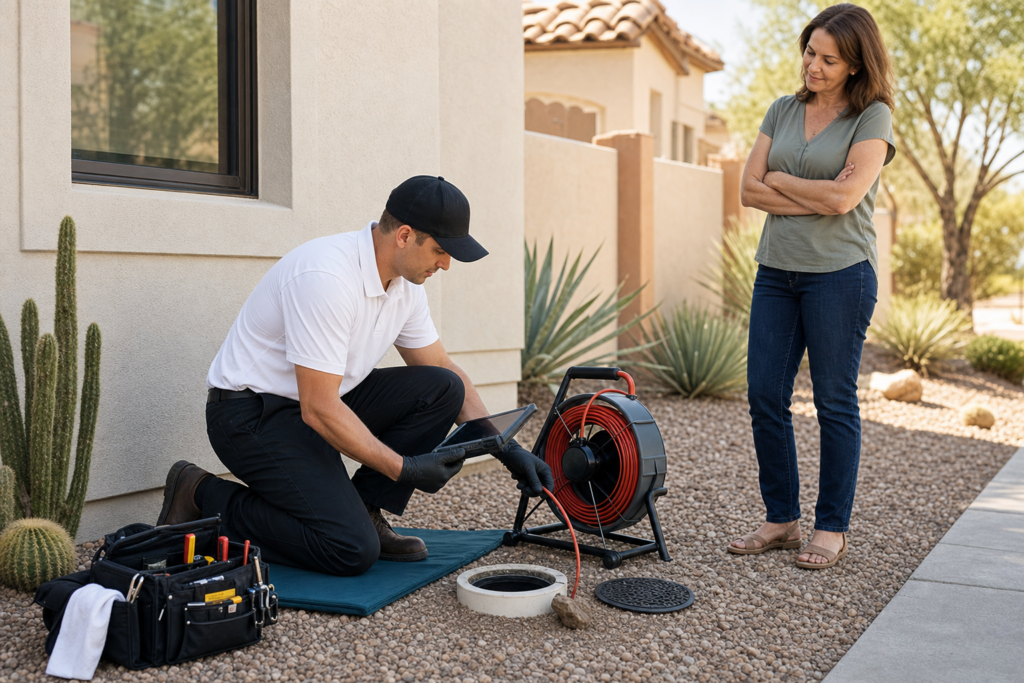
Sewer Line Cleaning in Phoenix: What It Costs, How It Works, and How to Find a Plumber You Can Trust
Sewer line cleaning in Phoenix typically involves either mechanical cable snaking or hydro jetting, and the cost depends on factors like the severity of the blockage, your pipe’s condition, the cleaning method used, and how accessible your sewer cleanout is. Most Phoenix homeowners pay somewhere between a few hundred dollars for a straightforward snaking and several hundred more for hydro jetting — but the actual number for your home depends on what a licensed plumber finds during the inspection.
If you have been dealing with slow drains, sewage odors, or a backup that will not clear, this article explains what sewer line cleaning actually involves, how to understand what you are paying for, and how to find a Phoenix plumber who will give you honest answers instead of a high-pressure sales pitch. We wrote this because too many homeowners in the Valley tell us the same thing: they do not know who to trust, their last quote felt too high, or their previous plumber never showed up.
Here is what you need to know before you call anyone.
What Sewer Line Cleaning Actually Is and When You Need It
Sewer line cleaning is the process of clearing buildup, blockages, or obstructions from the main pipe that carries wastewater from your home to the municipal sewer system. This is different from clearing a single clogged drain in your kitchen or bathroom. Your main sewer line serves the entire house, so when it has a problem, you usually notice it in more than one place.
Sewer line cleaning may be needed reactively, after a backup or blockage has already disrupted your home, or proactively, as scheduled maintenance to prevent a problem before it starts. Both situations are common in Phoenix, and which approach makes sense for your home depends on the age of your pipes, the trees on your property, and your plumbing history.
Signs Your Main Sewer Line May Need Cleaning
Not every slow drain means your sewer line is the issue. But certain patterns can indicate a main line problem rather than a localized clog:
- Multiple drains backing up at the same time. If your kitchen sink, shower, and toilet are all draining slowly or gurgling, that often points to the main sewer line rather than individual fixture clogs.
- Sewage odors inside or outside your home. A persistent smell near floor drains, cleanout caps, or your yard could suggest buildup or a partial blockage in the sewer line.
- Water backing up into the lowest drains. Tubs, showers, or floor drains on the lowest level of your home are often the first to show signs of a main line issue because gravity pushes wastewater back there first.
- Gurgling sounds from drains or toilets. Air trapped by a partial blockage can cause bubbling or gurgling when you run water elsewhere in the house.
- Recurring clogs in the same drain. If a drain clears temporarily but keeps coming back, the problem may be deeper in the line than a standard drain snake can reach.
Any one of these symptoms could have a simpler explanation, but when they appear together or keep returning, it is worth having a licensed plumber evaluate the main sewer line rather than treating individual drains over and over.
Main Sewer Line Problem vs. a Single Drain Clog
A single drain clog usually affects one fixture — one sink, one shower, one toilet. The rest of the house drains normally. This kind of clog is typically in the trap or the branch line that serves that specific fixture, and it can often be cleared with a standard drain snake.
A main sewer line issue affects the whole system. When the main line is partially or fully blocked, wastewater has nowhere to go, so it backs up across multiple fixtures. The distinction matters because the cleaning method, the cost, and the urgency are all different. A plumber who takes the time to identify where the blockage actually is — rather than defaulting to the most expensive option — will save you money and frustration.
The Two Main Cleaning Methods: Cable Snaking and Hydro Jetting
When a Phoenix plumber cleans your sewer line, they will typically use one of two methods. Understanding the difference helps you ask better questions and feel more confident about the recommendation you receive.
Cable Snaking
Cable snaking, sometimes called mechanical augering, uses a motorized steel cable with a cutting head to break through blockages in the pipe. The cable is fed into the sewer line through the cleanout access point or a drain opening, and the rotating head breaks apart clogs caused by grease, waste buildup, or small root intrusions.
When cable snaking makes sense:
- The blockage is a straightforward clog from grease, paper, or waste buildup
- The problem is a first-time or infrequent issue
- The pipe is in generally good condition
- The homeowner needs a faster, less expensive solution to restore flow
Cable snaking is effective for clearing the immediate blockage, but it does not scrub the inside walls of the pipe. That means residual buildup may remain, especially in older lines with rough interior surfaces.
Hydro Jetting
Hydro jetting directs pressurized water through a specialized nozzle to thoroughly clean the interior surfaces of the sewer pipe. The force of the water is sufficient to cut through accumulated grease, mineral deposits, and root growth while pushing debris out and through the line.
When hydro jetting makes sense:
- The blockage involves heavy grease buildup, mineral scale, or root intrusion
- The homeowner has dealt with recurring clogs that snaking temporarily clears but does not prevent
- The plumber recommends a more thorough cleaning after a camera inspection reveals significant buildup
- The homeowner wants a longer-lasting result that addresses the root cause, not just the symptom
Hydro jetting costs more than snaking, but for recurring problems or heavily scaled lines, it can be the better long-term value because it cleans more thoroughly and the results tend to last longer.
How to Think About the Decision Between Them
| Factor | Cable Snaking | Hydro Jetting |
|---|---|---|
| What it does | Breaks through the blockage to restore flow | Scours the entire pipe interior, removing buildup and debris |
| Best for | First-time clogs, simple blockages, good-condition pipes | Recurring clogs, heavy buildup, root intrusion, older pipes with scale |
| How long results last | Varies — may need to be repeated if underlying buildup remains | Typically longer-lasting because the pipe is cleaned more thoroughly |
| Relative cost | Lower per visit | Higher per visit, but may reduce long-term costs by preventing repeat calls |
| Pipe condition requirement | Works on most pipes | Requires pipes in structurally sound condition — a camera inspection is usually recommended first |
A trustworthy plumber will explain which method they recommend and why, based on what they find in your specific line. If someone recommends hydro jetting without inspecting the pipe first, or pushes you toward it when a simpler snaking would solve the problem, that is worth questioning.
Sewer Camera Inspection: What It Is and When to Ask for It
A sewer camera inspection involves feeding a small, waterproof video camera into the sewer line to see the interior condition of the pipe in real time. The plumber can identify the location and nature of a blockage, check for cracks, breaks, root intrusion, mineral buildup, or pipe deterioration, and determine which cleaning method is appropriate.
When a camera inspection is worth requesting:
- Before hydro jetting, to confirm the pipe is structurally sound enough for high-pressure cleaning
- When clogs keep coming back and you want to understand why
- After cleaning, to verify the line is clear and check for damage that may need repair
- When buying an older Phoenix home and you want to know the condition of the sewer line before closing
- When a plumber recommends a major repair and you want to see the evidence yourself
A camera inspection cannot tell you everything — it shows the current condition of the pipe but cannot predict exactly when a problem will develop. However, it gives you and your plumber real information to make decisions with, rather than guessing. At Fast Layne Plumbing, we use camera inspections when the situation calls for it, and we walk homeowners through the footage so you can see exactly what we see.
What Drives the Cost of Sewer Line Cleaning in Phoenix
Sewer line cleaning prices in the Phoenix area vary, and there is no single number that applies to every home. The cost depends on several factors specific to your situation:
- Cleaning method: Cable snaking is generally less expensive than hydro jetting. The method your plumber recommends should be based on what the line actually needs, not on which service generates a higher bill.
- Severity of the blockage: A partial clog from grease buildup requires less time and effort than a fully blocked line with root intrusion. More severe blockages typically cost more.
- Accessibility of the cleanout: If your sewer cleanout is easy to locate and access, the job goes faster. If it is buried, hard to reach, or missing, the plumber may need extra time or an alternative entry point.
- Pipe depth and length: Deeper pipes or longer runs from the house to the street connection require more cable or hose and more time.
- Time of service: Emergency calls outside normal business hours may cost more than scheduled appointments. If your situation allows it, scheduling during regular hours can help manage cost.
- Whether a camera inspection is included: Some companies include a camera inspection as part of the service. Others charge separately. Ask before the appointment so you know what is and is not included in the quoted price.
Why Extremely Low Advertised Prices Deserve a Second Look
If you see a sewer line cleaning advertised for an unusually low price — well below what other licensed companies in Phoenix are quoting — it is worth asking what that price actually covers. In some cases, a very low headline price is a door-opener designed to get a technician into your home, where additional charges are added once the scope of work becomes clear. That is not always deceptive — sometimes the actual problem is more complex than the initial call suggested — but you should know upfront what the quoted price includes and under what circumstances it could change.
Before agreeing to any sewer line cleaning service, ask:
- Is the price flat-rate or hourly?
- What does the quoted price include?
- Is a camera inspection included, or is it a separate charge?
- Under what circumstances could the price change once work begins?
- Will I receive a written estimate before any work starts?
A plumber who answers these questions clearly and without hesitation is giving you a good sign. A plumber who avoids them or gets vague is giving you a different kind of signal.
Phoenix-Specific Factors That Affect Your Sewer Line
Phoenix is not like most other cities when it comes to sewer line conditions. The desert climate, local soil, water quality, and landscaping choices all play a role in how your sewer line ages and what kind of maintenance it needs.
Tree Root Intrusion
Phoenix homeowners often underestimate how aggressively local tree roots seek out moisture. Mesquite, palo verde, citrus, and ficus trees — all common throughout the Valley — send roots toward sewer lines because those pipes carry water. Over time, roots can penetrate small cracks or joints in older pipes and grow inside the line, causing partial or full blockages. Homes with mature trees near the sewer line run are more likely to deal with root-related clogs, especially if the pipes are original to the home.
Hard Water and Mineral Scale
Phoenix has some of the hardest water in the country. Over years, mineral deposits from hard water can build up on the interior walls of sewer pipes, narrowing the effective diameter and making clogs more likely. This is especially common in homes built between the 1950s and the 1990s that still have original cast iron or clay pipe. Hydro jetting can address mineral scale more effectively than cable snaking, which is one reason a plumber may recommend it for older Phoenix homes.
Older Pipe Materials in Established Neighborhoods
Many homes in central Phoenix, Arcadia, the Camelback Corridor, and other established neighborhoods were built with cast iron, clay, or Orangeburg (compressed tar paper) sewer pipes. These materials degrade over time. Clay pipes develop cracks at the joints that allow root intrusion. Cast iron corrodes from the inside. Orangeburg pipes can collapse entirely. If your home was built before the 1980s and still has original sewer pipe, the age and material of your pipe directly affect what cleaning method is safe and appropriate.
Soil Movement
The desert soil in the Phoenix metro area expands and contracts with moisture changes, and that slow movement can shift pipe joints out of alignment over time. Misaligned joints create small gaps where roots enter and debris accumulates. A camera inspection can identify joint separation that might not be obvious from the symptoms alone.
How to Find a Sewer Line Cleaning Company You Can Trust in Phoenix
This is the part most generic plumbing articles skip, but it is the part that matters most to the homeowner who has already been burned by a no-show plumber or a quote that felt too high.
What to Look For
- Licensing: Confirm the company is licensed to perform plumbing work in Arizona. This is a basic requirement, not a differentiator — but it is worth verifying.
- Flat-rate pricing: A company that gives you a flat-rate quote before work begins is putting the risk on themselves, not on you. Hourly billing can spiral if the job takes longer than expected.
- Written estimates: You should receive a clear, written estimate before any work starts. If a plumber begins work before you have agreed to a price, that is a serious red flag.
- Willingness to explain: A good plumber can explain what they found, what they recommend, and why — in plain English. If the explanation feels vague or pressured, trust your instincts.
- Camera inspection availability: A company that offers camera inspection and is willing to show you the footage is giving you transparency, not just a recommendation you have to take on faith.
Red Flags to Watch For
- The plumber recommends a major repair or replacement before doing any diagnostic work
- You feel pressure to approve expensive work on the spot
- The quoted price changes significantly once work begins, without a clear explanation of what changed
- The plumber cannot explain why they are recommending one method over another
- The company is difficult to reach, misses appointments, or does not return calls
None of these red flags automatically mean you are being taken advantage of — sometimes unexpected complications arise. But a trustworthy plumber handles those moments with clear communication and gives you the chance to understand your options before moving forward.
How Often Should a Phoenix Home’s Sewer Line Be Cleaned?
There is no single answer because it depends on your home. Here is a general framework:
- Homes with mature trees near the sewer line: Preventive cleaning every one to two years may help avoid root-related blockages, especially if you have had root issues before.
- Older homes with original pipes: More frequent monitoring and occasional cleaning can help manage buildup before it becomes an emergency. A camera inspection every few years can help you stay ahead of pipe deterioration.
- Newer homes with PVC pipe and minimal tree coverage: You may not need routine cleaning at all unless you notice symptoms. Reactive cleaning when a problem appears is often sufficient.
- Homes with a history of recurring clogs: If you have had the same line cleaned multiple times, a camera inspection may reveal a deeper issue that cleaning alone cannot solve — such as a cracked or collapsed section that needs repair.
A plumber who evaluates your specific situation and gives you an honest recommendation about maintenance frequency — including telling you that you may not need regular cleaning — is a plumber worth keeping.
Preparing for a Sewer Line Cleaning Visit
A few simple steps before your appointment can help the visit go smoothly and may reduce the time and cost of the service.
Locate Your Sewer Cleanout Access Point
Your sewer cleanout is a capped pipe, usually white or black PVC, that provides direct access to the main sewer line. In most Phoenix homes, it is located in the front or side yard, often near the foundation. Some older homes have cleanouts inside, near a laundry area or garage. If you can locate yours before the plumber arrives, it saves time.
If you cannot find it or it appears to be buried, do not worry — your plumber can locate it. Just let them know when you schedule the appointment so they can plan accordingly.
Clear the Area
Make sure the path to the cleanout is clear of furniture, storage, landscaping obstacles, or anything that would slow access. If the cleanout is in the yard, move hoses, planters, or pet items out of the way.
What to Expect During the Visit
- The plumber will typically start by discussing your symptoms and history
- They will locate and access the cleanout
- Depending on the situation, they may run a camera inspection first or begin with snaking
- You should receive a clear explanation of what they find before any major work begins
- After cleaning, a good plumber will confirm the line is flowing properly and explain what they recommend going forward
When Cleaning Is Not Enough
Sewer line cleaning solves a lot of problems, but it cannot fix everything. If a camera inspection reveals a cracked pipe, a collapsed section, significant root damage, or deteriorated pipe material, cleaning may provide temporary relief but will not address the underlying issue.
In those situations, a plumber may recommend sewer line repair or replacement. When that conversation comes up, you have every right to ask questions, see the camera footage, get a second opinion, and understand your options before making a decision. A trustworthy plumber will not pressure you into a repair decision on the spot — they will give you the information you need and the time to think it through.
Fast Layne Plumbing offers sewer line repair services, including trenchless repair options when appropriate, but we only recommend repair when the inspection shows that cleaning alone will not solve the problem. We walk you through the footage and explain exactly what we see, so the decision is yours to make with full information.
How Fast Layne Plumbing Approaches Sewer Line Cleaning
We are a family-owned plumbing company serving Phoenix, and sewer line cleaning is one of the services we handle regularly. Here is what our approach looks like in practice:
- We answer the phone. When you call 480.485.4659, you reach us. We know that when your drains are backing up, waiting for a callback is not acceptable.
- We show up. We schedule a time and we are there. Homeowners tell us all the time that their previous plumber did not show. We take that seriously.
- We diagnose before we recommend. We do not walk in assuming you need the most expensive service. We look at the problem, use camera inspection when the situation calls for it, and recommend the cleaning method that actually fits.
- We explain what we find in plain English. No jargon, no pressure, no vague warnings. We tell you what we see, what we recommend, and why.
- We give you upfront pricing before work begins. You know the cost before we start. No surprise bills.
- We treat your home with respect. We clean up after ourselves and leave your property the way we found it.
We are not the right fit for every homeowner, and we are not going to pretend we are the only plumber in Phoenix. But if you are looking for honest diagnosis, clear communication, and fair pricing from a local company that cares about doing the job right, that is what we do.
Frequently Asked Questions
What is the average cost of sewer line cleaning in Phoenix?
The cost varies based on the cleaning method, severity of the blockage, pipe accessibility, and whether a camera inspection is included. Cable snaking is generally less expensive than hydro jetting. Rather than relying on an average, ask for a flat-rate quote that covers your specific situation before work begins. A reputable plumber will give you a clear price upfront.
What is the difference between snaking and hydro jetting?
Cable snaking uses a rotating metal cable to break through a blockage and restore flow. Hydro jetting sends pressurized water through the pipe to clean the interior surfaces, clearing away accumulated grease, mineral deposits, root material, and other debris. Snaking is typically less expensive and works well for straightforward clogs. Hydro jetting costs more but tends to last longer and is better suited for recurring problems or heavy buildup.
How often should a sewer line be cleaned?
It depends on your home. Properties with mature trees near the sewer line, older pipes, or a history of recurring clogs may benefit from preventive cleaning every one to two years. Newer homes with PVC pipe and no tree root risk may not need routine cleaning at all. A licensed plumber can evaluate your situation and recommend a maintenance schedule that makes sense.
Does sewer line cleaning include a camera inspection?
Not always. Some companies include it as part of the service, and others charge separately. Ask before scheduling so you know what is included in the price. A camera inspection is especially valuable if you have recurring clogs, older pipes, or want to see the condition of your line after cleaning.
What causes sewer line clogs in Phoenix specifically?
The most common causes in the Phoenix area are tree root intrusion from species like mesquite, palo verde, citrus, and ficus; hard water mineral buildup on pipe walls; grease and waste accumulation in older pipes; and joint separation caused by soil movement in desert conditions. Homes built before the 1980s with original cast iron or clay pipe tend to be more susceptible.
How do I know if it is my main sewer line or just one drain?
If only one fixture is affected and the rest of the house drains normally, the clog is likely in a branch line or trap serving that specific fixture. If multiple drains are slow, backing up, or gurgling at the same time, the problem may be in the main sewer line. A plumber can confirm the location with an inspection.
What is a sewer cleanout and where is mine?
A sewer cleanout is a capped pipe that provides direct access to the main sewer line. In most Phoenix homes, it is located in the front or side yard near the foundation, though some older homes have interior cleanouts near the laundry area or garage. Locating it before your plumber arrives can save time during the service visit.
What is the 135 rule in plumbing?
The 135 rule refers to a plumbing code requirement that limits the total combined angle of bends in a drain run to 135 degrees before a cleanout must be installed. This ensures that sewer cleaning equipment can navigate the pipe without getting stuck. It is a code detail that affects pipe layout, not something homeowners typically need to act on — but it is why cleanout access points exist where they do.
The Right Next Step
If you are dealing with slow drains, recurring backups, sewage smells, or you just want to understand the condition of your sewer line before a small problem becomes a bigger one, the right next step is a conversation with a plumber who will listen, inspect, and give you honest answers.
Fast Layne Plumbing serves homeowners throughout Phoenix. We offer sewer line cleaning, camera inspection, hydro jetting, and sewer line repair — and we start every job with a clear diagnosis and upfront pricing so you know exactly what you are getting before we begin.
Call Fast Layne Plumbing at 480.485.4659 to schedule service or talk with a local Phoenix plumber about what your sewer line needs.