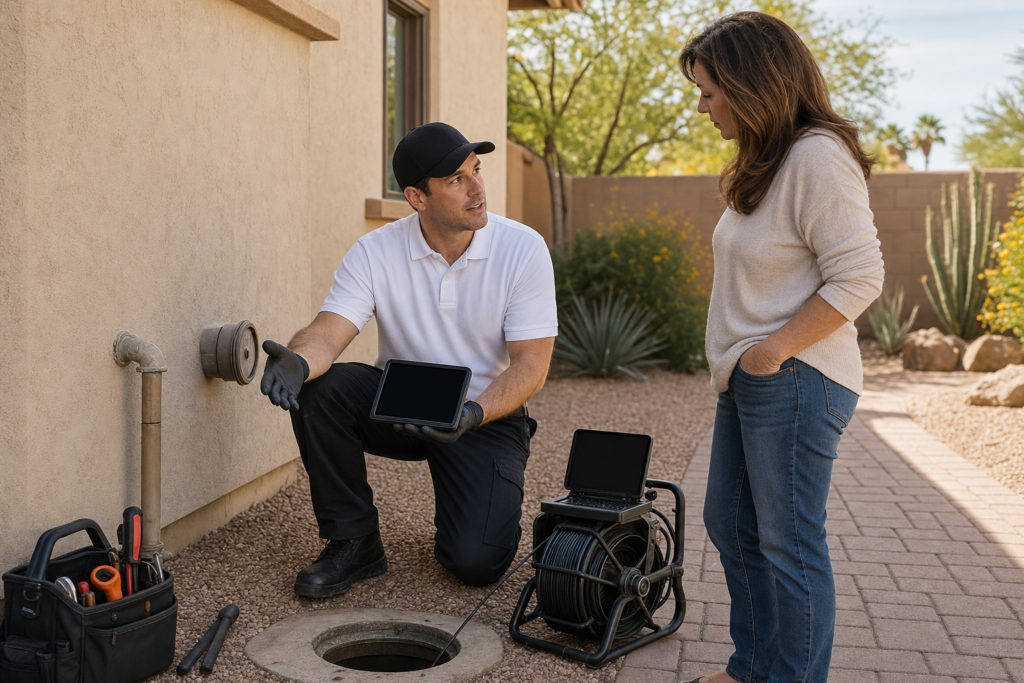
How to Compare Drain and Sewer Quotes in Phoenix: A Homeowner’s Guide to Asking the Right Questions
Comparing drain and sewer quotes in Phoenix is not about finding the lowest number on a page. It is about understanding what each number actually covers — and what it leaves out. Two quotes that look different on paper may describe completely different scopes of work, and a lower price does not always mean a better deal when the work involves your home’s sewer line.
Phoenix has specific conditions that shape what any honest drain or sewer quote should address. The presence of caliche soil, mineral scale from hard water, deteriorating clay and cast iron pipe in older parts of the valley, root intrusion into sewer lines, and slab-on-grade home construction all influence what a job demands and what it legitimately costs. A quote that overlooks these factors may not be dishonest — but it may not tell the whole story.
This guide gives you a practical framework for comparing any quotes you receive, regardless of who gave them. We will walk through what services typically cost in the Phoenix market, the two pricing models you will encounter, the specific questions worth asking, and how to evaluate quotes based on scope rather than sticker price alone.
What Phoenix Drain and Sewer Work Actually Involves
Before comparing prices, it helps to understand what you are comparing. Drain problems and sewer problems are different categories of work with very different cost structures, and the distinction matters when you are reading a quote.
The Difference Between a Drain Problem and a Sewer Problem
A drain problem typically affects a single fixture — one sink backing up, one shower draining slowly, one toilet that will not flush properly. These issues are usually caused by a localized clog in the branch line that connects that fixture to the rest of your plumbing system.
A sewer problem affects multiple fixtures at once. If more than one drain in your home is backing up, or if you notice sewage smells, gurgling sounds from multiple drains, or water backing up in unexpected places, the issue may be in your main sewer line — the larger pipe that carries everything out of your home to the city’s system.
The tools, time, and expertise required for each are different. A single drain clog might take thirty minutes with a cable machine. A main sewer line blockage might require a camera inspection, hydro jetting, or in some cases, physical repair or replacement of a damaged section of pipe. The price difference between these two categories of work is significant and legitimate.
Your Lateral Line Versus the City’s Main — Who Owns What in Phoenix
In Phoenix, the city is responsible for the public sewer main that runs under or along the street. You, as the property owner, are responsible for the lateral sewer line — the pipe that runs from your home to the point where it connects to the city’s main.
The lateral line is typically the section where most residential sewer problems occur. Root intrusion, pipe deterioration, bellied sections, and cracks tend to develop in this stretch of pipe, and the cost of diagnosing and repairing it falls to the homeowner.
If you are unsure whether a blockage is in your lateral line or in the city’s main, a plumber with a sewer camera can usually help determine the location. If the problem turns out to be on the city’s side, you can contact the City of Phoenix Water Services Department to report it. Knowing this distinction before you start collecting quotes can save you time and help you understand what you are actually being quoted for.
Why Phoenix Conditions Affect Pricing
Phoenix is not a generic plumbing market. Several local conditions affect the difficulty and cost of drain and sewer work here:
- Caliche soil: A large portion of the Phoenix metro sits on caliche — a calcium carbonate hardpan layer that is exceptionally resistant to digging. When sewer repair calls for excavation, working through caliche adds meaningful time and equipment expense compared to regions with softer ground.
- Hard water scale: Phoenix is well known for its hard water. Mineral deposits accumulate along the interior walls of drain and sewer pipes over time, reducing flow capacity and contributing to repeat clogs. This problem is especially prevalent in homes constructed before the 2000s.
- Tree root intrusion: Desert landscaping does not eliminate the risk of root intrusion. Many tree and plant species common to Phoenix yards extend their roots toward sewer lines in search of moisture, making root intrusion one of the leading causes of main sewer line blockages in established neighborhoods.
- Older pipe materials: Homes built throughout Phoenix from the 1950s into the 1980s frequently have clay or cast iron sewer lines. These materials break down with age and can crack, collapse, or develop joint failures that invite root intrusion and allow soil to enter the pipe.
- Slab-on-grade construction: The majority of Phoenix homes sit on a concrete slab foundation. When a sewer line runs beneath that slab, reaching it for repair or replacement involves specialized work — and the cost of gaining that access is a real component of the overall price.
Any honest quote for drain or sewer work in Phoenix should account for the conditions specific to your property. If a quote seems unusually simple, it may be worth asking what assumptions were made about soil, pipe material, and access.
What Services Typically Cost in the Phoenix Market
The ranges below reflect general market pricing for drain and sewer services in the greater Phoenix area. These are not Fast Layne Plumbing’s prices — they are reference ranges based on publicly available market data to help you understand what is typical.
| Service | Typical Phoenix Market Range |
|---|---|
| Standard drain cleaning (single fixture, cable/snake) | $100 – $300 |
| Main sewer line clearing | $200 – $500 |
| Sewer camera inspection | $125 – $400 |
| Hydro jetting | $350 – $800 |
| Spot sewer repair (localized section) | $1,500 – $4,000 |
| Full sewer line replacement | $4,000 – $15,000+ |
These ranges vary based on the length and depth of the line, the pipe material, the access difficulty, the repair method, and the condition of the soil. A quote at the low end of a range is not automatically better, and a quote at the high end is not automatically inflated. The question is always: what does the quote include?
What “Included” Should Actually Mean
When a plumber gives you a price for any of these services, ask what is included in that number. For example, a sewer camera inspection quote should clarify whether the following are part of the price or billed separately:
- A recorded video of the inspection
- A line locate showing where the problem is physically located on your property
- Written findings or a summary of the pipe’s condition
For sewer repair or replacement, ask whether the quote includes the permit, the excavation, the backfill, and any landscape or hardscape restoration. These items can add hundreds or even thousands of dollars if they are not part of the original number.
The Two Pricing Models and What They Mean for You
Most plumbing companies in Phoenix use one of two pricing models. Understanding which model a company uses helps you compare quotes more accurately.
Flat-Rate Pricing
With flat-rate pricing, the plumber gives you a set price for the job before work begins. The price does not change based on how long the work takes. This protects you from a situation where an unexpected complication doubles your bill. You know what you owe before anyone picks up a tool.
Time-and-Materials Pricing
With time-and-materials pricing, you are billed based on the actual time the work takes plus the cost of parts and materials. This model can be reasonable for straightforward jobs, but it creates uncertainty for more complex work. If the job takes longer than expected, your bill goes up — and you may not know the final total until the work is done.
What to Listen For
When you call for an estimate, ask: “Does your quote cover everything, or should I expect additional charges?”
A clear, direct answer to this question tells you a lot about how a company communicates. If the answer is vague, or if you are told the price “depends” without a clear explanation of what it depends on, that is worth noting. A plumber who is comfortable being transparent about pricing will usually give you a straight answer.
Questions to Ask Any Drain or Sewer Company in Phoenix
The best way to compare quotes is to ask the same questions of every company you call. Here are the questions that tend to reveal the most about the quality and completeness of a quote.
About the Diagnostic Process
- “Do you charge a trip fee or service call fee to come out?” — Some companies charge a fee just to come out and assess the situation. This is not necessarily unreasonable, but you should know about it upfront. Ask whether the fee applies toward the cost of the repair if you move forward.
- “What process do you use to identify the source of the problem?” — This question reveals whether the company diagnoses before recommending. A plumber who recommends a specific repair before understanding the problem may be guessing or upselling.
About the Scope of Work
- “Can you walk me through exactly what this quote covers?” — Ask for specifics. What equipment is being used? How far into the line does the work extend? Is the cleanout access included or is there an additional charge to locate or install one?
- “Under what circumstances would this estimate increase?” — This tells you where the estimate might shift once work begins. A good answer is specific: “If we encounter root intrusion beyond a certain point, we may need to run a camera inspection before continuing.” A vague answer is a flag.
About the Camera Inspection
- “Will I receive a video recording of the camera inspection?” — A camera inspection is only as useful as the documentation it produces. If the company does not provide a recording, you are relying entirely on their verbal assessment.
- “Is a line locate part of what the inspection includes?” — A line locate uses the camera’s signal to mark the physical location of the problem on your property. This matters if repair or excavation is recommended, because the location affects cost and method.
About After-Hours and Emergency Pricing
- “Are your rates different for evenings, weekends, or holidays?” — Many companies charge more for after-hours service. That is standard in the industry, but the markup varies widely. Knowing this in advance helps you decide whether to wait for a regular-hours appointment when the situation allows.
About the Repair Method
- “Is this quote based on trenchless methods or open excavation?” — These are fundamentally different approaches with different costs, timelines, and disruption levels. A trenchless method (such as pipe lining or pipe bursting) typically costs more upfront but avoids the expense of excavation and landscape restoration — which can be substantial in Phoenix, especially through caliche.
- “Is site restoration factored into this price, and what does it cover?” — If the repair requires digging, ask who handles backfill, compaction, and restoration of any concrete, landscaping, or hardscaping that was disturbed.
About Warranty and Permits
- “Does this quote factor in the cost of the permit?” — Major sewer repair and replacement work in Phoenix typically requires a permit. If the quote does not include the permit cost, it is not a complete number.
- “What is covered under your warranty, and what is the coverage period?” — Ask specifically what the warranty applies to — labor, materials, or both — and under what conditions it would not apply. A warranty that sounds generous in conversation but has narrow terms in writing is worth understanding before you commit.
How to Compare Quotes on Scope, Not Just Price
When you have two or three quotes in front of you, the most useful thing you can do is compare them on scope of work — not just the bottom line. Two quotes with different totals may be describing different jobs.
Use Per-Linear-Foot Pricing for Major Sewer Work
For sewer line repair or replacement, the cleanest comparison unit is cost per linear foot. If one company quotes $6,000 for 40 feet of sewer replacement and another quotes $8,000 for 60 feet, the per-foot cost is $150 versus $133 — and the higher total may actually be the better value because it covers more of the line.
Ask each company how many linear feet the quote covers and what method is being used. This gives you an honest apples-to-apples comparison even when the totals look different.
Trenchless Versus Traditional — Why the Higher Quote May Cost Less Overall
In Phoenix, trenchless sewer repair methods often carry a higher base price than traditional excavation. But when you add up the full cost of traditional repair — excavation through caliche soil, disposal of spoil material, backfill and compaction, concrete or landscape restoration, and the longer timeline — the total may exceed the trenchless option.
If one quote is for traditional excavation and another is for trenchless, you are not comparing the same job. Ask each company to break out the full cost including restoration, and compare those totals instead.
What a Dramatically Lower Quote Might Mean
If one quote comes in far below the others, it does not necessarily mean that company is dishonest. But it is worth asking a few follow-up questions:
- Does the lower quote include the same scope of work?
- Does it account for permits, restoration, and warranty?
- Is the company licensed in Arizona?
- Was the quote given after a camera inspection or diagnostic visit, or was it estimated over the phone?
A significantly lower number sometimes reflects a smaller scope — not a better deal. Understanding what each quote covers is more important than comparing totals in isolation.
The Total Cost Picture
For major sewer work, think about the total cost of the project — not just the repair itself. That total may include:
- The repair or replacement work
- The camera inspection that led to the diagnosis
- The permit
- Excavation and site access costs
- Backfill, compaction, and site restoration
- Warranty terms and what they actually protect
- Any follow-up inspection to confirm the work was completed correctly
A complete quote accounts for all of this. An incomplete quote may look better on paper but leave you with unexpected costs after the work begins.
Verify Before You Hire: Using Arizona’s Public Resources
How to Look Up a Contractor’s License
The Arizona Registrar of Contractors (ROC) maintains a public license lookup tool on their website. You can search by company name or license number to confirm that a plumbing company is properly licensed, check whether any complaints have been filed, and verify that the license is current.
This takes a few minutes and is one of the most useful things you can do before signing anything.
When to Contact the City of Phoenix Water Services Department
If you suspect the blockage or sewer issue may be in the city’s main line rather than your lateral, contact the City of Phoenix Water Services Department before scheduling a private repair. The city can investigate whether the issue is on their side of the connection. If it is, the repair may be their responsibility — and you may avoid an unnecessary expense entirely.
What a Licensed Plumber Should Be Able to Show You
Before work begins on a significant sewer repair, a licensed plumber should be able to provide you with a written estimate that describes the scope of work, the method, the materials, the timeline, the total cost, and the warranty terms. If a company is unable or unwilling to put these details in writing, that is a meaningful signal about how they operate.
Frequently Asked Questions
What is a fair price for drain cleaning in Phoenix?
Standard drain cleaning for a single fixture typically falls in the $100 to $300 range in the Phoenix market, depending on the location and severity of the clog. Main sewer line clearing generally runs higher, often $200 to $500 or more. The right price depends on the scope of work — not just the service category.
How do I know if a sewer repair quote is reasonable?
Compare the scope of work, not just the total. Ask what is included (permits, restoration, warranty, camera inspection), what method is being used, and how many linear feet the quote covers. A reasonable quote accounts for the full job and is explained clearly.
Is my sewer line the city’s responsibility or mine?
In Phoenix, you are typically responsible for the lateral sewer line that runs from your home to the point where it connects to the city’s main sewer line. The city is responsible for the public main. If you are unsure where the blockage is, a camera inspection can help determine the location, and the City of Phoenix Water Services Department can investigate issues on their side.
What is the difference between snaking and hydro jetting?
Snaking (or cabling) uses a motorized cable to break through a blockage and restore flow. It is effective for many common clogs. Hydro jetting directs pressurized water through the full length of the pipe, clearing away accumulated debris, grease, mineral deposits, and root material from the pipe walls. Hydro jetting is more thorough and is often recommended when recurring clogs suggest buildup inside the line. The right option depends on the diagnosis — a licensed technician can evaluate which approach fits the situation.
Should I get a camera inspection before approving a sewer repair?
In most cases, a camera inspection before approving significant sewer work is a smart step. It allows you to see the condition of the pipe, understand the location and nature of the problem, and verify that the recommended repair matches the actual findings. It also gives you documentation that you can compare against the scope described in any quote you receive.
How does caliche soil affect sewer repair costs in Phoenix?
Caliche is an exceptionally dense calcium carbonate layer found throughout Phoenix-area soil. Breaking through it during excavation takes considerably more time and effort than digging through standard soil, which drives up labor and equipment costs for any sewer repair that involves digging. This is one of the reasons trenchless repair methods can be cost-competitive in the Phoenix market — they reduce or eliminate the need to dig through caliche.
What is a trip fee, and should I pay it?
A trip fee is a charge for a plumber to come to your property and assess the situation. Some companies charge one and some do not. A trip fee is not inherently unreasonable — it covers the time and cost of dispatching a technician. The key question is whether the fee applies toward the cost of the repair if you move forward, and whether it is disclosed clearly before the visit is scheduled.
How Fast Layne Plumbing Approaches Pricing and Diagnosis
At Fast Layne Plumbing, we believe every homeowner deserves to understand what they are paying for and why. We provide upfront pricing before work begins, explain the diagnosis in plain English, and only recommend the work that is actually needed based on what we find during the inspection.
We are a family-owned plumbing company serving Phoenix, and we built this business on showing up when we say we will, treating every home with respect, and giving our neighbors honest answers — even when the honest answer is simpler and less expensive than what they expected.
The questions in this guide are the same questions we would want you to ask us. We are comfortable with transparency because we have nothing to hide.
If you have received a quote you are not sure about, or if you want a straightforward assessment of a drain or sewer issue at your Phoenix home, we are here to help.
Call Fast Layne Plumbing at 480.485.4659 to schedule service or talk with a local Phoenix plumber.