How to Choose a Trusted Plumber for a Clogged Main Line in Phoenix
If you’re dealing with a clogged main sewer line in Phoenix, the most important decision you’ll make isn’t which drain product to buy — it’s which plumber to call. A main line clog is different from a slow bathroom sink. It touches every drain in your home, and the plumber you hire will determine whether the problem gets properly identified, honestly communicated, and fixed the right way.
This guide walks you through exactly what to look for, what to ask, and what to avoid when bringing in a plumber for main line work in Phoenix. It comes from the perspective of a local, family-owned plumbing company that deals with main line blockages on a regular basis — and witnesses firsthand what goes wrong when homeowners hire the wrong contractor.
What a Clogged Main Line Actually Is — and Why It’s Not the Same as a Clogged Drain
Your home has individual drain lines running from each sink, shower, tub, and toilet. Those smaller lines all feed into one large pipe — the main sewer line — that carries everything out to the city sewer connection. When the main line is clogged, it doesn’t just affect one fixture. It can trigger backups throughout the entire house.
This distinction matters because the tools, experience, and diagnostic approach required for a main line clog are different from what’s needed for a simple kitchen sink backup. Not every plumber is equipped or experienced enough to handle main line work well, and choosing the wrong one can mean paying for a clearing that doesn’t last, a misdiagnosis, or repairs you didn’t actually need.
Common Causes of Main Line Clogs in Phoenix
Phoenix has specific conditions that make main line problems more common than homeowners might expect:
- Tree root intrusion. Roots from mature trees and landscaping can work their way into sewer line joints and cracks over time, gradually restricting flow until a full blockage forms.
- Hard water mineral buildup. Phoenix’s water is among the hardest in the country. Over years, mineral deposits can accumulate inside older sewer lines and reduce the pipe’s effective diameter.
- Aging pipe materials. Many Phoenix homes built from the 1950s through the early 2000s have clay, cast-iron, or Orangeburg sewer lines. These materials deteriorate with age and can crack, collapse, or develop bellies that trap debris.
- Caliche soil. The calcium carbonate–rich soil common across the Phoenix metro area is extremely hard and does not absorb moisture well. This creates pressure on underground pipes and can contribute to shifting and cracking over time.
- Grease and buildup. Cooking grease, soap residue, and organic material accumulate in the main line gradually, often without any obvious warning until the line is significantly restricted.
Understanding these local factors helps you gauge whether a plumber genuinely knows the Phoenix plumbing environment or is simply working from a generic playbook.
Warning Signs That Point to the Main Line
A single slow drain usually means a localized clog. But when multiple fixtures are affected at the same time, the problem may be deeper in the system. Signs that could indicate a main line issue include:
- Multiple drains backing up or draining slowly at once
- Gurgling sounds from toilets or drains when you run water elsewhere in the house
- Water backing up in a floor drain, shower, or tub when a toilet is flushed
- A sewage odor inside or outside the home
- Unexplained wet spots or lush patches of grass near the sewer line path in the yard
These signs don’t guarantee a main line blockage — a licensed plumber can assess the situation and pinpoint the source of the problem using proper diagnostic equipment.
Start With Credentials: How to Verify a Plumber’s License in Arizona
Licensing is the most basic filter, but most homeowners don’t actually know how to verify it. In Arizona, plumbing contractors are regulated by the Arizona Registrar of Contractors (AZ ROC). Every legitimate plumbing company operating in the state should carry an active ROC license number.
How to Look Up a Plumber’s License
- Visit the Arizona Registrar of Contractors website at roc.az.gov.
- Use the license search tool to look up the company by name or license number.
- Confirm that the license is active, not expired or suspended.
- Check for any complaints or disciplinary actions on file.
This takes about two minutes and gives you a verifiable fact — not a claim on a website, but an official state record. If a plumbing company can’t provide a license number or if the number doesn’t check out, that’s a clear signal to move on.
Why Licensing, Bonding, and Insurance Each Matter Differently
These three terms get grouped together so often that homeowners usually treat them as one thing. They aren’t interchangeable:
- Licensing confirms that the company has satisfied the state’s requirements to legally perform plumbing work. It’s the foundational credential.
- Bonding offers a layer of financial protection for you as the customer. If the contractor fails to complete the job properly, the bond may help cover resulting damages.
- Insurance steps in when something goes wrong on the job — an on-site worker injury, unintended property damage, or other liability exposure. A company without coverage could leave you holding the bill.
Ask for proof. A trustworthy plumber will have no hesitation providing this information.
Look for Main Line Specialization — Not Just General Plumbing Experience
Plenty of plumbers can fix a leaky faucet or replace a toilet. Main line work requires a different level of equipment, experience, and diagnostic judgment. When you’re evaluating a plumber for a clogged main line, look for evidence that they actually handle this type of work regularly.
What Equipment a Main Line Plumber Should Have
A plumber equipped for main line work should have access to:
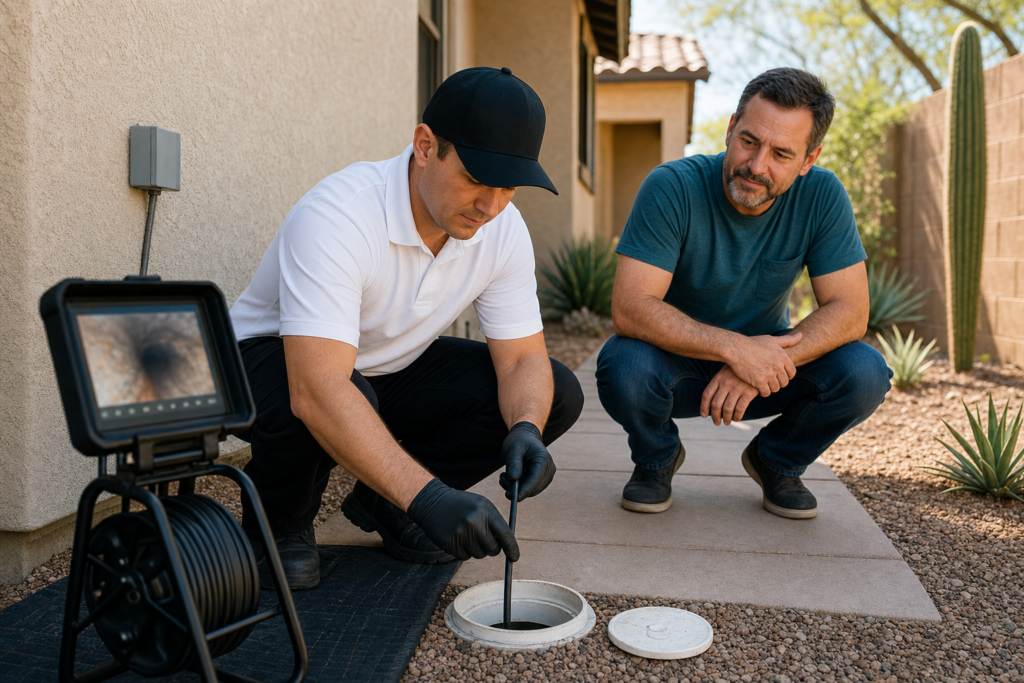
- A sewer camera inspection system. This is not optional for serious main line diagnosis. A camera allows the plumber to see inside the line, identify the location and nature of the blockage, and determine whether the pipe itself is damaged.
- A motorized cable machine (drain snake). This is the standard tool for clearing many main line blockages. Different situations call for different cable sizes and configurations.
- A hydro jetting system. Hydro jetting uses high-pressure water to clean the inside of the sewer line, flushing out grease, scale, and accumulated debris that a cable machine may leave behind. Not every clog calls for hydro jetting, but a company that offers it brings a broader range of solutions to the table.
If a company relies on a single tool regardless of the situation, that may limit how effectively they can address your specific problem.
Snaking vs. Hydro Jetting: What Each Does and When Each Is Appropriate
This is one of the most common points of confusion for homeowners, and it matters because it directly affects what you’re paying for and whether the work will hold up.
| Method | What It Does | Best For | Limitations |
|---|---|---|---|
| Snaking (Cable Machine) | A rotating cable breaks through the blockage and restores flow | Solid blockages, root masses, and clogs that need to be physically broken up | May not remove buildup on pipe walls; the clog can reform if the underlying cause isn’t addressed |
| Hydro Jetting | Pressurized water blasts through the pipe interior, clearing grease, scale, roots, and built-up debris from the walls | Buildup-related clogs, grease accumulation, and lines that need a deeper cleaning | Not safe for severely deteriorated or fragile pipes; a camera inspection should confirm pipe condition first |
A trustworthy plumber should be able to explain which method they recommend and why. If someone pushes hydro jetting without first inspecting the line, or refuses to explain the reasoning behind their recommendation, that’s worth questioning.
Why Trenchless Repair Options Matter When Choosing a Full-Service Company
Not every main line clog is a simple blockage. Sometimes the camera inspection reveals cracks, breaks, root intrusion damage, or collapsed sections that require repair rather than clearing. When that happens, you want a company that offers modern repair options — not just excavation.
Trenchless repair methods like pipe lining and pipe bursting can address damaged sewer lines with less disruption to your yard, landscaping, and driveway. Not every situation qualifies for trenchless repair, but a company that offers these options can provide you with more choices and a clearer comparison of what each approach involves.
This is relevant even at the hiring stage: if the company you call can only do one thing, they may recommend that one thing regardless of what the situation actually requires.
The Sewer Camera Inspection: What It Is and Why You Should Expect It
A sewer camera inspection is one of the most important tools a plumber has for main line work, and it’s one of the clearest signals of whether a company is serious about honest diagnosis.
During a camera inspection, a small waterproof camera is fed into the sewer line. The plumber can view the pipe interior as the camera moves through it, pinpointing where the blockage is, what’s causing it, and whether there’s structural damage to the pipe. The camera can also surface issues that a cable machine would never detect — cracks, bellied sections, offset joints, or root entry points that will cause repeat problems if left unaddressed.
What a Camera Inspection Reveals
- The exact location of the blockage
- The nature of the clog — roots, grease, debris, mineral buildup, or foreign objects
- The condition of the pipe — cracks, corrosion, joint separation, or collapse
- Whether the line has a belly or low point where water and waste collect
- The pipe material and approximate condition, which helps determine whether repair or replacement may eventually be needed
Questions to Ask About the Inspection Before Scheduling
- Do you offer sewer camera inspection as part of the service?
- Will I be able to see the footage or have it explained to me?
- Will the inspection results be documented or provided to me?
- Is the camera inspection included in the cost of the clearing, or is it a separate charge?
A plumber who uses a camera inspection and shares the findings with you is showing you what’s actually happening inside the line. A plumber who recommends expensive work without ever looking inside the pipe is asking you to take their word for it.
Pricing: What Honest, Upfront Estimates Look Like
Cost uncertainty is one of the biggest concerns Phoenix homeowners have when calling a plumber — and for good reason. Stories about quotes that doubled after the work started, or surprise fees that appeared on the final bill, are common enough to make anyone cautious.
Flat-Rate vs. Hourly Billing for Main Line Work
There are two common pricing models:
- Flat-rate (upfront) pricing: You’re told the price before work begins. The cost is based on the scope of the job, not on how long it takes. This gives you certainty.
- Hourly billing: You’re charged based on time. This can work for simple jobs, but for main line work — where complications can extend the timeline — hourly billing can lead to bills that grow beyond what you expected.
Upfront pricing isn’t automatically better, but it does remove the uncertainty. When a plumber provides a clear price before starting and sticks to it, you can make a decision based on real information rather than an estimate that might change.
What a Written Estimate Should Include
A legitimate written estimate for main line work should cover:
- A description of the problem as the plumber understands it
- The specific work being proposed — clearing, jetting, camera inspection, repair, or a combination
- The total cost, including any separate charges for diagnostics or equipment
- Any conditions that could change the scope or cost, explained plainly before work begins
If the estimate is vague, verbal-only, or changes once the plumber is already working, that’s a concern worth taking seriously.
The Lowball Pricing Pattern and How to Recognize It
Some companies advertise an unusually low price for drain or sewer line clearing to get in the door. Once on-site, the actual recommendation becomes something far more expensive — sometimes before any diagnostic work has been done.
This doesn’t mean every affordable price is a bait. But if a quote seems dramatically lower than others, ask what’s included. Ask whether the quoted price covers diagnosis and clearing, or just the trip out. And ask what happens if the scope changes once work begins.
An honest plumber will have straightforward answers to all of those questions.
How to Read Reviews for Main Line Work Specifically
Online reviews are useful, but most people read them in a general way. When you’re looking for a plumber specifically for a main line problem, you can get more value from reviews by searching for specific terms.
What to Search for in Review Text
Look for reviews that mention:
- Sewer line or main line work
- Camera inspection
- Hydro jetting
- Root intrusion or tree roots
- Drain backup involving multiple fixtures
- The explanation the plumber gave — did they explain clearly?
- Whether the price matched the original quote
Reviews that mention these details tell you something meaningful about how the company handles the kind of work you actually need done.
How to Evaluate a Company’s Response to Negative Reviews
Every company receives negative reviews eventually. What matters more than a perfect score is how the company responds. Look for responses that are calm, professional, and specific. A company that responds to criticism with defensiveness, dismissal, or silence may handle in-person conflict the same way.
Questions to Ask Before You Schedule
Before you book a plumber for a main line issue, these questions can help you evaluate whether they’re the right fit:
- Are you licensed with the Arizona Registrar of Contractors, and can you provide your ROC number?
- Do you carry liability insurance and workers’ compensation coverage?
- Do you specifically handle main sewer line blockages — not just general drain cleaning?
- Do you use sewer camera inspection as part of your diagnostic process?
- Will you explain what the camera shows and walk me through the findings?
- Do you provide upfront pricing before starting any work?
- What is included in the quoted price — and what could change it?
- What equipment do you use for main line clearing?
- If the line needs repair instead of clearing, do you offer trenchless options?
- How soon can you come out for an evaluation?
A plumber who answers these questions clearly, without evasion or pressure, is showing you how they’ll treat you throughout the entire service process.
Red Flags That Signal an Untrustworthy Plumber
Knowing what to look for also means knowing what to watch out for. These warning signs don’t automatically mean a company is dishonest, but they’re worth paying attention to — especially when the work involves your main sewer line.
Refusing to Show Camera Footage
If a plumber runs a camera inspection but won’t show you the footage or explain what they found, that defeats the entire purpose of the inspection. A camera inspection should give you real information, not simply provide cover for a recommendation you have no way to verify.
Pushing Full Replacement Before Attempting Clearing
Some blockages do require repair or replacement — but that determination should come after diagnosis, not before. If a plumber recommends replacing your sewer line before inspecting it, or without attempting a clearing first, ask why. There may be a legitimate reason, but you deserve to hear it explained.
No Written Estimate, Unmarked Vehicles, or Vague Licensing Claims
Professional plumbing companies provide written estimates, arrive in identifiable vehicles, and can verify their credentials on the spot. If any of these basics are missing, proceed carefully.
High-Pressure Scare Tactics
A clogged main line is a real problem that deserves prompt attention. But a plumber who leans on fear — suggesting your home is about to flood, your foundation is in immediate danger, or that you must decide on the spot — is using urgency to override your better judgment. A trustworthy plumber explains the situation calmly, gives you clear options, and respects your right to make an informed decision.
One Thing Many Phoenix Homeowners Don’t Know: Who Is Responsible for the Sewer Line
In most cases, the homeowner is responsible for the sewer lateral — the section of pipe that runs from your house to the connection point at the city’s main sewer line, typically located near the street or alley. The city is generally responsible for the main sewer infrastructure beyond that connection point.
This means that if the clog or damage is in your sewer lateral, the repair and cost are your responsibility. Many homeowners don’t learn this until they’re already dealing with a problem.
Understanding this boundary helps you evaluate what a plumber is recommending and why. If you have questions about where your responsibility begins and ends, the City of Phoenix Public Works department can provide additional information. A licensed plumber can also help clarify this during an inspection.
What Honest Service Actually Looks Like
At Fast Layne Plumbing, we believe the standard for main line service in Phoenix should be straightforward:
- Answer the phone. When you call, you talk to a real person who can help you schedule promptly.
- Show up on time. Reliability matters — especially when your home is disrupted by a sewer backup.
- Inspect before recommending. We use sewer camera inspection to see what’s actually happening inside the line before we recommend any course of action.
- Explain what we find in plain English. You should understand the problem, the options, and the reasoning behind our recommendation. No jargon, no pressure, no vague explanations.
- Provide upfront pricing. You know the cost before any work begins. No surprise fees, no scope changes without your approval.
- Do the work right. Whether the solution is a cable machine, hydro jetting, or a repair, the goal is to address the real problem — not just treat the symptom.
- Clean up and leave your home the way we found it. Respect for your home is non-negotiable.
This is what we’d want if someone were working in our own home. That’s the standard we hold ourselves to.
Frequently Asked Questions
What are the signs of a main sewer line problem?
Multiple drains backing up or draining slowly at the same time, gurgling sounds from toilets or drains, sewage odors inside or outside the home, and water backing up in floor drains or tubs when other fixtures are used. These signs may point to a main line issue, but a licensed plumber can confirm the source using proper diagnostic equipment.
How do I verify a plumber’s license in Arizona?
Visit the Arizona Registrar of Contractors website at roc.az.gov and use the license search tool. You can search by company name or license number to confirm that the license is active and check for any complaints on file.
What is a sewer camera inspection?
A sewer camera inspection involves sending a small waterproof camera through the sewer line to view the pipe interior as it travels. It identifies the location and cause of blockages, reveals the condition of the pipe, and shows whether there’s damage requiring repair. It’s an essential diagnostic tool for main line work.
What is the difference between snaking and hydro jetting?
Snaking uses a rotating cable to break through a blockage and restore flow. Hydro jetting directs pressurized water through the pipe to strip away buildup, grease, scale, and root material from the interior walls. Snaking is effective for many blockages; hydro jetting delivers a more thorough cleaning. The right method depends on the type of clog and the condition of the pipe, which a camera inspection can help determine.
Who is responsible for the sewer line — the homeowner or the city?
In most Phoenix situations, the homeowner is responsible for the sewer lateral — the pipe that runs from the home to the city sewer connection point. The city is generally responsible for the main sewer infrastructure beyond that point. If you’re unsure where the boundary is for your property, the City of Phoenix Public Works department or a licensed plumber can help clarify.
What should a written estimate from a plumber include?
A written estimate should describe the problem as diagnosed, the specific work being proposed, the total cost including any separate charges, and any conditions that could affect the scope or final price. Everything should be explained before work begins.
What are red flags that a plumber is not trustworthy?
Warning signs include refusing to show camera footage, recommending replacement before inspecting the line, being unable to provide a license number, avoiding written estimates, using high-pressure scare tactics, and dramatically low initial pricing that changes once work begins.
Find a Plumber You Can Trust for Main Line Work in Phoenix
A clogged main line is a serious problem, but choosing the right plumber doesn’t have to be stressful. Look for an Arizona-licensed company that uses camera inspection, explains their findings clearly, provides upfront pricing, and treats your home with respect. Ask the questions outlined in this guide, watch for the red flags, and trust your judgment.
Fast Layne Plumbing is a family-owned Phoenix plumbing company that specializes in sewer line clearing, camera inspection, hydro jetting, and sewer line repair — including trenchless options when appropriate. We answer the phone, show up when we say we will, explain everything in plain English, and give you honest, upfront pricing before any work begins.
If you’re dealing with a main line issue in Phoenix, or you want a second opinion on work that’s already been recommended, we’re here to help.
Call Fast Layne Plumbing at 480.485.4659 to schedule service.