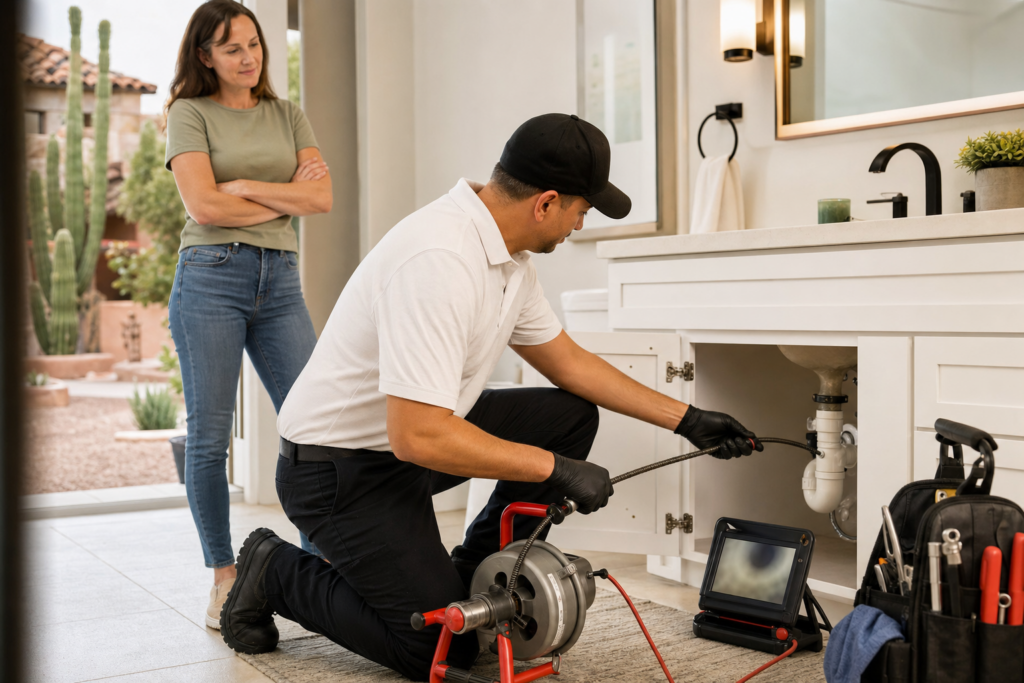
When Is Motorized Drain Snaking Enough to Clear a Residential Clog?
Motorized drain snaking is often the right first step for a single clogged drain — especially when the blockage is a one-time event caused by something like hair, soap buildup, or food debris sitting near the fixture. It works well when the obstruction is discrete, the pipe behind it is in reasonable shape, and the drain stays clear afterward.
But snaking has real limits. It opens a path through a clog — it does not clean the pipe walls, and it cannot fix a pipe that is cracked, collapsed, or narrowed by years of mineral scale. Understanding the difference between a clog that snaking can fully resolve and one where snaking only buys time is the key to spending your money on the right service.
This guide walks through the specific situations where motorized snaking is the right call, the warning signs that something more is going on, and what an honest diagnostic process looks like when snaking alone is not enough.
What a Motorized Drain Snake Actually Does
A motorized drain snake — sometimes called a power auger or cable machine — feeds a flexible steel cable into the drain line. The cable rotates as it moves through the pipe, and the cutting or hooking head at the end either breaks apart the blockage or catches it so it can be pulled back out.
The important thing to understand is what snaking does not do. The cable bores through the center of whatever is blocking the pipe. It opens a channel for water to flow again. But it does not scrub the pipe walls, and it does not remove buildup that has been gradually narrowing the line over months or years.
Think of it this way: if someone poked a hole through a clogged straw, liquid would flow again — but the walls of the straw would still be coated. That is essentially what snaking does inside a pipe when the problem is wall buildup rather than a single obstruction.
This distinction matters because it explains why snaking works perfectly for some clogs and only provides temporary relief for others.
When Motorized Snaking Is the Right Call
Snaking is generally effective when the blockage is a single, discrete obstruction in an otherwise healthy drain line. Here are the specific situations where it tends to work well.
Single-Fixture, First-Time Clogs
If only one drain in your home is slow or backed up — and it has not happened before — there is a good chance a motorized snake can clear it and the drain will stay open. A first-time clog in a single fixture usually means something specific got stuck, not that the entire pipe system has a deeper issue.
Hair and Soap Scum in Bathroom Drains
Hair tangles combined with soap residue are one of the most common causes of bathroom drain clogs. Because hair forms a physical mass that the snake’s cutting head can grab or break apart, this type of clog responds well to snaking. The obstruction is usually sitting in or near the P-trap — the curved section of pipe directly below the drain — which means the snake does not have to travel far to reach it.
Food Debris in Kitchen Sink Lines
Small food particles, vegetable scraps, or starchy buildup that has formed a blockage in the kitchen drain line can often be cleared with a motorized snake, especially if the clog is a one-time event rather than a recurring pattern.
Small Objects or Paper Buildup
If something fell into the drain or if paper products created a blockage, a motorized snake can usually hook or break apart the obstruction and restore flow.
Clogs Near the Fixture Trap
Clogs that form close to the drain opening — in the trap or within the first several feet of pipe — are the easiest for a motorized snake to reach and clear effectively. The shorter the distance, the more control the technician has over the cable.
How to Recognize a Successful Snake Job
The clearest sign that snaking fully resolved the problem is simple: the drain stays clear. If your drain flows well for weeks and months after snaking, the clog was likely a discrete obstruction that snaking removed completely. That is the outcome you want.
- Only one fixture was affected
- The clog had not happened before, or it had been a long time since the last one
- The drain flows freely after the service
- The drain stays clear for months, not just days or weeks
If all four of those statements are true after a snake job, snaking was the right tool for the situation.
When Snaking Is Not Enough
There are situations where snaking will temporarily open the drain but will not resolve the underlying cause. In these cases, the clog comes back — sometimes within days or weeks — because the real problem was never fully addressed. Here are the most common scenarios.
The Clog Keeps Coming Back
This is the single most important signal that snaking is not the full solution. If you have had a drain snaked and the same drain clogs again within a few weeks, the snake opened a channel through the blockage without removing what caused it. Recurring clogs in the same drain almost always mean there is buildup on the pipe walls, a partial obstruction deeper in the line, or a structural issue in the pipe itself.
A licensed plumber can evaluate what is happening beyond the clog itself — which is something snaking alone cannot reveal.
Multiple Drains Are Slow or Backing Up
When more than one fixture in your home is draining slowly or backing up at the same time, the problem is usually not in an individual branch line. It is more likely in the main sewer line that all of your fixtures connect to. Snaking a single fixture drain will not address a main line blockage. This situation typically requires a different approach, starting with identifying where the blockage actually is.
Signs that may point to a main line issue include:
- Water backing up in a shower or tub when you flush a toilet
- Gurgling sounds from drains you are not using
- Multiple slow drains on the same side of the house or on the lowest level
- Sewage smell coming from floor drains or cleanout access points
Grease and Mineral Scale Buildup
This is where the mechanical limitation of snaking becomes most clear. Grease coats the inside of kitchen drain pipes gradually over time. In Phoenix, hard water mineral deposits — calcium and lime scale — can do the same thing to pipes throughout the home, especially in older systems with cast iron or galvanized steel pipes.
When grease or mineral scale narrows the pipe from the inside, the snake cable passes through the remaining opening and may clear whatever soft material triggered the backup. But the hardened buildup on the pipe walls stays in place. The pipe is still narrowed, and new material will accumulate and re-clog more quickly each time.
Snaking provides temporary relief in this situation, but it does not address the narrowing. A different cleaning method — or in some cases, a pipe evaluation — may be needed to restore the full diameter of the line.
Tree Root Intrusion
Tree roots can enter sewer lines through small cracks or joint separations and grow inside the pipe, creating a mass that catches debris and causes recurring blockages. A motorized snake can punch through a root mass and restore flow temporarily, but it does not remove the roots from the pipe. They continue growing, and the clog returns.
In Phoenix, mature neighborhoods with established trees and older clay or cast iron sewer lines are more likely to experience root intrusion. If snaking clears the drain but the problem returns in a similar timeframe each time, root intrusion is one possibility a licensed plumber can investigate.
Structural Pipe Damage
A pipe that has cracked, collapsed, developed a belly (a low spot where the pipe sags and holds water), or shifted at a joint creates a point where debris naturally collects. Snaking can push through the collected material, but the structural issue remains. The pipe will continue catching debris in the same spot.
Snaking cannot fix a broken pipe. And in some cases, aggressive snaking in a pipe that is already damaged can make things worse. This is one reason why understanding the condition of the pipe matters before deciding on the next step.
Why Pipe Condition Matters More Than Most Articles Mention
Most guides on this topic move directly from noting that snaking fell short to recommending hydro jetting as the automatic next step. That approach skips something important.
Hydro jetting uses high-pressure water to scour the inside of the pipe and remove buildup from the walls. It is an effective cleaning method when the pipe can handle it. But not every pipe can. Older pipes — especially cast iron, clay, or galvanized lines that have been in the ground for decades — may be corroded, thinned, cracked, or fragile enough that high-pressure water could cause further damage.
This is why a camera inspection matters. Before deciding whether hydro jetting, pipe repair, or another approach is the right next step, a plumber needs to see the inside of the pipe. A camera inspection shows what the clog actually is, where it is located, and what condition the pipe is in. That information determines the right course of action — not the other way around.
At Fast Layne Plumbing, this diagnostic step is part of how we approach drain problems honestly. We would rather show you what is happening inside the line and walk you through your options than jump to a service that may not match the actual situation.
What Comes Next When Snaking Is Not the Full Answer
If snaking does not fully resolve the issue — or if the clog keeps returning — the honest next step is diagnosis, not automatic escalation to the most aggressive service.
Camera Inspection
A sewer camera inspection involves feeding a small waterproof camera into the drain line to see exactly what is happening inside the pipe. It can reveal root intrusion, pipe cracks, bellied sections, scale buildup, grease accumulation, and blockages that are not visible from the drain opening. This is the step that tells the plumber — and you — what you are actually dealing with.
Hydro Jetting
When the camera shows that the pipe is structurally sound but narrowed by grease, scale, or other wall buildup, hydro jetting may be the appropriate next step. It cleans the full interior surface of the pipe rather than just opening a channel through the center. This can restore flow in a way that snaking cannot for buildup-related clogs.
Pipe Repair or Replacement
If the camera reveals structural damage — cracks, collapses, severe corrosion, or joint separation — the issue is not a clog that needs clearing. It is a pipe that needs repair or replacement. This is a different category of work, and it is important to know the difference before spending money on repeated cleaning that cannot solve a structural problem.
The right answer depends on what the inspection shows. A trustworthy plumber will explain what the camera found, walk you through your options in plain language, and let you make an informed decision.
Phoenix-Specific Factors That Affect Drain Clogs
If you live in Phoenix, a few local conditions are worth knowing about because they affect how clogs form and how they respond to snaking.
Hard Water and Mineral Scale
Phoenix has notably hard water. As years pass, calcium and mineral deposits accumulate along pipe interiors — a problem that tends to be more pronounced in older homes with cast iron or galvanized plumbing systems. That scale progressively reduces the pipe’s usable diameter and leaves behind rougher interior surfaces where grease and debris are more likely to snag. Snaking can push through the soft material on top, but it does not remove the hardened scale underneath.
Older Pipe Materials in Established Neighborhoods
Many Phoenix homes built from the 1950s through the early 2000s have clay, cast iron, or Orangeburg sewer lines. These materials deteriorate differently than modern PVC, and they are more vulnerable to root intrusion, corrosion, and joint separation. Clogs in these older systems are more likely to be symptoms of a pipe condition issue rather than a simple blockage.
Tree Roots in Mature Neighborhoods
Established Phoenix neighborhoods with mature trees — including common desert-adapted species with aggressive root systems — can experience root intrusion into aging sewer lines. The roots seek moisture, and even a small crack or loose joint in the pipe gives them a way in. Snaking can temporarily clear the blockage, but the roots will grow back unless the entry point is addressed.
Frequently Asked Questions
Why won’t my drain unclog even after snaking?
If the drain is still slow or backing up after a professional snake job, the obstruction may be further down the line than the cable reached, or the problem may not be a simple clog. Grease buildup, mineral scale, root intrusion, or a structural pipe issue can all cause symptoms that snaking cannot fully resolve. A camera inspection can help identify what is actually going on.
How do I know if the clog is in the main sewer line or a branch line?
If only one fixture is affected, the clog is most likely in the branch line connected to that fixture. When several fixtures throughout the home are draining slowly, backing up, or making gurgling noises at the same time — particularly on the home’s lower level — the main sewer line is the more likely source of the problem. A licensed plumber can evaluate which line is affected and what is causing the backup.
Can snaking damage pipes?
In most cases, professional motorized snaking is safe for pipes in good condition. However, pipes that are severely corroded, thinned, cracked, or made of fragile older materials could potentially be damaged by the rotating cable. This is another reason why understanding your pipe condition is important, and why an experienced plumber adjusts their approach based on what they find.
How long does a snaked drain usually stay clear?
If the clog was a discrete obstruction — like a hair mass or a piece of debris — the drain may stay clear for months or years. If the underlying cause is buildup, root intrusion, or a pipe issue, the clog may return within weeks. How long the drain stays clear after snaking is one of the best indicators of whether snaking was the right solution or whether something deeper needs attention.
When should I call a licensed plumber instead of renting a drain snake?
Consider calling a licensed plumber if the clog is in more than one fixture, if it is a recurring problem, if you suspect the issue is in the main sewer line, or if you are not confident about what is causing the backup. Motorized drain snakes require some skill to operate without damaging pipes, and a professional can assess the situation, choose the right tool, and identify problems that a rented snake cannot diagnose.
Is it safe to use chemical drain cleaners before calling a plumber?
Chemical drain cleaners can sometimes clear minor surface-level clogs, but they can also damage pipes over time — especially older pipes — and they do not address the root cause of recurring blockages. If a chemical cleaner does not work, let the plumber know you used one so they can take appropriate precautions during the service call.
What to Tell Your Plumber Before the Visit
When you call about a clogged drain, a few details can help the plumber prepare and arrive with the right equipment:
- Which fixture or fixtures are affected
- Whether the problem has happened before, and how recently
- Whether multiple drains are slow or only one
- Whether you notice any unusual sounds, smells, or water appearing in unexpected places
- Whether you have tried anything to clear it yourself
This kind of information helps the plumber understand what they are walking into and whether a motorized snake is the likely starting point or whether additional diagnostic tools may be needed from the start.
The Right Method Depends on the Right Diagnosis
The core question — is motorized drain snaking enough? — comes down to what is actually causing the clog. For a single, first-time obstruction in a healthy pipe, snaking is often the right tool and the right investment. For recurring clogs, multi-fixture backups, heavy buildup, root intrusion, or structural pipe issues, snaking may provide temporary relief without solving the real problem.
The difference between a plumber who reaches for the same tool every time and one who takes the time to understand what is actually happening in your pipes is the difference between treating a symptom and solving the problem.
At Fast Layne Plumbing, we explain what we find in plain English, walk you through your options with upfront pricing, and make sure the service matches the actual situation — not the other way around. We do not push services you do not need, and we do not leave until you understand exactly what was done and why.
If you have a clogged drain in Phoenix — whether it is the first time or the fifth — give us a call at 480.485.4659. We will help you figure out what is going on and what it takes to fix it the right way.