Sewer Blockage: How to Tell If the Problem Is Buildup or Pipe Damage
The clearest way to tell whether a sewer blockage is caused by buildup or actual pipe damage is to watch what happens after the line has been cleared. A blockage caused by grease, scale, or debris will respond to professional cleaning and stay open. A blockage caused by structural pipe damage — a crack, a collapsed section, a sagging low point, or root intrusion through a break — will return quickly, often in the same location and within days or weeks of the last clearing.
If you are a homeowner in Phoenix dealing with recurring drain problems, multiple backups at once, or a sewer issue that keeps coming back no matter how many times it gets cleared, the symptoms may be pointing to something deeper than ordinary accumulation. This article walks through the specific signs that suggest pipe damage rather than buildup, explains the reasoning behind each one, and covers what a licensed plumber actually looks for during a diagnostic camera inspection.
Why the Difference Between Buildup and Damage Matters
Not every sewer blockage needs the same solution. Buildup blockages and damage-caused blockages can produce similar-looking symptoms on the surface — slow drains, gurgling, backups — but they require very different responses. Understanding which type you may be dealing with helps you avoid paying for repeated cleanings that only treat the symptom, and it helps you have a more informed conversation when you call a plumber.
Buildup blockages happen when grease, soap residue, mineral scale, hair, or other debris gradually narrows the inside of the pipe. The pipe itself is intact. Professional drain cleaning or hydro jetting removes the accumulation and restores flow. The blockage is gone because the cause — the buildup — has been removed.
Damage-caused blockages happen when the pipe itself has a structural problem: a crack, a joint that has separated, a section that has collapsed, a low point where the pipe sags (sometimes called a pipe belly), or a break where tree roots have entered the line. In these cases, even after clearing, debris collects again at the damaged spot because the physical defect is still there. Cleaning addresses the symptom but not the cause.
The repair path is different, the urgency may be different, and the cost is different. That is why identifying the right cause early matters — it saves you from paying for work that will not hold.
The Behavioral Test: What Happens After the Line Is Cleared
Before looking at individual symptoms, the single most useful thing a homeowner can observe is how the sewer system behaves after a professional clearing.
If the Clog Clears and Stays Clear
When a professional clears a blockage and the drains flow normally for months afterward, the problem was most likely accumulation. The pipe was narrowed or blocked by material that the cleaning removed. Once the material was gone, the pipe resumed normal function because the pipe itself was sound.
If the Clog Returns Quickly in the Same Location
When a blockage comes back within days or weeks — especially in the same drain or the same section of the main sewer line — that pattern strongly suggests a structural issue. A crack catches debris. A belly creates a low point where waste pools. A separated joint creates a ledge that snags material. Tree roots growing through a break re-establish themselves quickly after being cut. The clearing worked temporarily, but the physical defect that caused the original blockage is still there.
This behavioral pattern is the most reliable indicator a homeowner can observe on their own. If you have had the same line cleared two or three times and the problem keeps returning, a camera inspection is the appropriate next step to find out what is actually happening inside the pipe.
Interior Signs That May Point Toward Pipe Damage
Some symptoms that appear inside the home are more consistent with structural pipe problems than with ordinary buildup. No single sign is proof of damage on its own — a camera inspection is needed to confirm — but these patterns are worth paying attention to.
Recurring Clogs in the Same Line After Professional Cleaning
As described above, this is the strongest interior indicator. A pipe that keeps clogging in the same spot after professional clearing may have a belly, a collapsed section, a root intrusion point, or a joint offset that keeps catching material. Buildup can recur over long periods, but it does not typically return in the same place within days or weeks of a thorough cleaning.
Multiple Drains Backing Up or Slowing Down at the Same Time
When more than one fixture is affected simultaneously — toilets, showers, and sinks all backing up or draining slowly at the same time — the issue is typically in the main sewer line rather than in an individual branch line. A localized buildup problem usually affects one drain. A systemic backup that hits multiple fixtures at once can indicate a main line obstruction caused by a structural failure downstream.
Persistent Sewer Gas Odors Inside the Home
A mild sewer smell that comes and goes may be caused by a dry trap — a fixable, minor issue. But persistent or worsening sewer gas odors inside the home, especially near floor drains or lower-level fixtures, can indicate a breach somewhere in the line. A cracked or separated pipe can allow sewer gas to escape into the surrounding soil and eventually into the home. If the odor does not go away after running water in all drains, it may be worth having a technician evaluate the line.
Root Material on the Drain Snake or Auger
If a plumber pulls root material out of your line during a clearing, that tells you roots have entered the pipe somewhere. This is an important detail: tree roots do not push through intact pipe walls. They enter through existing cracks, breaks, or separated joints. Root material on the equipment is a direct indicator that the pipe has a structural opening.
Exterior Signs That May Point Toward Pipe Damage
Some of the most telling signs of a damaged sewer pipe show up outside the home, in the yard or near the foundation. These signs are often overlooked because homeowners do not associate them with plumbing.
Soggy Patches, Unusually Green Grass, or Soft Ground Along the Sewer Line Path
When a sewer pipe cracks or breaks underground, wastewater can leak into the surrounding soil. That moisture acts as both irrigation and fertilizer. The result is a strip or patch of grass that looks noticeably greener or lusher than the rest of the yard, or a section of ground that stays soft or soggy even when it has not rained. In the Phoenix climate, where most yards are dry and irrigation-controlled, an unexplained wet or green patch can stand out clearly.
Small Sinkholes or Depressions in the Yard
When wastewater leaks from a broken pipe over time, the surrounding soil can wash away or erode. This can create small depressions or sinkholes along the path of the sewer line. If you notice the ground dipping or settling in a line that runs from the house toward the street, that may indicate a pipe problem underground.
Unusual Pest Activity Near Drains or Plumbing Access Points
A broken sewer pipe underground creates an opening — and that opening can become an entry point for rodents, cockroaches, or other pests. If you notice an increase in pest activity near floor drains, cleanouts, or lower-level plumbing fixtures, a damaged pipe could be part of the cause. This is a less common sign, but it is a real one that many homeowners would not immediately connect to plumbing.
Foundation Dampness or New Settling Cracks
This is a longer-term consequence rather than an early warning sign, but it is worth mentioning. A sewer pipe that has been leaking beneath or near the foundation for an extended period can contribute to soil moisture changes that may affect the foundation over time. If you notice unexplained dampness near the base of the home alongside other sewer symptoms, it is worth having both the plumbing and the foundation evaluated by the appropriate professionals.
What a Camera Inspection Actually Shows
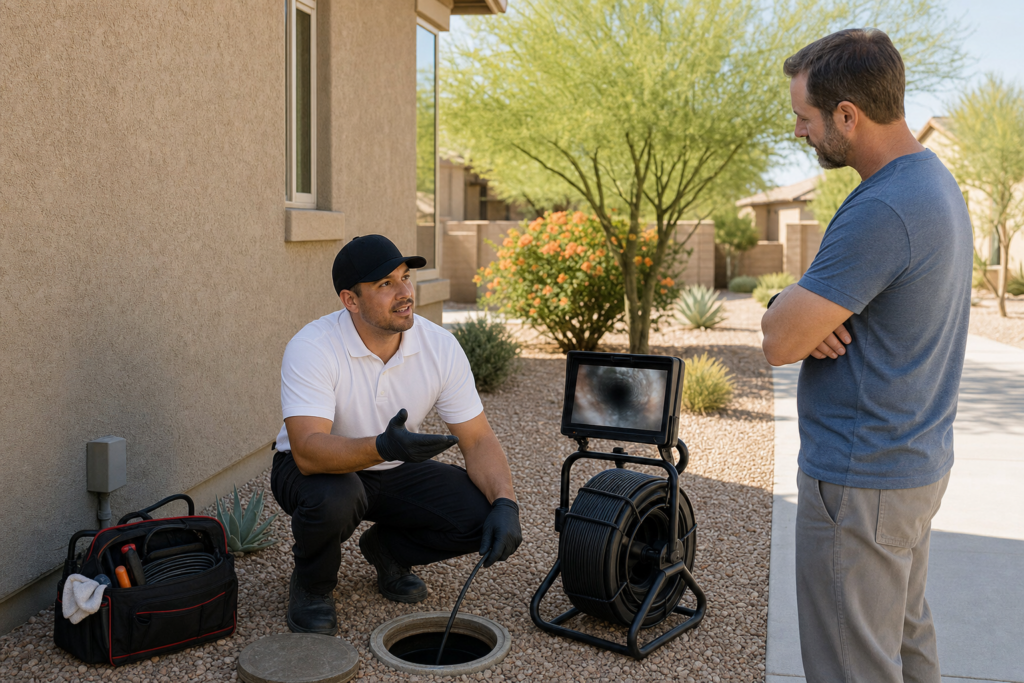
A CCTV sewer camera inspection is the standard diagnostic tool for confirming whether a sewer blockage is caused by buildup or pipe damage. A small waterproof camera is fed into the sewer line, and a technician watches the real-time video to see the interior condition of the pipe.
A camera inspection can reveal:
- Cracks and fractures in the pipe wall
- Offset joints — sections where the pipe connections have shifted out of alignment, creating a ledge that catches debris
- Pipe belly — a section of pipe that has sagged or settled, creating a low point where waste and water pool instead of flowing through
- Root intrusion — visible roots growing through a break or joint gap into the pipe interior
- Corrosion — deterioration of the pipe material, especially common in older cast iron or clay pipes
- Partial or full collapse — sections where the pipe has caved in, significantly restricting or blocking flow
- Heavy scale or buildup — if the pipe is structurally intact but narrowed by accumulated material, the camera shows that too
The camera inspection is what separates guessing from knowing. It shows the technician — and the homeowner — exactly what is happening inside the pipe, which makes it possible to recommend the right repair instead of repeating a clearing that may not hold.
At Fast Layne Plumbing, camera inspection is part of how we diagnose before we recommend. We show you what the camera finds, explain what it means in plain English, and walk you through the options so you can make an informed decision. No pressure, no unnecessary upsells — just an honest look at what your pipe actually needs.
What Phoenix Homeowners Should Know
Phoenix has some specific conditions that can affect sewer pipe health in ways that homeowners in other parts of the country may not experience.
Soil Conditions and Ground Movement
Phoenix-area soils — particularly the expansive clay soils found in many neighborhoods — can shift with moisture changes. When soil expands and contracts, it puts stress on buried pipes. Over time, that movement can contribute to joint separation, cracking, and the development of bellies in the line. Homes that have been through many seasonal cycles may have pipes that have gradually shifted from their original alignment.
Common Pipe Materials in Older Phoenix Homes
Homes built from the 1950s through the early 2000s in the Phoenix area may have sewer lines made from clay, cast iron, Orangeburg (a compressed fiber material), or older-generation PVC. Each of these materials has a different lifespan and a different failure pattern. Clay pipes are prone to cracking and root intrusion at joints. Cast iron corrodes from the inside over decades. Orangeburg can deform and collapse. If your home is older and you have never had the sewer line inspected, the age and material of the pipe are worth knowing.
Tree Root Intrusion in Desert Landscaping
Many homeowners assume that because Phoenix is a desert environment, tree roots are not a sewer line risk. In fact, some of the most common landscape trees in the Phoenix area — mesquite, palo verde, and citrus trees — have aggressive root systems that actively seek out moisture underground. A hairline crack or a slightly loose joint in a buried sewer pipe is all the invitation they need. Roots locate the moisture source, push through the opening, and expand inside the pipe until a blockage forms. A yard with sparse landscaping can still develop a root intrusion problem when the right tree is planted near enough to the sewer line.
What to Do If You Suspect Pipe Damage
If you recognize several of the signs described above — especially recurring clogs after clearing, multiple drains affected at once, or visible yard symptoms — the most useful next step is a professional camera inspection of the sewer line.
What you should avoid: Continuing to snake or clear a damaged line without diagnosing the underlying cause. Each time you clear a blockage in a damaged pipe, you are treating the symptom while the structural problem remains. In some cases, repeated aggressive snaking can actually worsen damage to a weakened pipe.
What you should expect from a good plumber: An honest evaluation. A camera inspection to see the condition of the pipe. A clear explanation of the findings. And if repair is needed, a straightforward conversation about what the options are — whether that is a spot repair, pipe lining, or replacement — based on what the inspection actually shows.
Fast Layne Plumbing serves homeowners throughout Phoenix, and we handle exactly this kind of diagnostic work every week. We answer the phone, show up when we say we will, and use camera inspection to find the real problem — not just the symptom. If the line only needs cleaning, we will tell you that. If there is damage, we will show you the footage, explain what it means, and give you upfront pricing on the repair options so there are no surprises.
If you are dealing with a sewer issue that keeps coming back, or if you just want to know what is going on inside your line, call Fast Layne Plumbing at 480.485.4659 to schedule an inspection.
Frequently Asked Questions
How do I know if my sewer clog is from buildup or a broken pipe?
The most reliable way to tell is by observing what happens after the line has been professionally cleared. If the clog stays gone for a long time, it was likely buildup. If it returns quickly — especially in the same location — it may indicate structural damage. A camera inspection is the definitive way to confirm which cause is present.
Why does my drain keep clogging after it has been cleaned?
Recurring clogs in the same line after professional cleaning can indicate a physical defect in the pipe, such as a crack, a belly, an offset joint, or root intrusion. These defects create spots where debris catches and accumulates again regardless of how well the line was cleaned. A camera inspection can identify the specific issue.
What is a pipe belly and why does it cause blockages?
A pipe belly is a section of sewer pipe that has sagged or settled, creating a low point in the line. Waste and water pool in that low spot instead of flowing freely toward the main sewer. Over time, debris accumulates in the belly and creates a recurring blockage. A belly is a structural problem — no amount of cleaning will raise the pipe back to its correct slope.
Can tree roots cause a sewer blockage even in a desert yard?
Yes. Common Phoenix-area trees like mesquite, palo verde, and citrus have root systems that aggressively pursue underground moisture. A minor crack or slightly separated joint in a sewer pipe gives roots a point of entry, and once inside, they continue to grow until a blockage develops. Having minimal landscaping does not eliminate the possibility of root intrusion.
What does a CCTV sewer inspection show?
A camera inspection shows the interior condition of the sewer pipe in real time. A technician can see cracks, joint separations, root intrusion, pipe bellies, corrosion, collapse, and buildup. It is the standard method for determining whether a sewer problem is caused by accumulation or structural damage, and it allows the plumber to recommend the right solution based on what the pipe actually looks like.
When should I call a plumber instead of trying to clear it myself?
If you have a single slow drain, a basic plunger or household drain tool may help with a minor clog. But if multiple drains are affected, the problem keeps returning, you notice sewer odors, or you see yard symptoms like wet patches or sinkholes, call a licensed plumber. Main sewer line problems are beyond what household tools can diagnose or resolve, and improper clearing can make damage worse.
Get an Honest Diagnosis From a Local Phoenix Plumber
Dealing with a sewer problem that will not stay fixed is frustrating — especially if you have already paid for a clearing that did not last. You deserve a straight answer about what is actually going on with your line, and you deserve a plumber who explains the findings clearly instead of jumping to the most expensive recommendation.
Fast Layne Plumbing is a family-owned plumbing company serving Phoenix, AZ. We use camera inspection to find the real problem, we explain everything in plain English, and we provide upfront pricing before any work begins. No surprise bills, no unnecessary upsells, and no guessing.
Call Fast Layne Plumbing at 480.485.4659 to schedule service.