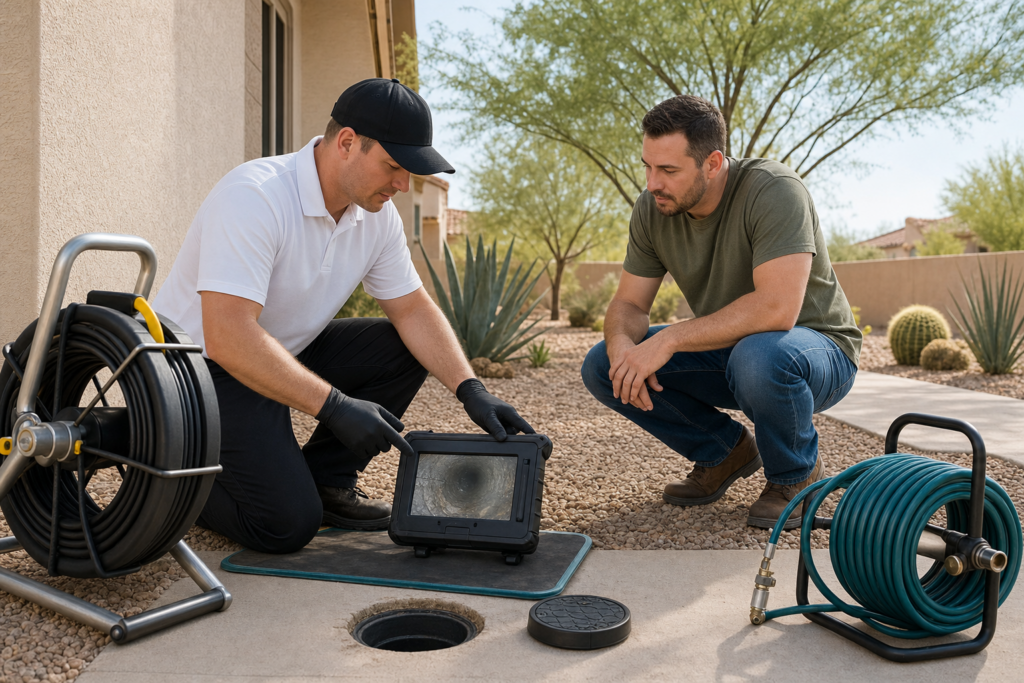
How to Choose a Plumber in Phoenix for Hydro Jetting Roots Out of Your Sewer Line
If tree roots have found their way into your sewer line, hydro jetting is one of the most thorough methods available to clear them — but the plumber you hire for this job matters just as much as the method itself. High-pressure water cutting through a root-filled pipe requires the right equipment, genuine experience with root intrusion, and an honest evaluation of whether your pipes can handle the process safely.
This guide is written for Phoenix homeowners who are past the point of hoping a basic drain snake will solve the problem. You already know something is wrong. Now you need to find a plumber you can trust to handle it correctly — someone who will inspect the line first, explain what they find in plain English, give you a clear price before any work begins, and tell you the truth about what your sewer line actually needs.
Here is what to look for, what to ask, and what to watch out for before you let anyone put a high-pressure jetting nozzle into your Phoenix sewer line.
Why Tree Roots Keep Getting Into Phoenix Sewer Lines
Before you evaluate plumbers, it helps to understand why this problem is so common here — and why it tends to come back.
The Trees That Cause the Most Trouble in the Valley
Mesquite, Palo Verde, Ficus, and Eucalyptus are some of the most common root intrusion culprits in Phoenix. These trees send roots deep into the soil searching for moisture, and a sewer line with even a small gap at a joint or a hairline crack is an open invitation. The roots find the moisture, work their way inside, and grow until they slow or completely block the flow.
Why Older Phoenix Pipes Are Especially Vulnerable
Many homes built in Phoenix from the 1950s through the early 2000s have clay or cast iron sewer lines. Clay pipes in particular were installed with joints that can separate over decades, creating gaps where roots enter. Cast iron corrodes over time, developing rough surfaces and weak spots. Phoenix’s hard water also contributes — mineral deposits build up inside the pipe, creating additional texture for roots to grip onto and making blockages worse.
The combination of aggressive desert tree roots, aging pipe materials, and mineral-heavy water makes root intrusion one of the most persistent plumbing problems in the Phoenix area.
What Happens Inside the Pipe When Roots Take Hold
Roots typically enter through joints, cracks, or small openings. Once inside, they spread like a net across the interior of the pipe. Over time, the root mass traps waste, grease, and debris — creating a blockage that gets worse with every flush. A standard drain snake may punch through the blockage temporarily, but it usually cannot remove the root structure attached to the pipe walls. That is where hydro jetting becomes relevant.
What Hydro Jetting Actually Does to Tree Roots
Hydro jetting uses a specialized nozzle that delivers high-pressure water — typically between 3,000 and 4,000 PSI — directly into the sewer line. For root removal, the nozzle is equipped with rear-facing jets and sometimes a root-cutting head designed to slice through root material and flush it out of the pipe.
Unlike a mechanical drain snake, which punches a hole through a blockage, hydro jetting scours the entire interior wall of the pipe. The process clears away the root mass along with accumulated grease, mineral scale, and debris that have built up around it. For sewer lines heavily impacted by roots, this is typically the more complete approach.
What hydro jetting cannot do: It does not repair the cracks, gaps, or joint separations where roots entered the pipe. It does not seal the entry points. And because those entry points remain open, roots can and often do grow back over time. This is an important reality that any honest plumber should explain before you agree to the work.
The Criteria That Separate a Qualified Phoenix Hydro Jetting Plumber from the Rest
Not every plumber who offers hydro jetting is equally prepared to handle root intrusion in older Phoenix sewer lines. Here is what to look for — and what a strong answer sounds like when you ask the right questions.
They Require a Camera Inspection Before Touching the Water Pressure
This is the single most important criterion. A camera inspection before hydro jetting reveals the pipe material, the structural condition of the line, the location and density of the root mass, and whether the pipe has any cracks, collapses, or bellied sections that could make high-pressure jetting risky.
Jetting a pipe that is already cracked or partially collapsed can cause serious damage. A responsible plumber will not skip this step because it protects both the homeowner and the integrity of the repair.
What a good answer sounds like: “A camera inspection is always our first step. We need to understand the condition of your pipe before we determine how to handle the roots. If the line isn’t structurally ready for jetting, we’ll let you know before anything else happens.”
What a red flag sounds like: “No camera needed — we’ll run the jetter through and see what comes out.”
If a plumber suggests skipping the camera inspection, that is a clear reason to call someone else.
They Hold a Valid Arizona ROC License and Can Prove It
Arizona requires plumbing contractors to be licensed through the Registrar of Contractors, commonly referred to as the ROC. This is not a formality — it means the contractor has met state requirements for bonding, insurance, and trade competence.
You can verify any contractor’s license status through the Arizona ROC’s online database. Search by company name or license number and check that the license is active, the classification covers plumbing work, and the contractor is bonded and insured.
For high-pressure sewer work specifically, this verification matters because if something goes wrong — if a pipe is damaged during jetting, for example — you need to know the contractor is properly insured and accountable.
What to ask: “Would you share your Arizona ROC license number so I can look it up?” A qualified plumber will provide this without hesitation.
They Specialize in Drain and Sewer Work
There is a meaningful difference between a general plumber who occasionally rents a jetting machine and a drain and sewer specialist who handles root intrusion regularly. The difference shows up in equipment, technique, and judgment.
A plumber who does this work regularly will have professional-grade jetting equipment with the appropriate PSI range and multiple nozzle types, including root-cutting heads designed specifically for this type of blockage. They will also have the experience to adjust pressure and technique based on what the camera reveals about pipe material and condition.
What to ask: “How often do you deal with root intrusion jobs? What jetting equipment do you use, and do your nozzle options include root-cutting heads?” A plumber who works with sewer lines routinely will answer these questions with specifics, not generalities.
They Explain What They Find Before They Start Jetting
After the camera inspection, a qualified plumber should show you the footage and explain what they see — in plain English, not jargon. You should understand where the roots are, how dense the mass is, what condition the pipe is in, and what the plumber recommends doing about it.
For thick root masses, some plumbers use a mechanical rooter machine first to break up the heaviest root material before switching to hydro jetting to clear and flush the line. This rooter-first technique can be more effective and safer than blasting a dense root ball with high-pressure water alone.
What a good answer sounds like: “The camera footage shows the root concentration is at this joint. The pipe walls look solid, so we’re clear to jet. My plan is to run the rooter through the densest area first, then follow with a full jetting pass on the line.”
You have every right to understand what is happening inside your pipes before authorizing work. A plumber who rushes past this step is not giving you the information you need to make a confident decision.
They Include a Post-Jetting Camera Inspection
The job is not complete when the water pressure turns off. A post-jetting camera inspection confirms that the roots have been cleared, shows the condition of the pipe walls now that they are clean, and reveals any structural damage that may have been hidden behind the root mass — cracks, joint separations, or early signs of pipe deterioration.
This step matters because it determines what happens next. If the pipe is clean and structurally sound, you may only need periodic maintenance. If the camera reveals damage, your plumber should be able to explain your options — from spot repair to trenchless pipe lining to section replacement — so you can make an informed decision about long-term protection.
What to ask: “Do you do a camera pass after the jetting is finished, and is that included in the price you quoted?”
They Provide Upfront, Flat-Rate Pricing Before Starting Work
Root intrusion jobs vary in complexity. The length of the sewer line, the density of the root mass, whether a rooter pre-treatment is needed, accessibility of the cleanout, and whether camera inspections are included all affect the scope of work. Hourly pricing for this type of job creates uncertainty because a thick root mass can take significantly longer to clear than a light one.
A plumber who provides a written, flat-rate estimate after the camera inspection — before any jetting begins — gives you the clarity you need to approve the work without worrying about a bill that grows by the hour.
Residential sewer line hydro jetting in the Phoenix area generally falls within a range that varies based on all the factors above. Rather than quoting a number without seeing your line, a trustworthy plumber will explain what drives the cost for your specific situation.
What a good answer sounds like: “This is your all-in price — it covers the camera work, the jetting, and the post-jetting verification. Everything is spelled out, and the final bill will match what I’m quoting you now.”
Questions to Ask Any Plumber Before You Hire Them for This Job
Before you schedule hydro jetting for root intrusion, ask these questions. The answers will tell you a lot about whether the plumber is the right fit.
- Will you perform a camera inspection before hydro jetting?
- What do you do if the camera reveals a cracked or collapsed pipe?
- Are my pipes safe for high-pressure jetting, and how will you determine that?
- Do you use specialized root-cutting nozzles, or standard jetting heads?
- Will you show me the camera footage before and after the job?
- Is a post-jetting camera inspection included in your quote?
- What are my options if roots grow back?
- Can I see your Arizona ROC license number?
- Is your quote flat-rate or hourly, and what does it include?
A plumber who answers these questions with specifics — not vague reassurances — is demonstrating the kind of transparency that matters for this type of work.
What Happens After Hydro Jetting — Your Long-Term Options
Hydro jetting clears the roots that are inside the pipe right now. It does not close the entry points where those roots got in. That means roots can grow back, often within 12 to 18 months depending on the tree species, the proximity of the roots to the pipe, and how many entry points exist.
An honest plumber will tell you this upfront. Here are the options that may be available depending on what the post-jetting camera inspection reveals:
- Regular maintenance jetting: Some homeowners schedule periodic hydro jetting — annually or every couple of years — to keep roots from building back up to a critical level. This is a practical approach when the pipe is structurally sound but root entry points cannot be eliminated.
- Root inhibitor treatment: Chemical treatments applied after jetting can slow root regrowth inside the pipe. These treatments do not eliminate roots permanently, but they can extend the interval between cleanings.
- Trenchless pipe lining: If the pipe has multiple entry points or joints that are allowing root intrusion, trenchless lining creates a smooth, sealed interior surface inside the existing pipe. This can eliminate the gaps and cracks where roots enter without requiring a full excavation.
- Pipe repair or replacement: If the post-jetting camera reveals severe structural damage — a collapsed section, a major crack, or pipe that has deteriorated beyond repair — a section repair or full sewer line replacement may be the most appropriate long-term solution.
The right path depends entirely on what the camera shows after the line is clean. This is why the post-jetting inspection is so important — it gives you and your plumber the information needed to make a sound long-term decision.
Red Flags to Watch For When Evaluating Plumbers for This Job
- Quotes a price over the phone without inspecting the line
- Cannot provide an Arizona ROC license number when asked
- Does not mention a camera inspection as part of the process
- Pressures you to decide immediately or uses scare tactics about damage
- Cannot explain what equipment they use for root removal specifically
- Offers only hourly pricing with no written estimate
- Refuses to show you camera footage before or after the work
- Recommends full pipe replacement before inspecting the line
Any of these should give you pause. A plumber who is confident in their work and honest about the process will welcome your questions — not avoid them.
How Fast Layne Plumbing Approaches Root Intrusion in Phoenix Sewer Lines
At Fast Layne Plumbing, we handle root intrusion the same way we handle every job — by finding the real problem first, explaining it clearly, and giving you honest options before any work begins.
That means a camera inspection comes first. We want to see what your sewer line looks like, what the roots are doing, and whether the pipe is in good enough condition for hydro jetting. If it is, we explain the scope of work, give you a clear price upfront, and get to work. If the camera reveals something that changes the picture — a crack, a collapse, or a section that needs repair rather than cleaning — we tell you that, too.
We are a family-owned plumbing company serving Phoenix, Arizona. We show up when we say we will. We explain what we find in plain English. We do not upsell services you do not need. And we treat your home with the same respect we would want in ours.
If you are dealing with recurring drain backups, slow drains, or a sewer line that has been giving you problems, a licensed technician can evaluate what is going on and walk you through your options.
Call Fast Layne Plumbing at 480.485.4659 to schedule service.
Frequently Asked Questions
Does hydro jetting actually remove tree roots from sewer lines?
Yes. Hydro jetting uses high-pressure water — typically between 3,000 and 4,000 PSI — with specialized root-cutting nozzles to cut through root material and flush it out of the pipe. It is generally more thorough than mechanical snaking for root removal because it clears the entire interior surface of the pipe rather than just punching a hole through the blockage.
How long before tree roots grow back after hydro jetting?
Roots can begin growing back within 12 to 18 months in many cases, though the timeline varies depending on the tree species, how close the roots are to the pipe, and how many entry points exist. Hydro jetting clears the roots inside the pipe but does not seal the cracks or joint gaps where roots entered. Regular maintenance jetting, root inhibitor treatments, or trenchless pipe lining may help extend the interval or address the root cause.
Is hydro jetting safe for older clay or cast iron pipes?
It can be, but only if the pipe is structurally sound enough to handle the water pressure. This is why a camera inspection before hydro jetting is essential. The camera reveals the pipe material, wall condition, and any cracks or weak spots. A qualified plumber will evaluate the camera footage and adjust their approach accordingly — or recommend a different solution if the pipe cannot safely withstand jetting.
Do I need a camera inspection before hydro jetting?
A pre-jetting camera inspection is strongly recommended for root intrusion work. It shows the plumber what they are dealing with — the pipe material, the location and density of the root mass, and the structural condition of the line. Without this step, there is a risk of jetting a pipe that is already compromised, which could cause further damage.
What is an Arizona ROC license and why does it matter?
The Arizona Registrar of Contractors (ROC) licenses and regulates contractors in the state. A valid ROC license means the contractor has met requirements for bonding, insurance, and trade competence. You can verify any plumber’s license status through the ROC’s online database by searching for the company name or license number. For sewer work involving high-pressure equipment, confirming that your plumber is properly licensed and insured provides an important layer of protection.
What if the camera inspection finds a broken or collapsed pipe?
If the pre-jetting camera inspection reveals a cracked, broken, or collapsed section of pipe, hydro jetting may not be the right approach for that area. Your plumber should explain what the camera shows, discuss the condition of the pipe honestly, and present your repair options — which could include spot repair, trenchless pipe lining, or section replacement depending on the severity and location of the damage. The right repair depends on what the inspection reveals.
How much does hydro jetting cost in Phoenix?
The cost of hydro jetting for root intrusion varies based on the length of the sewer line, the severity of the root mass, accessibility of the cleanout, whether rooter pre-treatment is needed, and whether camera inspections are included in the scope of work. Rather than quoting a number without seeing your specific situation, a responsible plumber will inspect the line first and provide an upfront price based on what they find.