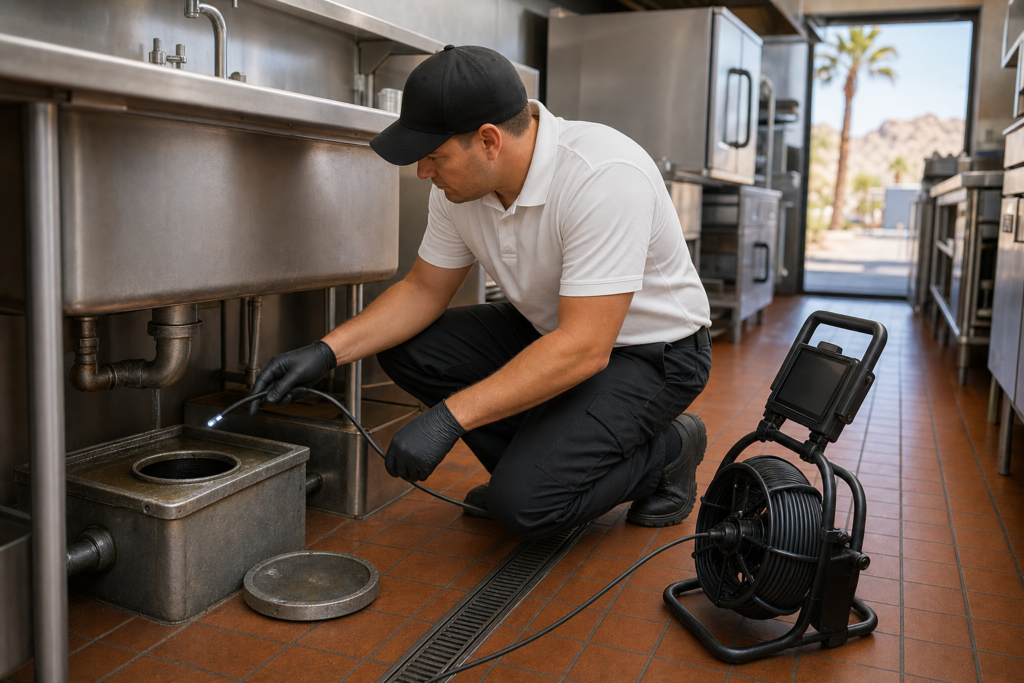
How to Clear Heavy Grease Buildup in a Commercial Kitchen Drain
Heavy grease buildup in a commercial kitchen drain requires a different approach than a typical household clog. The volume of fats, oils, and grease — known in the industry as FOG — that moves through a restaurant or commercial kitchen each day is far beyond what residential methods can handle. The right clearing method depends on how severe the blockage is, and in many cases, the grease trap is the actual source of the problem rather than the drain line itself.
This guide walks through how to assess what you are dealing with, which methods match which situations, what to avoid, and when it is time to call a licensed plumber. If you manage a commercial kitchen in Phoenix, this is written with your operation in mind.
Why Commercial Kitchen Grease Clogs Are Different from Residential Clogs
What FOG Is and How It Accumulates
FOG stands for Fats, Oils, and Grease — the byproducts of cooking that enter your drain system every time food is prepared, pans are washed, or equipment is cleaned. In a residential kitchen, FOG enters the drain in small amounts. In a commercial kitchen running breakfast, lunch, and dinner service, the volume can be significant enough to coat pipe walls in layers that harden over time.
Grease does not behave like other drain blockages. A hair clog or a food particle jam can often be cleared with a simple snake or plunger. Grease, on the other hand, coats the interior circumference of the pipe. It cools, solidifies, and bonds to the pipe wall. New layers build on top of old ones. Over weeks and months, the interior diameter of the pipe narrows until water flow slows, backs up, or stops entirely.
Why Household Remedies Do Not Work at Commercial Scale
Baking soda and vinegar, boiling water, and off-the-shelf drain cleaners are common suggestions for residential kitchen drains. In a commercial kitchen with heavy FOG buildup, these approaches are not effective. The volume of grease is too large, the buildup is too layered, and household products are not formulated for commercial-grade pipe systems.
Chemical drain openers can also create problems in commercial plumbing. They may react with grease in unpredictable ways, damage older pipe materials, or create hazardous fumes in a kitchen environment. More on what to avoid is covered below.
Before You Try Anything Else — Check the Grease Trap First
What a Grease Trap Does
A grease trap (also called a grease interceptor) is a device installed in the drain system of most commercial kitchens. Its job is to capture FOG before it enters the main drain line. Inside the trap, internal components called baffles slow the flow of water, allowing grease to float to the top and solids to settle to the bottom. The relatively cleaner water then continues into the drain line.
When a grease trap is working properly, it prevents the majority of FOG from reaching the pipes. When it is full, damaged, or neglected, grease passes through and builds up downstream — which is when drain problems start.
Signs the Grease Trap May Be the Real Problem
Many commercial kitchen drain backups are actually grease trap problems. If you are experiencing slow drains, foul odors near the sink or floor drain, or water backing up during heavy kitchen use, the grease trap is the first place to look.
- Grease visibly floating in the trap when you open the lid
- A strong, sour, or rotten smell near the trap or surrounding drains
- Water draining noticeably slower during peak kitchen hours
- Grease appearing in areas downstream of the trap
- The trap has not been cleaned or pumped within its recommended interval
If your grease trap is overloaded, no amount of drain line treatment will solve the problem. The trap itself needs to be addressed first.
A Note on Grease Trap Cleaning and Disposal
Cleaning a grease trap involves removing accumulated FOG and solids. For small under-sink traps, some operators handle basic cleaning themselves. For larger in-ground interceptors, professional pumping is typically required. Grease trap waste disposal is regulated — it cannot simply be thrown away or poured out. If you are unsure about your local requirements, a licensed plumber or your local municipality can help clarify what applies to your situation.
Assess the Severity Before Choosing a Method
Not every grease drain problem is the same. Before deciding what to do, it helps to understand where your situation falls on the severity spectrum. The right response depends on how far the buildup has progressed.
| Severity Level | What You Are Seeing | Recommended First Step |
|---|---|---|
| Mild | Drains are slightly slower than normal. No backup. No odor. | Hot water flush with commercial degreaser. Begin or resume enzyme maintenance. |
| Moderate | Drains are noticeably slow. Occasional backup during heavy use. Mild odor near drains. | Inspect and clean the grease trap. Consider mechanical snaking. Evaluate need for professional service. |
| Severe | Drains are fully backed up. Water standing in sinks or on the floor. Strong odor. Multiple drains affected. | Stop using affected drains. Call a licensed plumber. Professional hydro-jetting or camera inspection is likely needed. |
This assessment is a starting point. The actual condition of the pipe and trap can only be confirmed through inspection — and sometimes what looks like a moderate problem turns out to have a more serious cause underneath.
Methods for Clearing Commercial Kitchen Grease — Matched to the Situation
Hot Water and Commercial Degreaser Flush
Best for: Mild buildup. Routine maintenance between deeper cleanings.
Running hot (not boiling) water through the drain while applying a commercial-grade degreaser can help soften and move surface-level grease. This is not a solution for a significant blockage, but it can slow the progression of buildup between professional service visits.
Important: If your drain system uses PVC pipes, avoid pouring boiling water directly into the line. PVC has temperature limits, and boiling water can soften joints or damage pipe walls over time. Hot tap water is generally safer.
Enzymatic and Bacterial Drain Treatments
Best for: Ongoing maintenance. Mild to moderate buildup over time. Not effective on complete blockages.
Enzymatic drain treatments contain live bacteria or enzymes that digest organic material — including grease — over time. They work slowly, which is why they are best used as a maintenance tool rather than an emergency fix.
For best results, enzyme treatments are typically applied at the end of the business day or overnight, when the drain will not be used for several hours. This gives the bacteria time to work without being washed away by kitchen activity.
- Do not mix enzyme treatments with bleach, caustic chemicals, or chemical drain cleaners — these kill the bacteria and neutralize the product.
- Enzyme treatments will not clear a fully blocked drain. They maintain flow in a drain that is already open.
- Consistency matters. A single application does very little. Regular dosing over weeks is how these products deliver results.
Mechanical Snaking and Augering
Best for: Moderate blockages where physical obstruction needs to be broken through.
A mechanical auger (also called a drain snake) is a tool that feeds a cable into the pipe to break up blockages. It can restore flow through a grease-clogged line, but it has an important limitation: snaking punches a channel through the blockage without cleaning the pipe walls.
This means grease remains coating the interior of the pipe even after flow is restored. The drain may work for days or weeks, but the narrowed pipe will clog again — often faster than before — because the underlying buildup was not removed.
Snaking is a reasonable short-term step, especially when you need flow restored quickly. But for heavy grease buildup, it is usually not the final solution.
Professional Hydro-Jetting
Best for: Moderate to severe grease buildup. The professional standard for thorough grease removal in commercial kitchen drains.
Hydro-jetting uses high-pressure water — often up to 3,500 PSI or more — to scour the full interior circumference of the pipe. Unlike snaking, which punches a hole, hydro-jetting cleans the pipe walls. It removes layered grease, scale, and debris that have accumulated over time, restoring the pipe closer to its original diameter.
Hydro-jetting is performed by a licensed plumber with professional equipment. It is not a DIY method, and the high pressure involved requires training and appropriate safety measures. In many cases, a camera inspection is performed before jetting to assess pipe condition and identify any damage that high-pressure cleaning could worsen.
For commercial kitchens with recurring grease problems, scheduled hydro-jetting is often the most effective way to maintain long-term drain health.
What to Avoid When Clearing Commercial Kitchen Grease
Some common suggestions can make the problem worse or create new issues in a commercial setting. Here is what to be cautious about:
- Chemical drain openers: Most retail drain cleaners are formulated for residential hair and soap clogs. They are not effective against layered commercial grease, and they can damage older pipe materials, create fumes in an enclosed kitchen, or react unpredictably with FOG.
- Boiling water in PVC systems: If your drain system includes PVC pipe, boiling water can soften joints and degrade the material. Use hot water, not boiling.
- Mixing enzyme products with chemical cleaners: Bleach, caustic soda, and chemical drain openers kill the beneficial bacteria in enzyme treatments. If you are using both, the enzyme product is being wasted.
- Relying on snaking alone for grease clogs: Snaking restores flow temporarily but does not remove the grease coating the pipe walls. The clog will return — often sooner than expected.
- Ignoring the grease trap: If the trap is full or failing, treating the drain line alone will not solve the problem. The trap is upstream of the line, and FOG will continue passing through.
Prevention: What Commercial Kitchens Should Do Every Day, Every Week, and Every Month
The most effective way to manage grease buildup is to reduce how much FOG enters the drain system in the first place and to maintain the system on a regular schedule.
Every Shift
- Scrape plates, pans, and cookware into the trash before washing. This single habit removes the largest source of FOG before it reaches the drain.
- Wipe greasy pots and pans with a paper towel before rinsing.
- Make sure drain strainers and screens are in place and clear of debris.
Daily
- Clean and clear drain strainers at the end of each day.
- Run hot water through drains after the final cleanup to help move residual grease through the trap.
Weekly
- Apply enzymatic drain treatment overnight, following the product instructions for dosage and timing.
- Visually inspect the grease trap if accessible. Look for excess grease floating on the surface or unusual odor.
Monthly or as Needed
- Clean or pump the grease trap on a schedule appropriate for your kitchen’s volume. High-volume kitchens may need more frequent service.
- Evaluate drain flow across all kitchen sinks and floor drains. If any drain is slowing down, address it before it becomes a full backup.
Annually or Semi-Annually
- Schedule professional drain cleaning — including hydro-jetting if buildup is present — to clear accumulation that daily maintenance cannot reach.
- Consider a camera inspection to evaluate the condition of your drain and sewer lines, especially if the building is older or the kitchen has been in operation for several years.
Consistency is what makes prevention work. A single deep cleaning helps, but a sustained maintenance routine is what keeps drains flowing long-term.
A Note for Phoenix Commercial Kitchens
Phoenix’s year-round warm climate affects how grease behaves in commercial plumbing. In cooler regions, grease solidifies quickly in pipes, which can create hard blockages close to the drain opening. In Phoenix, warmer ambient temperatures may keep grease softer and allow it to travel farther into the line before solidifying — which can mean the blockage forms deeper in the system and is harder to reach with basic tools.
High-volume restaurant activity in the Phoenix metro area also means that many commercial kitchen drain systems see heavy use across long operating hours. Buildings that have housed multiple restaurant tenants over the years may have significant accumulated buildup that previous operators never fully addressed.
If you are a property owner or landlord managing a space with a commercial kitchen tenant, understanding the condition of your drain and sewer lines is worth the investment. A camera inspection can show what is happening inside the pipe without guesswork, and scheduled maintenance can prevent the kind of backup that disrupts a tenant’s business — and your property.
When to Stop and Call a Licensed Plumber
Some grease problems go beyond what maintenance habits and off-the-shelf products can handle. Here are situations where calling a licensed plumber is the right next step:
- Multiple drains backing up at the same time. This usually means the blockage is in the main line, not in an individual branch.
- The grease trap cannot be cleared with basic cleaning. If the trap is damaged, undersized, or has hardened buildup that manual cleaning cannot remove, a professional evaluation is needed.
- Recurring clogs despite regular maintenance. If the same drain keeps clogging even though you are following a maintenance routine, the pipe itself may need hydro-jetting or inspection.
- Sewage smell that does not go away after cleaning the trap and drains. Persistent odor can indicate a deeper issue in the sewer line that requires professional diagnosis.
- You are unsure whether the problem is in the drain line, the grease trap, or the sewer line. A camera inspection can identify the location and cause of the problem without guesswork.
- The kitchen has been shut down or business is disrupted by the backup. When the problem is affecting your operation, getting a licensed plumber on site quickly matters more than trying another round of DIY steps.
Fast Layne Plumbing provides professional drain cleaning, hydro-jetting, and camera inspection services for commercial kitchens in Phoenix. We explain what we find, walk you through your options in plain English, and provide upfront pricing before any work begins. No surprises on the bill, no pressure to approve work you do not need.
If you are managing a commercial kitchen drain problem and want a straight answer about what it will take to fix it, call us at 480.485.4659.
Frequently Asked Questions
How do I know if my grease trap is causing the drain backup?
If drains connected to the grease trap are slow or backing up while other drains in the building work normally, the trap is a likely cause. Opening the trap and checking for excessive grease accumulation on the surface is the fastest way to confirm. If you are unsure, a licensed plumber can evaluate the trap and the connected drain lines.
Can enzyme treatments clear a completely blocked commercial kitchen drain?
No. Enzymatic treatments work by slowly digesting organic material over time. They are effective as a maintenance tool to reduce ongoing buildup, but they cannot clear a full blockage. If your drain is completely stopped, you need mechanical clearing — such as snaking or hydro-jetting — before enzyme maintenance will be useful.
What is the difference between snaking and hydro-jetting for grease?
Snaking uses a cable to punch through a blockage and restore flow, but it does not clean the pipe walls. Grease remains on the interior surface and the clog often returns. Hydro-jetting uses high-pressure water to scour the full circumference of the pipe, removing layered buildup. For grease-dominated clogs, hydro-jetting is the more thorough option.
How often should a commercial kitchen grease trap be cleaned?
It depends on the kitchen’s volume and the size of the trap. High-volume restaurants may need monthly or even bi-weekly pumping. Lower-volume operations may be fine with quarterly service. Your local municipality may also have specific requirements. A licensed plumber familiar with commercial kitchen systems can help you determine the right schedule.
Is hydro-jetting safe for older commercial kitchen pipes?
In most cases, yes — but a camera inspection before jetting is recommended, especially in older buildings. The inspection lets the plumber check for cracks, deterioration, or pipe damage that high-pressure water could worsen. A qualified plumber will assess the pipe condition before proceeding.
Can I pour hot water down a commercial kitchen drain to clear grease?
Hot water can help move surface-level grease through the trap and into the line during routine cleanup, but it will not clear heavy buildup. It is a maintenance habit, not a solution for an existing problem. If your pipes are PVC, avoid boiling water — hot tap water is safer.
When should I stop trying to fix this myself and call a plumber?
If the drain is fully blocked, if multiple drains are affected, if the problem keeps coming back despite regular maintenance, or if you suspect the issue is deeper in the sewer line — those are all situations where professional diagnosis and equipment are needed. A camera inspection can show exactly what is happening inside the pipe and help you avoid paying for the wrong repair.
Get a Straight Answer About Your Commercial Kitchen Drain
Dealing with grease drain problems in a commercial kitchen is frustrating, especially when the backup is affecting your business. You should not have to guess whether the problem is in the trap, the drain line, or the sewer — and you should not have to wonder whether the solution being recommended is actually necessary.
Fast Layne Plumbing is a family-owned plumbing company serving Phoenix, AZ. We handle commercial drain cleaning, hydro-jetting, camera inspections, and sewer cleaning for restaurants, commercial kitchens, and the property owners who manage them. We show up, explain what we find, and give you upfront pricing before we start any work.
If your commercial kitchen drain needs attention, call Fast Layne Plumbing at 480.485.4659 to schedule service.