Emergency Drain Cleaning Rates in Phoenix: What to Expect When You Need Service Fast
Emergency drain cleaning in Phoenix typically ranges from $150 to $600 or more, depending on which drain is clogged, what method is needed to clear it, and when you call. After-hours, weekend, and holiday service usually adds a surcharge on top of the base cost of the work itself.
If you are dealing with a backed-up drain right now and trying to figure out whether the price you are being quoted is reasonable, this guide breaks down what drives the cost, what questions to ask before any work starts, and what the service process actually looks like from start to finish — written specifically for Phoenix homeowners.
What Emergency Drain Cleaning Typically Costs in Phoenix
The table below reflects typical price ranges for emergency drain cleaning services in the Phoenix area. These are not Fast Layne Plumbing’s specific rates — they represent common market ranges based on the type of service, the severity of the blockage, and the timing of the call.
| Service Type | Typical Emergency Price Range |
|---|---|
| Sink, shower, or tub drain clearing | $150 – $300 |
| Toilet clog clearing | $150 – $350 |
| Kitchen or laundry line clearing | $175 – $350 |
| Main sewer line snaking | $250 – $500+ |
| Hydro jetting | $350 – $600+ |
| Video camera inspection | $125 – $300 (sometimes bundled with other services) |
| Emergency dispatch or service call fee | $75 – $175 (may be credited toward the cost of the work) |
A few things to keep in mind when reading this table. These ranges assume the call is happening outside standard business hours — evenings, weekends, or holidays. A scheduled daytime appointment for the same work would typically cost less. Also, the final cost depends on what the technician finds once the work begins. A straightforward clog near the top of the line is a different job than a deep blockage in the main sewer line.
Worth asking before work starts: Whether the service call fee or dispatch fee is applied toward the total cost of the repair. Many plumbing companies credit that fee if you move forward with the work. If they do not, that is worth knowing upfront.
Why Emergency Drain Cleaning Costs More Than a Scheduled Visit
The difference in price between a scheduled drain cleaning and an emergency call is not arbitrary. There are specific, practical reasons the cost increases when service is needed outside normal hours.
The After-Hours and Weekend Premium
Most plumbing companies add a surcharge for calls that come in during evenings, weekends, or holidays. This surcharge typically works in one of two ways: a flat fee added on top of the standard service cost, or an increased hourly labor rate. Either way, the premium reflects the cost of keeping technicians available outside normal schedules. In Phoenix, after-hours surcharges commonly range from $50 to $150 or more, depending on the company and the time of the call.
The Type of Clog and Where It Is in the System
This is the single biggest factor that drives price variation. A slow-draining bathroom sink is a fundamentally different job than a main sewer line that has backed up into multiple fixtures. The deeper and more severe the blockage, the more time, equipment, and expertise the job requires.
A fixture-level clog — meaning the blockage is in or near the drain of a single sink, shower, tub, or toilet — is usually the simplest and least expensive to clear. A main sewer line blockage, where the entire drainage system is affected, requires more specialized equipment and more time to resolve.
The Method Required to Clear the Blockage
Standard drain snaking (also called cable augering) is the most common and least expensive method. The technician feeds a motorized cable into the drain to break through or retrieve the blockage. This handles most routine clogs effectively.
Hydro jetting uses high-pressure water to scour the inside of the pipe and remove buildup, grease, scale, or root intrusion that snaking alone cannot fully address. It is a more thorough cleaning method, but it costs more because of the equipment involved and the time it takes. Hydro jetting is not always necessary — a good plumber will recommend it only when the situation calls for it.
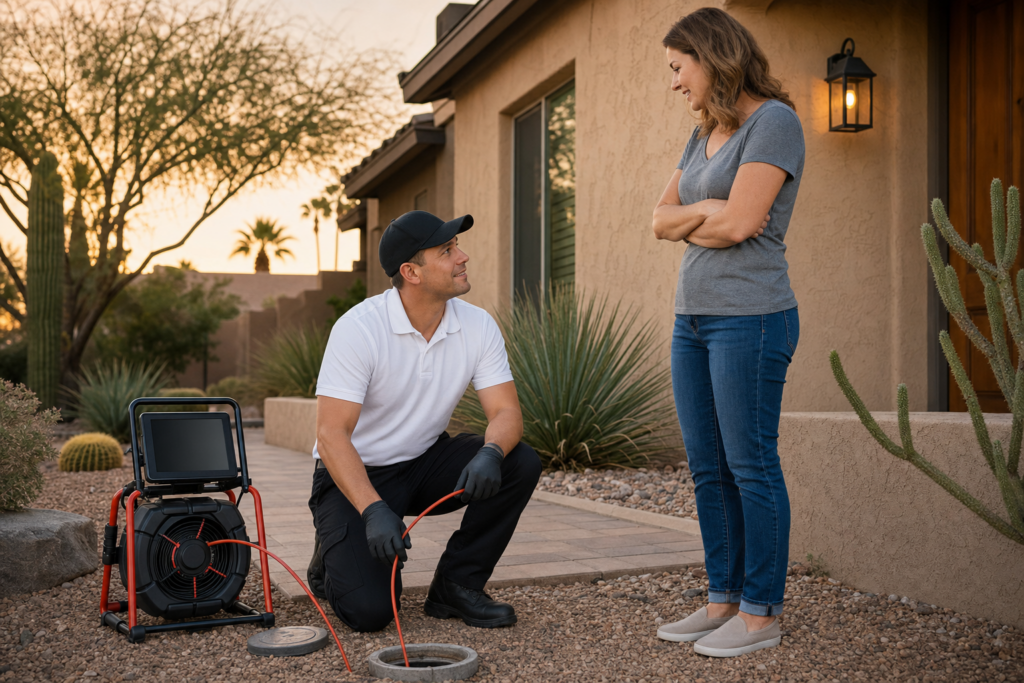
A video camera inspection is a diagnostic step, not a cleaning method. The technician inserts a small camera into the line to see the condition of the pipe, locate the blockage, and determine the best approach. Some companies include this as part of the service call; others charge for it separately.
Access and Complexity
How easily the technician can reach the affected drain or cleanout access point also affects cost. If the cleanout is buried, if a fixture needs to be pulled to access the line, or if the blockage is unusually deep in the system, the work takes longer. More labor time generally means a higher total cost.
Phoenix-Specific Factors That Affect Drain Cleaning Needs and Costs
Phoenix is not a generic plumbing market. The climate, water quality, and soil composition here create conditions that directly affect how often drains clog, what causes the blockages, and how much it costs to clear them.
Hard Water Mineral Buildup
Phoenix has some of the hardest water in the country. As water moves through pipes over the years, calcium and magnesium deposits build up along interior pipe walls and gradually restrict flow. This scale accumulation makes drains more susceptible to blockages and can make existing clogs more difficult to clear with standard snaking alone. In homes with older pipes and no water treatment system, this is a recurring factor.
Caliche Soil and Sewer Line Stress
Much of the Phoenix metro area sits on caliche — a dense, calcium-carbonate-rich soil that is extremely hard. This soil puts pressure on underground sewer lines and can contribute to cracking, shifting, or joint separation over time. When sewer lines develop cracks, tree roots can find their way in and create blockages that require more than basic drain cleaning to resolve. This is especially common in older Phoenix neighborhoods where the original sewer lines have been in the ground for decades.
Monsoon Season and Root Intrusion
Phoenix’s monsoon season brings sudden moisture to soil that is dry for most of the year. Trees and landscaping roots respond aggressively to that moisture, and sewer lines with even small cracks or joint gaps become targets. Root intrusion is one of the most common causes of main sewer line blockages in the Phoenix area, and it often requires hydro jetting or a camera inspection to fully diagnose and address.
Understanding these local factors is important because they can affect what the technician finds, what method is needed, and ultimately what the service costs. A plumber who works in Phoenix regularly will recognize these patterns and can explain what is happening in terms that make sense.
Is This a True Emergency, or Can It Wait Until Morning?
Not every drain problem requires an after-hours service call. Some situations genuinely cannot wait, and others — while frustrating — can safely hold until you can schedule a standard appointment. Knowing the difference can save you money and reduce stress.
Signs That Typically Cannot Wait
- Sewage or wastewater is backing up into your home through floor drains, toilets, or tubs
- Multiple fixtures are draining slowly or not draining at all, which may indicate a main sewer line blockage
- Water is actively overflowing from a fixture and you cannot stop it
- There is standing water that is creating an immediate problem in a living area
Signs That May Be Able to Wait
- A single sink or shower is draining slowly but still functioning
- A single toilet is clogged but other toilets in the home are working normally
- You notice minor gurgling in one drain but no backup or overflow
- A drain is slow but you can avoid using that fixture until morning
This is not a diagnostic list — it is a practical framework for thinking through your situation. If you are unsure whether your drain problem is urgent, calling a plumber and describing what you are seeing is a reasonable step. A trustworthy company will help you determine whether it makes sense to send someone now or schedule for the next available opening.
What to Ask Before the Technician Starts Work
When you are calling for emergency service, you are often making a decision quickly and under pressure. These questions can help you feel more confident about what you are agreeing to before any work begins.
- Is your pricing flat-rate or hourly? Flat-rate pricing means you know the total cost before work starts. With hourly pricing, what you ultimately pay is tied to how much time the job requires. Both are legitimate, but you should know which one you are being quoted.
- Is there a service call or dispatch fee, and is it applied toward the cost of the repair? Some companies charge a fee just to send a technician to your home. In many cases, that fee is credited toward the total if you move forward with the service. Ask before the technician is dispatched.
- What is the total estimated cost before any work begins? A reputable plumber should be willing to explain what they expect the work to involve and what it will cost before they start. If the scope changes once work is underway, they should communicate that clearly before proceeding.
- Are there additional charges for the time of day, day of the week, or holidays? If you are calling on a Saturday night or a holiday, ask whether a surcharge applies and how much it is. This is standard practice, but you deserve to know the number.
- Is a camera inspection included, or is it a separate charge? Camera inspections can be valuable for understanding what is causing a blockage, especially in the main sewer line. But they are not always necessary for a straightforward clog. Ask whether it is bundled with the service or billed separately.
These are not trick questions, and a plumber who is worth hiring will not be bothered by them. If anything, asking these questions is a sign that you are a thoughtful homeowner, and it sets the expectation for clear communication throughout the service.
What Actually Happens During an Emergency Drain Cleaning Visit
If you have never called a plumber for an urgent drain issue before, it helps to know what the process typically looks like. Understanding the steps can reduce anxiety and help you evaluate whether the service you are receiving is thorough.
Step one: the assessment. The technician arrives, takes a look at the affected drain or drains, and asks you what you have been experiencing — when the problem started, which fixtures are affected, and whether anything unusual happened before the backup. This conversation matters. It helps the technician narrow down where the blockage is and what might be causing it.
Step two: the explanation and pricing. Before any work begins, the technician should explain what they believe is happening, what approach they recommend, and what it will cost. This is where upfront pricing becomes real — not as a marketing phrase, but as an actual conversation where you understand the scope and the number before giving the go-ahead.
Step three: the clearing. The technician uses the appropriate method — snaking, hydro jetting, or another approach — to clear the blockage. For straightforward clogs, this may take 30 minutes to an hour. For main sewer line issues or more complex blockages, it may take longer.
Step four: the confirmation. After the blockage is cleared, the technician confirms that the drain is flowing properly. If a camera inspection was performed, they can show you what the line looks like and explain whether there are any underlying issues worth monitoring.
The entire process should involve clear communication at every step. If the technician discovers something unexpected — a cracked pipe, root intrusion, or a problem that goes beyond what drain cleaning can resolve — they should explain what they found and discuss your options before doing anything additional.
Understanding the Difference Between Drain Cleaning and Drain Repair
This is a distinction that catches many homeowners off guard, and it is worth understanding before you call.
Drain cleaning removes a blockage so that water can flow through the pipe again. It addresses the immediate problem — the clog — using methods like snaking or hydro jetting. The pipe itself is not changed or replaced.
Drain repair (or sewer line repair) addresses physical damage to the pipe itself — cracks, breaks, collapsed sections, or severe root intrusion that has compromised the pipe’s structure. This is a different scope of work, with different methods and different costs.
Sometimes what starts as a drain cleaning call reveals that the pipe has damage that cleaning alone cannot fix. A responsible plumber will explain this distinction clearly, show you what they found (often using a camera inspection), and help you understand your options — rather than simply recommending the most expensive solution.
If a technician tells you that drain cleaning is not enough and that repair or replacement is needed, it is reasonable to ask to see the camera footage and to get a clear explanation of what the damage looks like and why cleaning is not sufficient. This is your home and your decision.
How Fast Layne Plumbing Approaches Emergency Drain Calls
Fast Layne Plumbing is a family-owned plumbing company serving Phoenix, Arizona. We understand that a backed-up drain at 10 p.m. on a Saturday is not something you planned for, and we approach every emergency call with that reality in mind.
When you call us, we answer the phone. We listen to what you are dealing with, and we help you determine whether your situation needs immediate attention or whether it can wait for a scheduled appointment — without pressure either way.
If we send a technician, here is what you can expect: they will assess the situation, explain what they are seeing in plain English, and give you upfront pricing before any work begins. We do not start work without your approval, and we do not recommend services you do not need. If the problem turns out to be more involved than a standard drain cleaning, we will explain what we found and walk you through your options clearly.
We treat your home with respect. We clean up after ourselves. And we focus on finding the real problem — not just treating the symptom — so the issue does not keep coming back.
If you are dealing with a drain emergency in Phoenix or you are not sure whether your situation can wait, call Fast Layne Plumbing at 480.485.4659. We are here to help you figure out the right next step.
Frequently Asked Questions
How much does emergency drain cleaning cost in Phoenix?
Emergency drain cleaning in Phoenix typically ranges from $150 to $600 or more, depending on the type of drain, the severity of the blockage, the method used to clear it, and whether the call is during after-hours, weekend, or holiday periods. Main sewer line work and hydro jetting tend to be at the higher end of that range. A service call or dispatch fee may also apply.
Do plumbers charge more on weekends and at night?
Most plumbing companies add an after-hours surcharge for service calls that come in during evenings, weekends, or holidays. In Phoenix, this surcharge commonly ranges from $50 to $150 or more, depending on the company and the specific timing. This is standard practice and reflects the cost of maintaining technician availability outside normal business hours.
What is a service call fee, and is it applied toward the repair?
A service call fee (sometimes called a dispatch fee or trip charge) is a fee for sending a technician to your home to evaluate the problem. Many companies credit this fee toward the total cost of the work if you move forward with the service. It is worth asking about this before the technician is dispatched so there are no surprises.
What is hydro jetting, and when is it needed?
Hydro jetting is a drain cleaning method that uses high-pressure water to scour the inside of the pipe and remove buildup such as grease, mineral scale, and root intrusion. It is more thorough than standard snaking and is typically recommended when the blockage is caused by something that a cable alone cannot fully remove. It is not always necessary — a qualified technician can evaluate whether hydro jetting is the right approach for your situation.
How do I know if I need a plumber right now or if it can wait?
If sewage is backing up into your home, multiple fixtures are affected, or water is actively overflowing and you cannot stop it, those situations typically cannot wait. If a single drain is slow but still functioning and you can avoid using that fixture, it may be reasonable to schedule service for the next available opening. When in doubt, calling a plumber and describing what you are experiencing is a good first step — a trustworthy company will help you assess the urgency honestly.
Is a camera inspection necessary for a clogged drain?
Not always. For a straightforward clog in a single fixture, a camera inspection may not be needed. However, for main sewer line blockages, recurring clogs, or situations where the technician suspects pipe damage or root intrusion, a camera inspection can be a valuable diagnostic step. It gives the technician a clear view of what is happening inside the pipe so they can pinpoint the source and location of the problem. Some companies include it as part of the service; others charge separately.
The Right Next Step
A drain backup is stressful, especially when it happens at night or on a weekend. Knowing what to expect — from the cost range to the service process to the right questions to ask — puts you in a stronger position to make a confident decision, even under pressure.
If you are a homeowner in Phoenix dealing with a drain problem that needs attention, Fast Layne Plumbing is here to help. We answer the phone, explain everything clearly, and give you honest pricing before any work begins.
Call Fast Layne Plumbing at 480.485.4659 to schedule service or talk with a local Phoenix plumber about what you are experiencing.