When Does Fast Layne Plumbing Recommend a Camera Inspection? Here’s How We Decide
Fast Layne Plumbing recommends a camera inspection when your drain or sewer symptoms suggest something deeper than a routine clog — and when seeing inside the line changes what we do next. We do not recommend it as a default add-on for every service call. The decision depends on what your symptoms point to, what kind of plumbing your home has, and whether visual confirmation will lead to a better outcome for you.
This page walks through the specific situations where we recommend camera inspection, explains the reasoning behind each one, and covers the situations where it may not be necessary at all. If you have questions about your specific situation, call Fast Layne Plumbing at 480.485.4659 and we can talk it through before anyone shows up.
Camera Inspection Is Diagnostic, Not Automatic
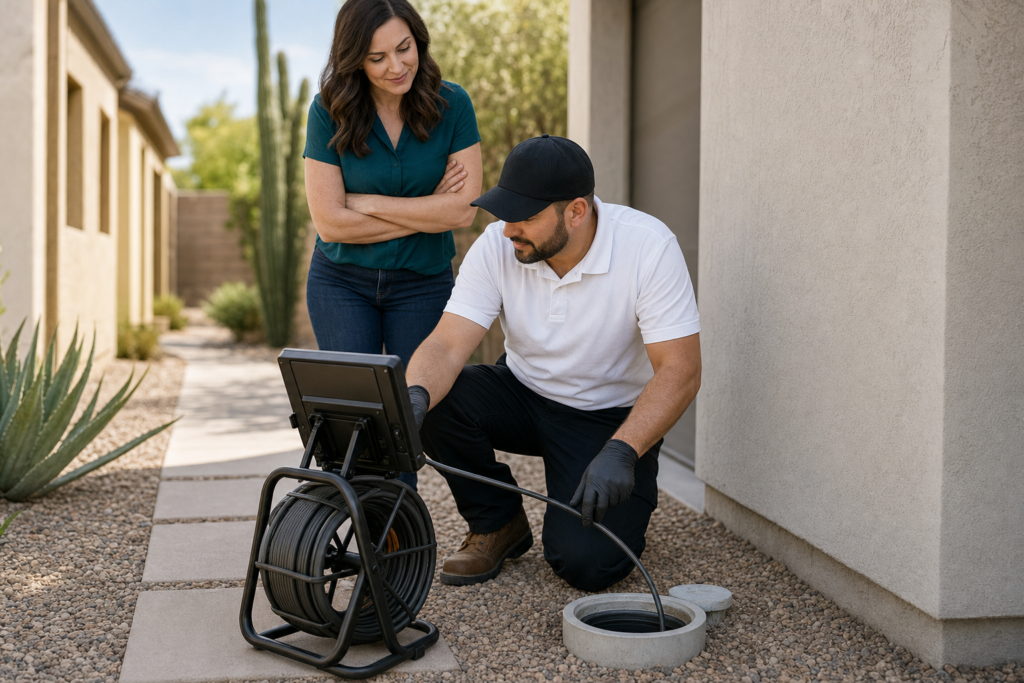
A sewer camera inspection involves inserting a small, high-resolution camera into the drain or sewer line — usually through a cleanout — and advancing it through the pipe to see what is happening inside. The camera sends a live feed so the technician can evaluate the condition of the pipe, identify blockages, and locate damage.
At Fast Layne Plumbing, we use camera inspection as a diagnostic tool. It helps us understand the real problem so we can recommend the right service — not guess at it. But not every drain call requires a camera. A straightforward clog in a kitchen sink does not need the same diagnostic approach as a main sewer line that keeps backing up every few months.
The difference matters because it affects what you pay for and what you actually need. Here is how we think through that decision.
Before Hydro Jetting: Why We Look First
What the Camera Confirms Before High-Pressure Water Goes In
Hydro jetting uses high-pressure water to clear buildup, grease, scale, and roots from inside a sewer line. It is one of the most effective cleaning methods available — but it is not appropriate for every pipe.
If a pipe has cracks, significant deterioration, or sections that have shifted out of alignment, putting high-pressure water through it could make the damage worse. A camera inspection lets us confirm the pipe’s condition before we proceed. We are looking at the pipe material, the wall thickness, any visible cracks or separations, and whether the line can handle the pressure safely.
What Happens If the Pipe Is Not in Condition for Jetting
If the camera shows that the pipe is compromised, we adjust the recommendation. That might mean cable cleaning instead of jetting, or it might mean the line needs repair before any aggressive cleaning makes sense. Either way, the camera tells us what we are actually working with — so you get the right service, not just the one that sounds most thorough.
This is one of the most common situations where camera inspection directly changes what we recommend and protects you from a service that could create a bigger problem than the one you called about.
When the Cause of a Backup Is Not Clear
A main line backup can have several different causes, and the treatment depends entirely on which one it is. The camera helps us identify what we are actually dealing with so we solve the right problem.
Tree Root Intrusion
In many Phoenix neighborhoods — especially areas with mature landscaping and older homes — tree roots can work their way into sewer lines through small joints or cracks. A camera inspection shows us exactly where the roots are entering, how far they extend, and whether the pipe itself is still structurally sound. That determines whether root clearing and hydro jetting can resolve it, or whether the line needs repair.
Grease Buildup
Grease accumulates gradually and can narrow a sewer line over time until flow slows to a stop. The camera shows us how much buildup is present, how far along the line it extends, and whether the pipe underneath is in good condition. If the pipe is healthy, a thorough cleaning may be all that is needed. If the buildup has been causing pressure on the pipe walls for years, we may see other issues that need attention.
Pipe Offsets and Structural Shifts
A pipe offset is where two sections of pipe have shifted out of alignment — often due to soil movement, settling, or age. Offsets catch debris, slow flow, and cause recurring backups. A camera inspection is one of the clearest ways to identify an offset because it is not something you can diagnose from the cleanout or by feel alone. If an offset is present, cleaning the line will restore flow temporarily, but the structural issue will keep causing problems until it is addressed.
Soft Clogs That Cable Cleaning Can Handle
Not every main line backup is caused by roots, grease, or structural damage. Sometimes it is a soft blockage — paper products, buildup at a single point, or something that got into the line that should not have. In those cases, cable cleaning can often restore flow without a camera. We explain that distinction more in the section below on when camera inspection may not be necessary.
The point is this: the camera tells us which problem we are actually solving. And because the treatment is different for roots, grease, offsets, and soft clogs, knowing the cause before choosing the service leads to a better result for you.
Before Recommending Major Repairs or Replacement
If a technician is recommending sewer line repair, trenchless sewer repair, pipe lining, or full sewer line replacement, a camera inspection should be part of that process. Visual confirmation of the damage matters before you approve significant work on your home.
The camera shows the location, type, and extent of the problem. It can uncover cracks, breaks, bellied sections, collapsed pipe, root damage, and degradation of the pipe material itself. Those details determine whether a targeted repair is possible, whether trenchless methods are an option, or whether the line needs to be replaced.
At Fast Layne Plumbing, we walk you through what the camera finds. You can see the footage and understand why we are recommending what we are recommending. We believe that if you can see the problem yourself, you can make a confident decision about how to move forward — without wondering whether the work is truly necessary.
This is especially relevant for homeowners in Phoenix who have received a previous quote that felt too high or felt uncertain about whether a repair was genuinely needed. The camera gives both of us the same information to work from.
Recurring Clogs: When the Same Drain Keeps Backing Up
If you have had the same drain or sewer line cleared more than once and the problem keeps coming back, that pattern usually means something deeper is going on. A cleared line that clogs again within weeks or months may have a root intrusion, a pipe offset, a partial collapse, or a section of pipe that has deteriorated enough to catch debris consistently.
A camera inspection in this situation helps us find the underlying cause rather than just treating the symptom again. It is the difference between clearing the line one more time and actually understanding why it keeps failing.
For homeowners in older Phoenix neighborhoods — homes built from the 1950s through the early 2000s — recurring drain problems can sometimes trace back to aging pipe materials like clay, cast iron, or Orangeburg. A camera inspection shows us the material, the condition, and what the realistic options are.
When Camera Inspection May Not Be Necessary
We want to be straightforward about this: not every service call needs a camera inspection, and we do not recommend one when it would not change the outcome for you.
Situations where camera inspection is often unnecessary include:
- A single fixture with a first-time clog and a clear, identifiable cause — such as a kitchen sink backed up from food debris or a bathroom drain slowed by hair buildup.
- A soft clog in a line with no history of recurring problems, where cable cleaning restores full flow and the drain runs normally afterward.
- A drain issue that is clearly isolated to one fixture and does not suggest a deeper line problem.
In these cases, standard drain cleaning is typically the right starting point. If the clog clears and the drain flows well, there may be no reason to go further. If the problem persists or comes back, that is when a camera inspection becomes a useful next step.
We would rather tell you a camera is not needed than recommend one just because it is available. That is part of how we approach every service call — find the real problem, recommend the right solution, and do not add services that do not help you.
What Happens After the Camera Inspection
Once the camera inspection is complete, we review the findings with you. You will see what we saw inside the line, and we will explain what it means in plain English — not plumber jargon.
Based on what the camera shows, we recommend the appropriate next step. That might be:
- Cable cleaning if the line is structurally sound and the blockage is soft or routine.
- Hydro jetting if the pipe is in good condition but has significant buildup, grease, or root intrusion that cable cleaning cannot fully address.
- Sewer line repair if the camera reveals cracks, breaks, offsets, or localized damage that can be addressed without replacing the entire line.
- Trenchless sewer repair if the pipe damage is repairable using methods designed to reduce disruption to your yard and property.
- Sewer line replacement only when the line is beyond repair and replacement is the most honest recommendation.
The camera inspection connects directly to the service recommendation. It is not a separate, standalone product — it is part of how we diagnose the problem correctly so the repair or cleaning that follows actually solves it.
We provide upfront pricing before any work begins, so you know what to expect before you say yes.
Frequently Asked Questions
Is a camera inspection always required for a clogged drain?
No. Many clogged drains can be resolved with standard drain cleaning. A camera inspection is typically recommended when the cause of the clog is unclear, when the problem is recurring, when hydro jetting is being considered, or when the symptoms suggest a deeper issue in the main sewer line. A single, straightforward clog often does not require one.
What does a sewer camera inspection actually show?
The camera shows the interior condition of your drain or sewer line in real time. Inside the pipe, we can see things like blockages, root intrusion, grease accumulation, cracks, breaks, offset joints, bellied sections, and signs of material deterioration throughout the line. It also shows the pipe material itself — clay, cast iron, PVC, or other types — which helps determine the best approach for cleaning or repair.
Do I need a camera inspection before hydro jetting?
In most cases, yes. Hydro jetting uses high-pressure water, and it is important to confirm the pipe is in good enough condition to handle that pressure safely. A camera inspection before jetting helps us avoid making an existing problem worse. If the pipe has significant cracks or deterioration, we may recommend a different approach.
How does a camera inspection help with a main line backup?
A main line backup can be caused by tree roots, grease, a pipe offset, a collapse, or a soft blockage — and each cause requires a different treatment. The camera identifies which problem is present, where it is located, and how extensive it is. That information determines whether cleaning, repair, or replacement is the right path forward.
Will Fast Layne Plumbing show me what the camera finds?
Yes. We walk you through the footage and explain the findings in plain language so you understand what is happening in your line and why we are recommending what we are recommending. You should never have to approve work without understanding the reason behind it.
Schedule a Camera Inspection or Ask Us About Your Situation
If you are dealing with a recurring drain problem, a main line backup, or you have been told you need a repair and want to understand what is really going on inside your line, Fast Layne Plumbing can help. We serve homeowners and businesses throughout Phoenix, AZ, and we are happy to talk through your situation before scheduling anything.
Call Fast Layne Plumbing at 480.485.4659 to schedule service or ask questions about whether a camera inspection makes sense for your situation.