What to Ask When You Call for After-Hours Emergency Drain Cleaning in Phoenix
When a drain backs up at ten o’clock on a weeknight or early on a Saturday morning, the first instinct is to search for someone who can help right now. That impulse makes sense. But before you authorize any after-hours drain work, a short conversation with the plumber on the phone can tell you a lot about whether you are calling the right company.
This guide covers the specific questions worth asking, what each question is designed to reveal, and what you can do at home while you wait for the technician to arrive. It is written from the perspective of a Phoenix plumbing company that takes these calls regularly — because we know the difference a few good questions can make for a homeowner who just wants the problem handled honestly.
Before You Pick Up the Phone: What to Notice First
The information you share with the dispatcher directly affects how quickly and accurately a technician can help. Before you call, take a moment to notice a few things. You do not need to diagnose the problem — just describe what you see.
Which Drain or Drains Are Affected
Is it one sink, one shower, or one toilet? Or are multiple fixtures backing up at the same time? A single slow drain often points to a localized clog. When more than one fixture is affected — especially if a toilet and a shower on opposite ends of the house are both backing up — that can indicate a blockage deeper in the main sewer line. This distinction helps the dispatcher understand the scope before the technician arrives.
What the Symptoms Look Like
Standing water in a sink or tub, gurgling sounds when you flush, a sewage smell near a floor drain, or water coming up where it should not — each of these tells a different story. Describe what you are seeing and hearing in plain terms. There is no wrong way to explain it.
When It Started and What You Have Already Tried
Did this come on suddenly, or has the drain been slow for weeks? Have you used a plunger or a store-bought drain product? This context helps the technician plan what equipment to bring and what to look for first.
Having these details ready when you call does not just speed up the process — it also gives you a better sense of how the company responds. A good dispatcher will ask you these kinds of questions. If they do not ask anything and just want to schedule, that is worth noticing.
Questions to Ask About Pricing and Fees
Pricing is the biggest source of anxiety for homeowners calling after hours, and it should be one of the first things you discuss. These questions are not about haggling — they are about understanding the structure before work begins.
Is There a Dispatch Fee or Service Call Fee?
Many plumbing companies charge a fee just to send a technician to your home. This is common and not automatically a red flag. What matters is whether the company tells you about it upfront. Ask whether the fee exists, how much it is, and whether it applies toward the cost of the work if you move forward.
Is There an After-Hours or Weekend Surcharge?
After-hours service often costs more than a daytime appointment. That is a normal part of running a business that keeps technicians available at night and on weekends. The question is not whether there is a surcharge — it is whether the company is honest about it before the technician shows up. If the answer is vague or dismissive, that tells you something.
Do You Price by the Job or by the Hour?
Flat-rate pricing means you are quoted a price for the job before it starts, regardless of how long it takes. Hourly pricing means the final cost depends on how long the technician is working. Both models exist. What matters is that you understand which one applies and that the number is discussed before any wrench turns.
Will You Give Me an Estimate Before Starting Work?
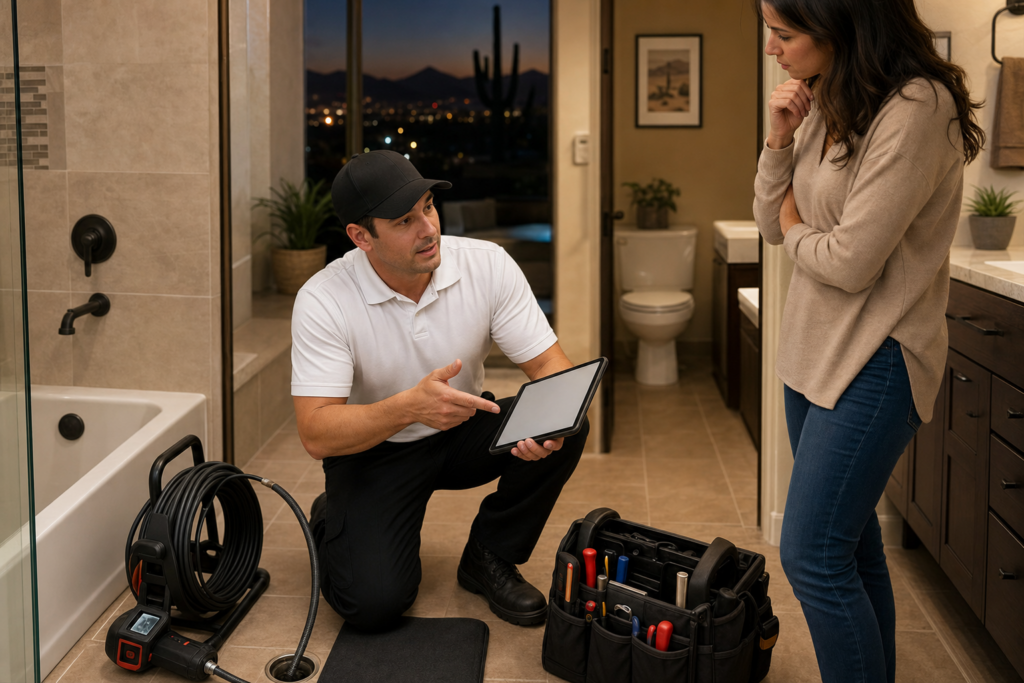
Ask whether the technician will explain the situation and provide a clear price before beginning the repair. A company that is willing to do this — and that does not pressure you into authorizing work the moment they arrive — is showing you how they operate. At Fast Layne Plumbing, we believe you deserve to know what the work involves and what it costs before anything starts.
What a straightforward answer sounds like: The company names the fee, explains the pricing model, and confirms that you will see the cost before they begin. If the answer is “it depends” without any further detail, or if they avoid the question entirely, that is a signal worth weighing.
Questions to Ask About Availability and Timing
Not every company that advertises after-hours service actually has a technician available tonight. These questions help you understand what you are really signing up for.
Is a Technician Actually Available Tonight?
Some companies answer the phone around the clock but schedule service for the next morning. That is not the same as having someone who can come to your home tonight. If your drain issue is actively disrupting your home, knowing whether help is truly available right now — or whether you are booking a morning appointment — changes your decision.
What Is the Estimated Arrival Window?
Ask for a realistic window rather than a promise. A company that claims “fifteen minutes, no matter what” is making a commitment that traffic, distance, and current call volume may not allow. A company that gives you a reasonable range and keeps you updated is being honest with you.
Questions to Ask About the Work Itself
Once you have covered pricing and timing, these questions help you understand what the technician will actually do — and whether the company is equipped to handle what might be going on.
What Equipment Will the Technician Bring?
Standard drain cleaning usually involves a motorized drain snake, sometimes called an auger. For more stubborn blockages — especially in main sewer lines — a company may use hydro jetting, which clears buildup with high-pressure water. Knowing what tools are available helps you understand whether the company can handle a range of situations or only the simplest clogs.
Does This Sound Like a Single-Fixture Clog or a Main Sewer Line Issue?
A good dispatcher can often give you a preliminary read based on your description. They cannot diagnose the problem over the phone — no one can without seeing the line — but they can tell you whether your symptoms suggest something localized or something that may involve the main sewer line. This matters because the scope of work, the equipment needed, and the cost can differ significantly between the two.
Is a Camera Inspection Available?
A camera inspection lets the technician see inside the pipe to identify what is causing the blockage and whether the line has damage such as cracks, root intrusion, or buildup that cleaning alone may not resolve. Ask whether camera inspection is part of the process or an additional service. Not every drain cleaning requires one, but when the situation is unclear or when blockages keep returning, a camera inspection can help identify the real problem instead of just treating the symptom.
What Happens If the Standard Approach Does Not Clear It?
This is a question most homeowners forget to ask, and it is one of the most important. If the snake does not clear the line, does the company have the capability to escalate — with hydro jetting, camera inspection, or sewer line evaluation — or will they refer you elsewhere? Understanding this before they arrive saves time and frustration.
A note about Phoenix drain conditions: Phoenix’s water supply is notably hard, which means mineral scale can build up inside pipes over time and contribute to recurring slow drains and blockages. Homes with mature landscaping — particularly ficus, mesquite, or citrus trees planted near sewer lines — may also deal with root intrusion, where tree roots grow into pipe joints searching for moisture. These are not unusual conditions in the Phoenix area, and a plumber experienced with local homes will be familiar with both.
Questions to Ask About Credentials and Guarantees
Are Your Technicians Licensed and Insured in Arizona?
In Arizona, licensed plumbing contractors are registered through the Registrar of Contractors, known as the ROC. A valid ROC license means the company has met state requirements for its trade. You can verify a company’s license on the ROC website. Asking about licensing is not rude — it is responsible. Insurance matters too, because it protects you if something goes wrong during the work.
Do You Offer Any Callback Policy If the Problem Comes Back?
Some drain clogs return shortly after cleaning, especially when the underlying cause has not been fully addressed. Ask whether the company has any policy for follow-up service if the blockage recurs within a certain period. This is not the same as asking for a lifetime guarantee — it is asking whether the company stands behind the work they did tonight.
What to Do While You Wait for the Technician
Once you have made the call and a technician is on the way, there are a few things you can do to protect your home and make the process smoother.
- Stop using the affected fixture. Running more water into a drain that is not flowing will only make the backup worse.
- If multiple drains are backing up, avoid using water throughout the house until the technician arrives. This includes toilets, sinks, showers, and washing machines. When the main sewer line is blocked, any water that enters the system has nowhere to go.
- Locate your main water shutoff valve. In many Phoenix homes, it is near the front of the house, close to the water meter, often near the street. If you have active water flowing where it should not be, shutting off the main supply can limit the situation until help arrives.
- Locate your sewer cleanout, if possible. In Phoenix-area homes, the sewer cleanout is typically a capped pipe near the exterior of the house, often along a side wall or near the back. If you can point the technician to it when they arrive, it saves time. If you are not sure where it is, that is completely fine — the technician will find it.
- Clear a path. Move anything away from the affected drain, the cleanout area, and the route the technician will walk. This is a small step that makes a real difference.
What you should not do is attempt to disassemble plumbing, use a powered drain tool you are not trained on, or pour chemical drain cleaners into a line that is fully blocked. Chemical products can sit in a clogged pipe without draining, creating a hazard for the technician who opens the line.
Red Flags Worth Watching For
Most plumbing companies doing after-hours work are legitimate businesses trying to help. But a few patterns are worth recognizing, because they can signal that the experience may not go well.
- Pressure to authorize work before you hear a price. If a technician wants to start before explaining the situation and providing a clear estimate, that is a reasonable concern.
- No clear answer on pricing structure. Vague responses about how pricing works — not just the exact dollar amount, but the structure itself — suggest the final bill may surprise you.
- No estimated arrival time. A company that cannot give you even a rough window may not have a technician available or may not prioritize clear communication.
- Reluctance to discuss licensing or methods. A confident, qualified company will not be bothered by these questions. They expect them.
Asking questions is not a burden on the plumber. It is how a homeowner makes a smart decision under pressure, and any company that treats your questions with respect is showing you how they will treat your home.
Frequently Asked Questions
Is it worth calling for after-hours service if the drain is slow but not completely blocked?
It depends on how much the issue is affecting your home. A slow kitchen drain at night is usually something that can wait until morning. A toilet that will not flush in a one-bathroom home, or a shower that is backing up with sewage, is a different situation. If you are unsure, calling and describing the symptoms to a dispatcher is a reasonable step — a good company will help you decide whether it needs attention tonight or can wait.
What is the difference between snaking a drain and hydro jetting?
A drain snake, or auger, is a flexible cable that physically breaks through or pulls out a blockage. It works well for most household clogs. Hydro jetting directs pressurized water through the interior of the pipe, stripping away grease, mineral scale, and accumulated buildup that a snake may push past without fully clearing. It is typically the right tool for persistent or recurring blockages, particularly in main sewer lines.
How do I know if the problem is in one drain or the main sewer line?
If only one fixture is slow or clogged and everything else in the house drains normally, the blockage is likely localized. If multiple fixtures are affected at the same time — particularly fixtures in different parts of the house — or if water backs up into a floor drain or bathtub when you flush a toilet, that can indicate a main sewer line issue. A technician can confirm with an inspection.
What is a dispatch fee?
A dispatch fee is what a company charges to send a technician out to your location. It accounts for the cost of keeping someone available and on the road, particularly during after-hours calls. Some companies credit that amount toward the total repair cost if you proceed with the work. Clarify the terms before anyone arrives so there are no surprises.
Are plumbers in Phoenix required to be licensed?
Arizona requires plumbing contractors to hold a license through the Registrar of Contractors. You can look up any company’s license status on the ROC website. Working with a licensed plumber gives you a layer of accountability and confirms the company has met state trade requirements.
When You Need After-Hours Drain Help in Phoenix
A backed-up drain after hours is stressful, but calling the right company does not have to be. The questions in this guide are designed to help you have a clear, honest conversation before any work begins — so you understand the pricing, the process, and what to expect.
Fast Layne Plumbing is a family-owned Phoenix plumbing company built around honest diagnosis, upfront pricing, and plain-English explanations. We answer the phone, show up when we say we will, and explain what we find before we start any work. If you are dealing with a drain issue and want to talk with a local plumber who will give you straight answers, we are here.
Call Fast Layne Plumbing at 480.485.4659 to schedule service or talk through your situation with our team.